



A New Dawn in Pataliputra: Samrat Choudhary Takes Oath as Bihar’s First BJP Chief Minister
The iconic Patna Secretariat where the new BJP-led administration officially took charge on April 15, 2026.
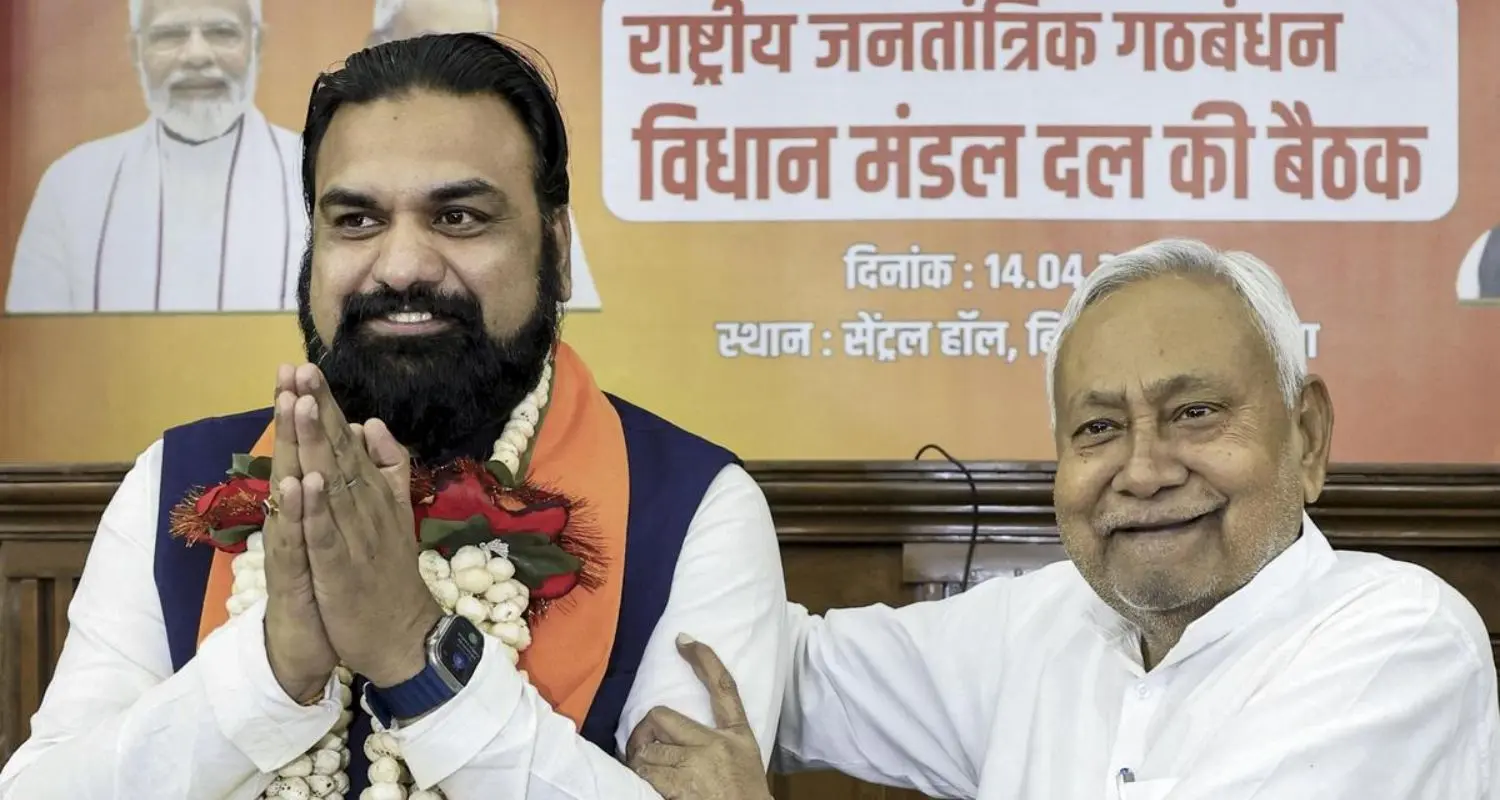
In a political earthquake that has permanently altered the landscape of the Hindi heartland, Samrat Choudhary was sworn in as the 24th Chief Minister of Bihar on April 15, 2026. The ceremony, held at the historic Lok Bhawan in Patna, marked a watershed moment: for the first time in the 46-year history of the Bharatiya Janata Party (BJP) in the state, the saffron party has claimed the top executive post.
Governor Syed Ata Hasnain administered the oath of office to the 57-year-old leader in a high-profile ceremony attended by top NDA leadership. The transition signifies more than just a change in personnel; it represents the end of an era dominated by Nitish Kumar and the start of a “Double-Engine” governance model that the BJP has successfully implemented across other northern states.
The End of the ‘Sushasan Babu’ Era
The elevation of Samrat Choudhary comes on the heels of the resignation of Nitish Kumar, the state’s longest-serving Chief Minister. In a move that surprised few but impacted many, Kumar stepped down to transition to national politics, having been elected to the Rajya Sabha. After nearly two decades at the helm, Kumar’s departure leaves a vacuum that Choudhary—a former protégé turned rival turned successor—is now tasked with filling.
While Kumar has pledged his “full cooperation and guidance” to the new administration, the shift is absolute. The Janata Dal (United) remains a key partner, but for the first time, it takes the backseat as the junior ally in terms of executive power.
Who is Samrat Choudhary? A Political Maverick’s Journey
Born on November 16, 1968, in the Lakhanpur village of Munger district, Samrat Choudhary’s political DNA is rooted in the soil of Bihar. He is the son of veteran leader Shakuni Choudhary, a powerhouse in the Kushwaha community. His journey to the Chief Minister’s bungalow at 1, Aney Marg, has been anything but linear.
- Early Years: Choudhary entered politics in 1990 under the mentorship of Lalu Prasad Yadav’s RJD.
- The Age Controversy: In 1999, he was famously sacked as a minister by then-Governor Suraj Bhan because he had not yet reached the constitutionally required age of 25.
- Strategic Crossover: After years with the RJD and later the JD(U) under Jitan Ram Manjhi, he joined the BJP in 2017, quickly rising to become the state president in 2023.
The New Power Structure: Cabinet Portfolios
The new government has signaled a lean but powerful administrative structure. Alongside Choudhary, two JD(U) stalwarts were sworn in as Deputy Chief Ministers to maintain the alliance’s delicate caste and political balance.
| Leader | Designation | Key Portfolios |
|---|---|---|
| Samrat Choudhary | Chief Minister | Home, Vigilance, Health, Industry, Revenue |
| Vijay Kumar Chaudhary | Deputy CM | Education, Transport, Water Resources |
| Bijendra Prasad Yadav | Deputy CM | Finance, Energy, Planning & Development |
Caste Equations and the ‘Luv-Kush’ Strategy
Choudhary’s appointment is a masterstroke in social engineering. Belonging to the Kushwaha (Koeri) community, he solidifies the BJP’s hold over a crucial OBC segment that accounts for nearly 7% of Bihar’s population. By pairing his leadership with JD(U) leaders, the NDA aims to retain the “Luv-Kush” (Kurmi-Koeri) vote bank while making significant inroads into the EBC (Extremely Backward Classes) demographic.
Priority One: The Liquor Ban and Development
One of the most anticipated moves of the Choudhary administration is a potential review of the state’s controversial prohibition policy. While the liquor ban was a signature move of Nitish Kumar, industry experts and certain political factions have called for a more “pragmatic” approach to boost state revenue and curb the black market. Sources indicate that a high-level committee may be formed within the first 100 days to evaluate the ban’s effectiveness.
Additionally, with 29 portfolios under his direct supervision, Choudhary has signaled that he will personally oversee the industrialization of Bihar. The focus is expected to shift toward IT parks, food processing units in North Bihar, and completing the long-pending highway projects connecting Patna to the border districts.
Conclusion: A Litmus Test for 2029
The next two years will be a litmus test for Samrat Choudhary. He must step out of the shadow of Nitish Kumar’s legacy and prove that the BJP can govern Bihar as a primary party rather than a supportive one. For the people of Bihar, the hope remains that this “Double-Engine” shift translates into better infrastructure, improved law and order, and a reversal of the migration trends that have plagued the state for decades.