




Global Energy Seismic Shift: UAE Formally Exits OPEC and OPEC+ Alliance
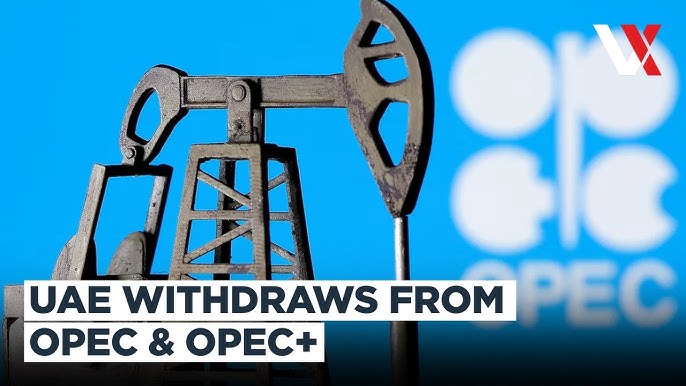
In a move that has sent shockwaves through the corridors of international power and global financial markets, the United Arab Emirates (UAE) has officially terminated its membership with the Organization of the Petroleum Exporting Countries (OPEC) and the broader OPEC+ alliance. The transition, which became effective on May 1, 2026, marks the end of a decades-long partnership and signals a profound pivot in Abu Dhabi’s sovereign energy strategy.
The “Independent Energy First” Doctrine
The decision to leave the cartel is not a sudden whim but the culmination of years of friction over production quotas. For over five years, the UAE has aggressively invested in its production infrastructure, with the Abu Dhabi National Oil Company (ADNOC) successfully reaching a capacity of 5 million barrels per day (mbpd). Under OPEC’s restrictive quota system, much of this capacity remained “shut-in,” costing the federation billions in potential revenue annually.
Why the Exit? The Economic Rationale
The primary driver for this divorce is the UAE’s desire to monetize its vast reserves before the global “energy transition” significantly erodes oil demand. By exiting OPEC+, the UAE is no longer bound by the collective production cuts led by Saudi Arabia and Russia. This allows Abu Dhabi to:
- Maximize Revenue: Fully utilize the 5 mbpd capacity to fund the “UAE Vision 2071” diversification projects.
- Market Share Capture: Aggressively compete in Asian markets, particularly India and China, where demand remains robust.
- Price Flexibility: Set sovereign pricing independent of cartel-mandated benchmarks.
Impact on the Global Oil Market
The immediate reaction in the Brent and WTI markets was a 7% drop in prices as traders factored in the “UAE surge”—an expected influx of an additional 1.2 to 1.5 million barrels of oil per day into a market already grappling with technological shifts. Analysts at State Correspondents suggest that this could lead to a sustained period of lower oil prices, benefiting net importers like India but devastating smaller OPEC members.
| Region | Anticipated Impact | Price Sensitivity |
|---|---|---|
| European Union | Lower energy costs; accelerated transition | High |
| United States | Lower pump prices; pressure on shale producers | Medium |
| India/South Asia | Significant reduction in import bill; GDP boost | Very High |
| OPEC Remaining | Loss of collective bargaining power | Critical |
Geopolitical Realignment: The Saudi-UAE Rift?
While official statements from Abu Dhabi and Riyadh emphasize continued cooperation in security and regional diplomacy, the energy split is undeniable. This move positions the UAE as a “lone wolf” energy superpower, similar to Qatar’s exit from OPEC in 2019 to focus on Liquefied Natural Gas (LNG). However, given the UAE’s size and oil volume, this exit is far more consequential for the survival of the OPEC+ framework.
A New Era
As of May 2026, the global energy landscape is no longer a bipolar world governed by a few giants. The UAE’s exit is a declaration of sovereign maturity. For the subscribers of State Correspondents, this story represents the beginning of a “Price War” era where efficiency and volume will dictate the winners of the final decades of the fossil fuel age.