




Shockwaves in Washington: Navy Secretary John Phelan Fired Amid Mounting Standoff with Iran
Pentagon Chief Pete Hegseth replaces billionaire Phelan with Undersecretary Hung Cao; dismissal highlights deepening rift over the “Golden Fleet” shipbuilding strategy.
Shockwaves in Washington: Navy Secretary John Phelan Fired Amid Mounting Standoff with Iran
The Pentagon was plunged into a fresh state of leadership transition on Wednesday evening after Secretary of the Navy John C. Phelan was dismissed “effective immediately.” The sudden exit of the billionaire financier-turned-civilian-leader marks the first major service secretary departure of the current administration’s term and leaves a critical leadership void as the U.S. continues to enforce a volatile maritime blockade in the Strait of Hormuz.
The announcement, delivered via a brief social media post by Pentagon spokesman Sean Parnell, offered no official reason for the firing. However, State Correspondents has learned from multiple D.C. sources that the move was the culmination of a months-long “cold war” between Phelan and Defense Secretary Pete Hegseth.
The Catalyst: The “Golden Fleet” and Shipbuilding Frustrations
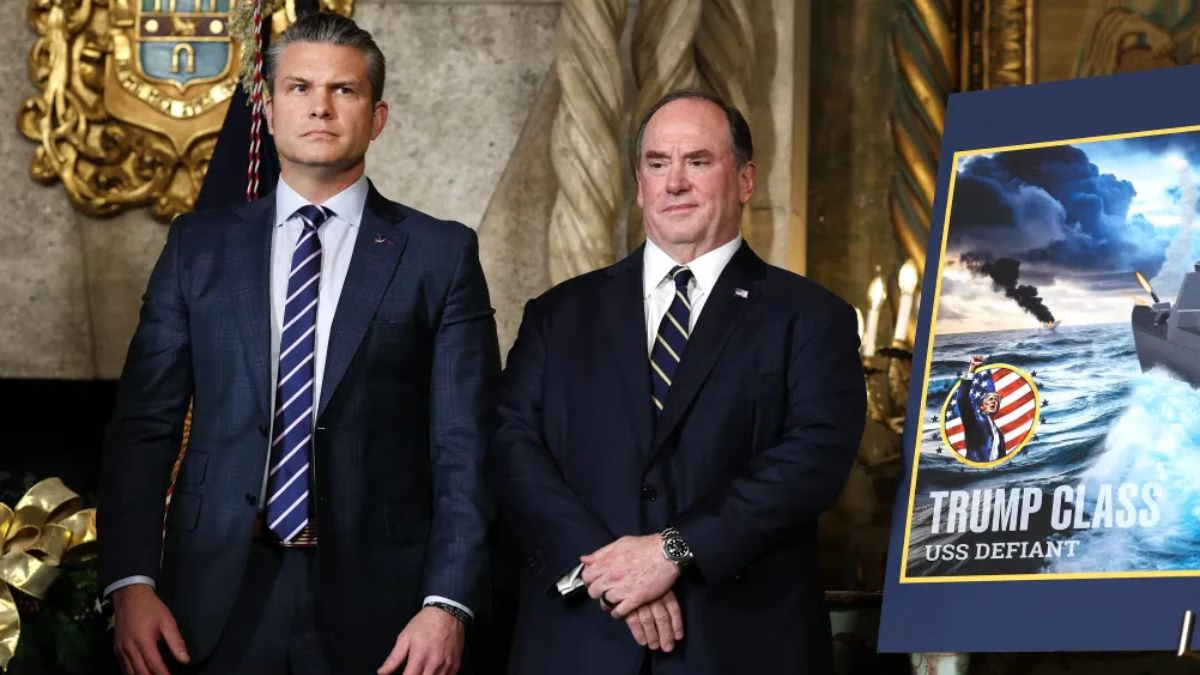
The primary point of friction centered on the ambitious “Golden Fleet” initiative—a massive $1.5 trillion modernization push designed to expand the U.S. Navy to over 500 ships. While Phelan was an ardent public supporter of the project, including the controversial “Trump-class” battleship program, internal reports suggest he clashed repeatedly with Deputy Defense Secretary Stephen Feinberg over the pace of implementation.
FEinberg and Hegseth reportedly grew frustrated with Phelan’s handling of shipyards and his openness to exploring ship production in foreign allied yards to meet timelines—a position that was seen as “under cutting” domestic manufacturing priorities. One official described the Navy’s major procurement programs as being “chronically behind schedule” under Phelan’s 13-month tenure.
Acting Leadership: Who is Hung Cao?
In the wake of Phelan’s removal, Undersecretary of the Navy Hung Cao has been named Acting Secretary. A former Navy EOD officer, Cao is widely viewed as being more “culturally and strategically aligned” with the current Pentagon leadership. His appointment signals a move toward a more military-centric management style for the Navy Department.
Key Friction Points Leading to the Dismissal:
- Direct Access: Phelan reportedly bypassed Hegseth to communicate directly with the White House, violating the established chain of command.
- Shipbuilding Delays: Failure to hit benchmarks in the $65 billion warship procurement plan for FY2027.
- Staffing Clashes: Hegseth had previously fired Phelan’s Chief of Staff, Jon Harrison, signaling deep internal distrust.
- The Kelly Investigation: Phelan’s recommendation regarding Senator Mark Kelly’s involvement in a controversial military video reportedly did not go “far enough” for the Pentagon’s top brass.
Timing: A Standoff with Iran
The timing of the firing has drawn sharp criticism from lawmakers. Senator Jack Reed, the top Democrat on the Senate Armed Services Committee, labeled the move “troubling,” citing the instability it creates during an active naval conflict. The U.S. Navy is currently leading a blockade of Iranian ports, having already redirected 31 ships and boarded two others in the past month.
| Context | Details |
|---|---|
| Naval Standoff | Active blockade of Iran in the Strait of Hormuz. |
| Budget Crisis | Phelan was dismissed just hours after meeting Senators regarding the Navy’s FY2027 budget. |
| Precedent | The firing follows the recent removal of Army Chief of Staff Gen. Randy George. |
Strategic Implications for the Global Economy
For global media owners and stakeholders—including our readers at State Correspondents—this leadership shakeup suggests a more aggressive, less bureaucratic approach to U.S. naval power. If Hung Cao moves to tighten the Hormuz blockade, we could see immediate impacts on global energy prices and freight insurance rates.
As the Pentagon consolidates power under the Hegseth-Feinberg axis, the “Golden Fleet” is expected to see a more rigid, domestic-focused procurement strategy. Whether this will actually speed up ship delivery or further complicate the industrial base remains the multi-billion dollar question for 2026.