



Woven City AI Revolution: Toyota Unveils ‘Akio Toyoda AI’ and World-Leading Vision Engine
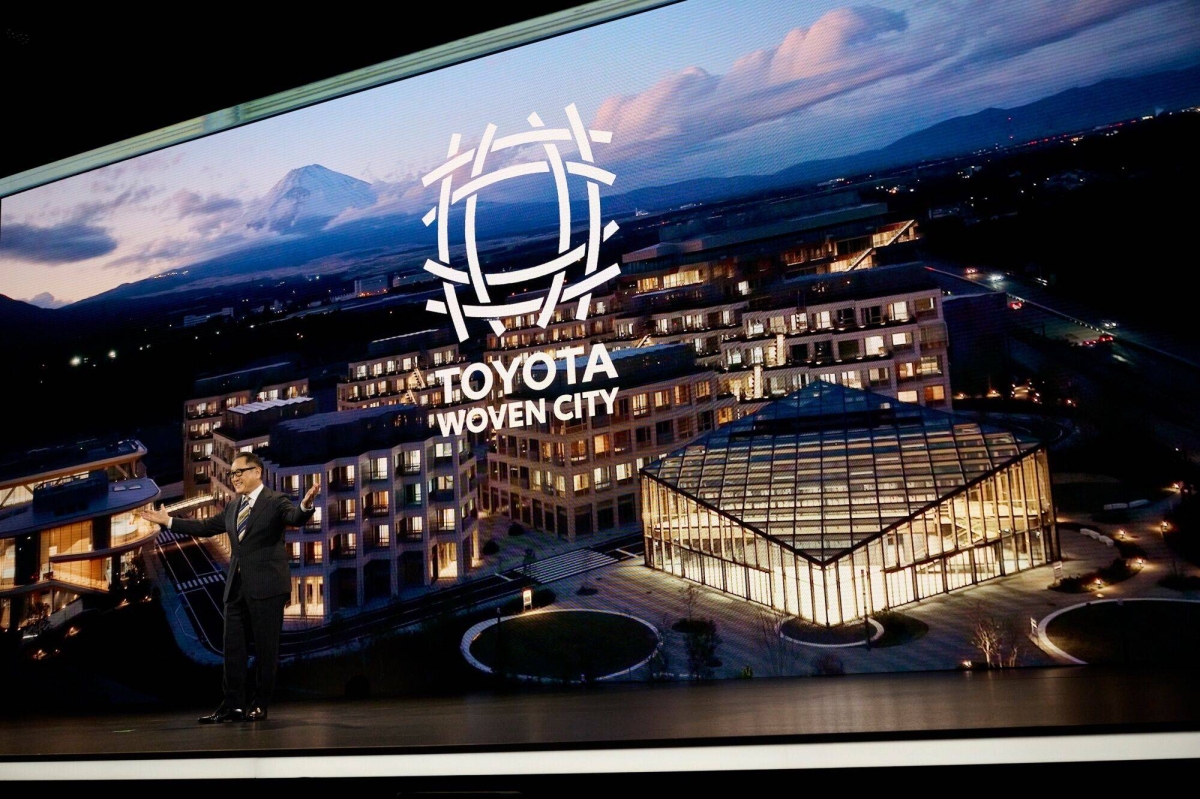
In a landmark event that signals the next chapter of the “Mobility for All” vision, Toyota Motor Corporation and Woven by Toyota (WbyT) today officially launched a suite of advanced AI technologies at **Woven City**, Japan. The announcement, delivered on April 22, 2026, introduces two core pillars of innovation: the world-leading **Woven City AI Vision Engine** and a unique AI model modeled after the leadership and decision-making philosophy of Toyota Chairman **Akio Toyoda**.
These technologies are designed to drive Kakezan—the Japanese concept of “multiplication”—by combining human intuition with artificial intelligence to solve complex societal challenges in real-time. Woven City, which began housing residents in late 2025, has now transitioned into a fully operational “Living Laboratory,” testing technologies that go far beyond the automotive sector.
The ‘Akio Toyoda AI’: Digitizing Leadership
Perhaps the most intriguing reveal is the Akio Toyoda AI. Unlike standard LLMs (Large Language Models), this AI was developed with the “Master Weaver” himself. It is designed to reflect Chairman Toyoda’s unique approach to purpose-driven collaboration and rapid decision-making under pressure.
According to Toyota representatives, the model is not meant to replace leadership but to empower the company’s “Inventors” and partners. By analyzing decades of Toyoda’s insights, the AI serves as a collaborative partner that helps teams align their projects with Toyota’s core philosophy: “Doing things for others.”
Woven City AI Vision Engine: A New Standard in VLM
At the technical heart of the launch is the **Woven City AI Vision Engine**. This is a large-scale Vision Language Model (VLM) that ranks among the world’s most advanced spatial-temporal understanding tools. Unlike traditional AI that sees static images, this engine understands the “flow” of the city.
What Makes the Vision Engine Unique?
- Hierarchical Compression: It uses a two-tier strategy to process short-term visual data and long-term context simultaneously, allowing it to “remember” events across the city.
- Real-World Co-creation: The engine is currently being used in a proof-of-concept project with **UCC Japan Co., Ltd.** to optimize retail and logistics within Woven City.
- Integrated ANZEN System: It powers the city’s safety protocols by predicting human behavioral patterns and providing real-time assistance to pedestrians and drivers.
The Concept of Kakezan (Multiplication)
Toyota defines Kakezan as the multiplication of diverse strengths. In Woven City, this means:
Toyota’s Manufacturing (Monozukuri) × WbyT’s Software Expertise × Partner Innovations = Well-being for All.
Technological Specifications & Applications
The AI Vision Engine is already being deployed through enterprise platforms like Amazon SageMaker, allowing for scalable, high-latency responses that can be used in manufacturing, facility management, and urban safety.
| Technology Component | Primary Function | Primary Benefit |
|---|---|---|
| AI Vision Engine | Spatial-Temporal Multimodal Analysis | Real-time risk detection and city optimization. |
| Behavior AI | Human pattern prediction | Reduces traffic accidents and improves pedestrian flow. |
| Infra Hub & Data Fabric | Unified data management | Ensures data utilization while respecting resident privacy. |
Woven City: A Living Laboratory in Phase 1
As of April 2026, Woven City’s Phase 1 is home to approximately 100 resident “Weavers.” These residents interact daily with delivery robots, personal mobility vehicles, and smart home systems. The Inventor Garage—a hub for prototyping—has also officially begun operations, allowing four new companies to join the community as “Inventors.”
The development loop at Woven City follows a strict three-stage process:
- Inventor Garage: Agile prototyping of mobility products.
- Inventor Field: Controlled validation in a test environment.
- Residential Area: Real-world testing with actual human feedback.
Conclusion: A Human-Centered Future
The launch of these AI models proves that Toyota’s vision for Woven City is not about creating a “cold” tech city, but a “warm,” human-centered ecosystem. By digitizing the decision-making spirit of Akio Toyoda and implementing an AI that “understands” human movement, Toyota is setting a global benchmark for the smart cities of the 2030s.
For our readers at State Correspondents, this represents a major shift in how AI will be integrated into logistics and urban infrastructure worldwide. We will continue to monitor how these Japan-based innovations influence the global mobility market.