




Fuel Price Shock: Central Government Hikes Petrol & Diesel by ₹3, CNG Up ₹2 as Hormuz Blockade Bleeds Global Oil Supply
In a decisive fiscal development that shatters over two years of relative retail price freezing, the Central Government on Friday sanctioned an immediate nationwide price revision for essential transport fuels. Public Sector Oil Marketing Companies (OMCs) have escalated retail rates for both petrol and diesel by a uniform ₹3.00 per litre across all variants. Concurrently, city gas distribution networks have realigned retail pricing for Compressed Natural Gas (CNG), registering an upward adjustment of ₹2.00 per kilogram.
The dramatic upward path reflects intense macroeconomic stress on domestic oil infrastructure, primarily driven by severe maritime supply blockades along the critical Strait of Hormuz—the world’s most vital energy chokepoint. With public sector refiners accumulating colossal fiscal shortfalls, the government broke its holding pattern to stabilize the domestic energy sector from an absolute import crisis.
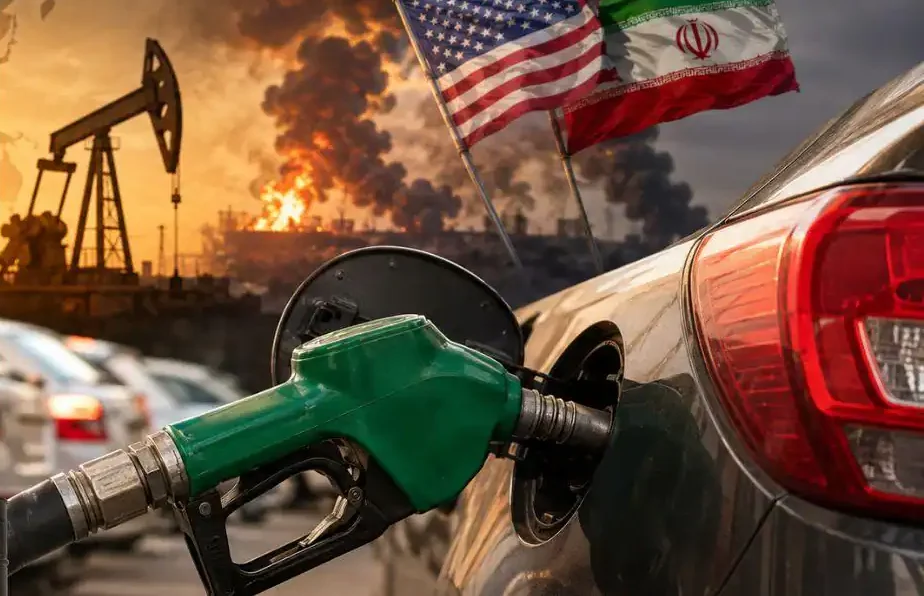
The Breaking Point: Why Retail Freezes Collapsed Post-Elections
Prior to the current adjustment, state-backed fuel retailers had effectively insulated domestic consumers from market shocks. Retail fuel rates remained frozen for approximately 10 weeks despite a cascading geopolitical crisis in West Asia. This strategic stability coincided with high-stakes assembly elections across multiple Indian states, including crucial regional contests in Assam, Kerala, Tamil Nadu, and West Bengal.
However, keeping standard pricing structures fixed while international crude benchmarks careened past historic safety thresholds created extreme operational strain for state-backed fuel entities. According to recent statements from the Ministry of Petroleum and Natural Gas, Indian public sector refiners were experiencing joint operating deficits climbing toward nearly ₹1,000 crore per day during the absolute height of international oil volatility.
The cumulative fiscal strain on public enterprises over the past 76 days is estimated to have neared the ₹1 lakh crore ceiling. While private retailers such as Shell and Nayara Energy deployed independent marginal hikes as early as March and April to preserve corporate margins, state oil marketing giants had fully depleted their lower-cost fuel inventories accumulated during the opening weeks of the year, rendering the ₹3 across-the-board hike a structural necessity.
Fiscal Reality vs. Consumer Shielding
While peer developing nations passed on the full volume of global energy shockwaves to consumers immediately—triggering immediate double-digit utility updates—India held its retail energy line for over two months, drawing deeply down on strategic inventories before allowing this measured baseline adjustment.
New Retail Metrics: City-Wise Fuel Breakdowns
The newly enacted price corrections apply uniformly to the base cost structures of regular and high-octane fuel products. However, due to regional discrepancies in domestic transportation logistics and the compounding effects of state-level Value Added Tax (VAT) policies, the ultimate out-of-pocket pricing at the pump varies heavily from state to state.
In the national capital of Delhi, standard retail petrol values rose to ₹97.77 per litre, climbing upward from its earlier static line of ₹94.77. Simultaneously, diesel within the capital shifted to ₹90.67 per litre, up from ₹87.67. Western and eastern urban industrial centers continue to see heavier retail pricing structures, with Kolkata pushing past the psychological barrier of ₹108 per litre.
Revised Fuel Tariff Structure Across Major Indian Metros
| Metro Location | Old Petrol Rate (₹/L) | New Petrol Rate (₹/L) | Old Diesel Rate (₹/L) | New Diesel Rate (₹/L) |
|---|---|---|---|---|
| New Delhi | 94.77 | 97.77 | 87.67 | 90.67 |
| Mumbai | 103.54 | 106.68 | 90.03 | 93.14 |
| Kolkata | 105.45 | 108.74 | 92.02 | 95.13 |
| Chennai | 100.84 | 103.67 | 92.39 | 95.25 |
| Bengaluru | 99.90 | 102.92 | 85.80 | 88.92 |
The Geopolitical Catalyst: The 2026 Strait of Hormuz Crisis
The root cause of domestic price adjustments rests entirely outside of local economic controls. International energy analytics characterize the ongoing conflict involving Iran, the United States, and Israel as the most aggressive disruption to global maritime trade since the 1970s energy crisis. The core point of friction centers on the complete operational blockade of the Strait of Hormuz by the Islamic Revolutionary Guard Corps (IRGC), which began in early March.
The Strait of Hormuz functions as the singular maritime exit for the Persian Gulf, managing roughly 20% of global petroleum supplies and a massive chunk of liquefied natural gas (LNG) volumes bound for Asian industrial hubs. The implementation of severe war-risk insurance premiums—surging from an initial base of 0.125% up to a crippling 0.4% of entire vessel values per transit—has effectively forced international container lines and massive crude supertankers to stall operations or completely bypass the Gulf.
This maritime chokehold immediately sent international benchmark crude soaring. Brent crude values, which sat comfortably at a baseline of $70 to $72 per barrel in early February, spiked past $120 per barrel during the initial waves of maritime strikes. While the introduction of emergency supply diversions through Saudi Arabian overland pipelines and strategic inventory releases from Western reserves have managed to pull benchmarks down slightly, crude prices remain heavily elevated at roughly $110 per barrel.
The Cascading Impact on the Indian Domestic Economy
As the world’s third-largest importer and consumer of crude oil, India maintains an acute structural vulnerability to Persian Gulf shipping channels. Approximately 30% of total Indian crude shipments navigate directly through the Strait of Hormuz, linking domestic refineries to long-term supply partners in Iraq, Saudi Arabia, and Kuwait.
The domestic economic ripples of this combined fuel and gas revision are projected to influence several core manufacturing and commercial sectors over the upcoming quarters:
- Logistics and Intercity Freight: National freight transport associations anticipate an immediate 3.5% to 5% escalation in long-haul truck operational costs. Fleet operators, already dealing with elevated component costs, are poised to pass these freight expenses onto manufacturing clients.
- Wholesale and Retail Inflation: The underlying wholesale fuel inflation baseline for April had already jumped to an elevated 42-month high of 8.3%, accelerated by surging international secondary distillates. Economists project that the latest retail price hike will apply a parallel upward push to the Consumer Price Index (CPI), which previously read at 3.48% for April.
- Agriculture and Production Costs: Because diesel remains the primary energy source for decentralized irrigation pumps and regional tractor transport across agricultural belts, food logistics lines are expected to encounter marginal inflationary pressure ahead of the summer crop distributions.
The CNG Dilemma: Alternative Commuting Under Structural Strain
The parallel ₹2.00 per kg increase in Compressed Natural Gas (CNG) pricing represents a major operational challenge for urban mass transit networks and commercial cab providers. Over the past several months, record numbers of urban vehicle owners shifted their daily transport configurations from petrol to factory-fitted CNG systems, seeking shelter from standard fuel volatility.
This rapid, mass migration has put immense pressure on local city gas distribution networks. In regions across Maharashtra, Gujarat, and the National Capital Region (NCR), commuters report extensive lines at refueling stations, with stations operating under strict allocation protocols due to broader international shortfalls in spot LNG shipments. Commercial cab syndicates have already initiated internal discussions to raise basic per-kilometer ride rates by ₹2 to ₹3 to counter the shrinking profitability of green fleets.
Political Repercussions and the Path Forward
The sudden timing of the price announcement—occurring right after the conclusion of key regional voting windows—has drawn immediate, sharp criticism from opposition political coalitions. Senior leaders from the Indian National Congress and various regional chief ministers have forcefully condemned the central government’s fiscal directives, classifying the delayed price adjustments as an intentional strategy to protect electoral performance rather than consumer welfare.
In response, government sources clarify that the delayed revision was a planned fiscal cushion designed to give global energy markets enough window to potentially clear maritime backlogs. With the diplomatic stand-off in Beijing showing prolonged bottlenecks regarding a definitive maritime ceasefire, the government had to act to prevent a systemic rating downgrade for public energy enterprises.
To alleviate some of this immediate economic pressure, the Ministry of Petroleum is currently evaluating long-term supply swaps with Atlantic Basin exporters. India is actively looking to increase direct shipments from the United States, Brazil, and Guyana, while also utilizing alternative overland routes out of Saudi ports that terminate cleanly along the Red Sea. Until these alternative shipping routes are fully functioning, domestic industries and retail consumers will have to adjust to this new, higher cost environment.