



Iran’s Mumbai Consulate Post Praising India Sparks Viral Trend
“Gyaan bhi aur swag bhi” – The Consulate General of the Islamic Republic of Iran in Mumbai has become a trending talking point after amplifying a politically charged message on Israel–Palestine and adding a warm, meme‑style tribute to India’s cultural and intellectual heritage.
How a Diplomatic Account Went Viral
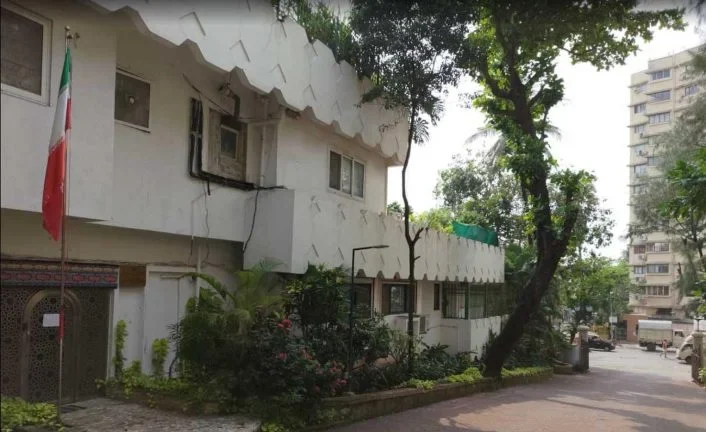
The Consulate General’s X (Twitter) handle, @IRANinMumbai, reposted a politically charged thread originally shared by an external user, focusing on the Israel–Palestine conflict, colonial history, displacement, and Israel’s occupation of the West Bank and Gaza. The consulate’s team added its own caption framing India as a nation that historically opposed the colonial division of Palestine, reinforcing Tehran’s stance on Palestinian rights.
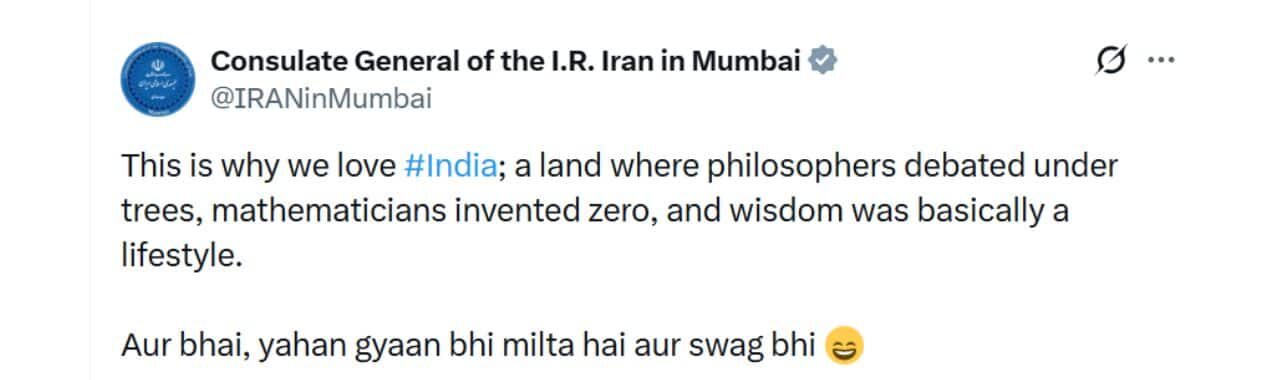
What truly caught the internet’s eye, however, was the consulate’s tone. Alongside the serious geopolitical commentary, it described India as “a land where philosophers debated under trees, mathematicians invented zero, and wisdom was basically a lifestyle.” The post ended with a Hindi line: “Aur bhai, yahan gyaan bhi milta hai aur swag bhi” (“And brother, here you get both knowledge and style”), giving it a distinctly local, meme‑friendly flavour.
A “Soft Spot” for India on Social Media
Within hours, the post went viral, with thousands of users praising the consulate’s blend of political messaging and cultural appreciation. Many netizens pointed out that the wording and register sounded so Indian that comments like “I’m 100% sure the X admin here is Indian” were widely shared, highlighting how naturally the consulate’s language wove into local internet culture.
This latest post fits a micro‑trend where the Iranian consulate in Mumbai has begun using a more conversational, almost playful tone on social media. Earlier exchanges already showed Iranian diplomats responding candidly to casual questions about working in Mumbai or hiring Indian staff, earning labels like “soft spot for India” from Indian observers. The new “gyaan bhi aur swag bhi” note feels like a conscious push to position Iran as a culturally aware, friendly player in India’s social‑media ecosystem.
“India’s intellectual legacy—from ancient philosophy to modern science—is something that many global audiences admire, but it is rare to see a foreign consulate celebrate it in such a casual, meme‑friendly way.”
Israel–Palestine Subtext Behind the “Trend”
At its core, the repost is not just about India; it is also a pointed statement on the Israel–Palestine conflict. The original message reiterated that in 1947 India voted against the colonial division of Palestine, and that the 1948 displacement of Palestinians and later occupation of the West Bank and Gaza have been central injustices in the region. By resharing this, the consulate underscores Tehran’s long‑standing critical stance toward Israel and its alignment with Palestinian narratives.
Yet the consulate’s framing softens the edge for Indian audiences. Instead of a formal diplomatic note, users read a fusion of hard‑line politics and a friendly, almost fandom‑style salute to India’s heritage. This duality has sparked varied reactions: some applaud the praise, others question mixing international politics with lighthearted banter, and a few worry that the meme‑tone could dilute the seriousness of the underlying message.
Why Indian Netizens Loved the “Gyaan + Swag” Vibe
The phrase “gyaan bhi milta hai aur swag bhi” instantly resonated with Indian language patterns, where “gyaan” (knowledge) and “swag” (style) regularly appear in youth slang and influencer culture. By borrowing this register, the consulate transformed an official‑sounding tribute into a relatable, share‑worthy punchline—perfect for meme‑makers and quote‑e makers.
Users began circulating the line in graphics, edits, and reaction videos, sometimes pairing the Iranian consulate’s logo with Indian icons such as the Indian flag, scholars, and tech‑savvy youth to visually reinforce the “India as knowledge hub” image. The post, in effect, became a cultural handshake across borders: Iran acknowledging India’s civilizational depth, and Indians embracing that praise in their own digital idiom.
Changing Face of Modern Diplomacy
This episode underscores how diplomatic communication is no longer confined to note‑verbal exchanges and press releases. Consulates and embassies now use social‑media platforms as auxiliary theatres of foreign policy, where a well‑chosen joke, a culturally rooted phrase, or a meme‑style caption can shape public perception as much as a formal statement.
Iran’s Mumbai consulate, with its recent posts, is clearly targeting younger Indian audiences who consume politics not just through news channels but also through X threads, Instagram reels, and meme‑ed content.By mixing a critique of Israel with a celebratory nod to India’s thinkers and mathematicians, the account advances Iran’s geopolitical messaging while also building a softer, friendlier image in India itself.
India–Iran Ties in the Digital Age
India and Iran have long shared economic and cultural links, with Mumbai’s consulate playing a key role in visa services, student exchanges, and business outreach. In recent years, the consulate has also used social media for lighter engagement—replying to job‑related queries, posting event photos, and even teasing about “hiring Indians” in the media team.
The latest viral post now adds another layer: a **digital diplomacy playbook** tailored for India’s meme‑driven online culture. For New Delhi, this kind of soft‑diplomacy signalling from Tehran can matter beyond headlines; it shapes how Indian audiences view Iran at a time when the region is under constant geopolitical stress.
Reactions from the Indian Internet
Online reactions have been mixed but largely positive in tone. Many users praised the consulate for appreciating India’s history, calling the post “classy” and “unexpectedly humble” for a foreign diplomatic handle. A popular comment line—“they sound like an Indian meme page”—underscored how seamlessly the consulate’s language mapped onto local internet humour.
At the same time, some commentators questioned whether foreign missions should use such informal language to amplify politically charged narratives. They argued that couched in a meme‑style tone, serious geopolitical statements might lose nuance or be misread by casual scroll‑ers. Others, however, saw the post as a sign that Iran is trying to connect with Indians on emotionally and culturally familiar ground, rather than speaking only through rigid diplomatic jargon.
What This Trend Tells Us About Public‑Diplomacy 2026
The viral moment around the Iranian consulate highlights three key trends in contemporary public diplomacy:
-
>Local‑language resonance – Global missions now deploy Hindi and region‑specific slang to build rapport with Indian audiences.
>Politic‑meme fusion – Serious political messages are being packaged with meme‑like captions that help them trend organically.
>Account‑voice humanization – Indian‑style humour and “soft spot” branding make foreign consulates feel more relatable, not just official.
For India, this shift means that foreign‑office narratives are no longer just read in newspapers; they are also shared, edited, and mocked across social‑media platforms. A consulate’s “voice” and editing choices can, therefore, quietly influence how a generation perceives long‑running disputes like the Israel–Palestine question.
Tags:
Like and Follow State Correspondents Facebook Page Latest International News Iran US War Subscribe for alerts© 2026 State Correspondents. All rights reserved.