




Nitish Kumar Quits as Bihar CM: Sources Confirm Rajya Sabha Move, Son Nishant Poised for Deputy CM Role in Historic Reshuffle
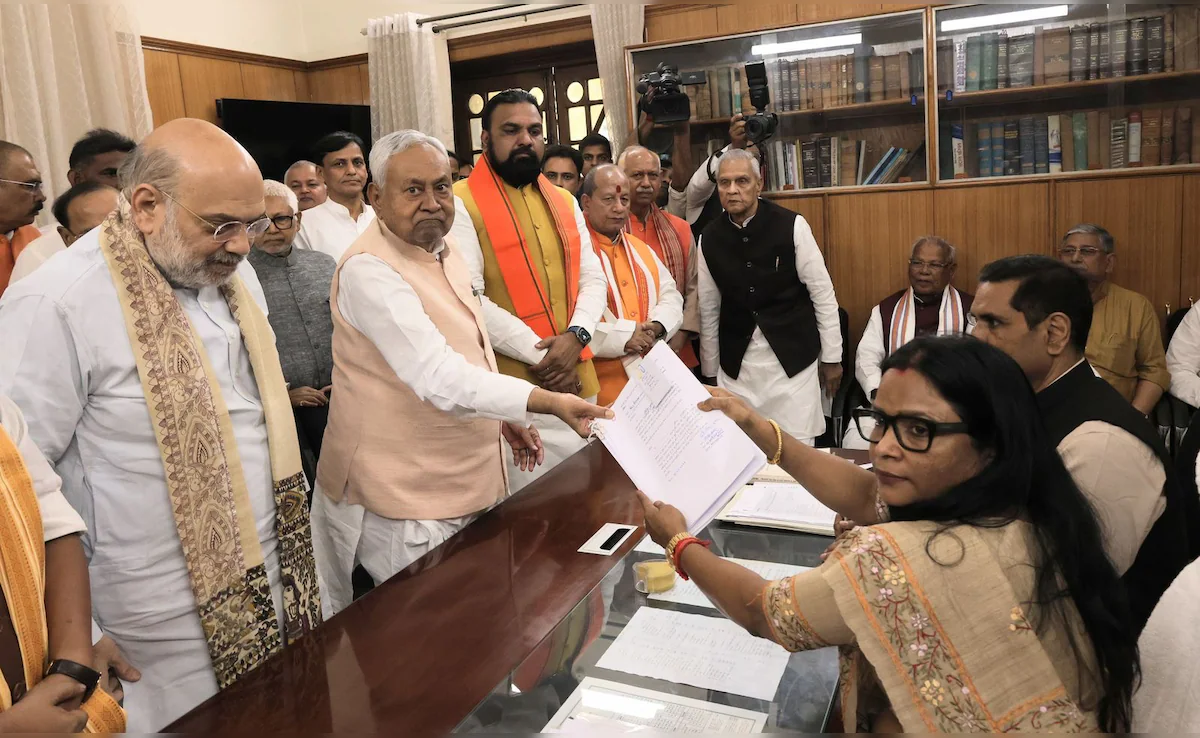
In a seismic shift that has electrified Bihar’s political landscape, Chief Minister Nitish Kumar has effectively quit as Bihar CM, filing his nomination papers for the Rajya Sabha on March 5, 2026. Sources within the Janata Dal (United) reveal that the veteran leader, who has helmed the state for nearly two decades across multiple alliances, plans to step down post-election on March 16, paving the way for a dramatic NDA reshuffle.
The move, confirmed by senior JD(U) functionaries, positions Kumar’s son, Nishant Kumar, as a frontrunner for the Deputy Chief Minister post, marking the younger Kumar’s formal entry into active politics. With Union Home Minister Amit Shah reportedly in Patna to oversee the transition, speculation is rife that a BJP leader could become Bihar’s first-ever Chief Minister from the saffron party, ending Kumar’s dominance in state politics.
The Rajya Sabha Nomination: A Calculated Exit Strategy
Nitish Kumar’s decision to contest the Rajya Sabha from Bihar comes at a time when his party holds a comfortable majority in the state assembly, ensuring an unopposed victory. Accompanied by NDA allies, Kumar submitted his papers at the Bihar Legislative Assembly, a ceremony attended by heavyweights like Deputy CM Samrat Choudhary and Union Minister Ramnath Thakur, who filed alongside him as JD(U)’s second candidate.
Party insiders indicate that Kumar, who turned 75 last week, will remain in office until April 9—the end of the current Rajya Sabha term— allowing time for a smooth handover. This interim period will see an NDA legislative party meeting to formalise the new leadership, potentially making Kumar a member of all four legislative houses: Bihar Vidhan Sabha, Vidhan Parishad, Lok Sabha, and now Rajya Sabha.
Nishant Kumar’s Rise: From Shadows to Deputy CM Contender
All eyes are on Nishant Kumar, Nitish’s son and a low-profile engineer-turned-social worker, who is expected to join the JD(U) formally today at the party headquarters on Beerchand Patel Marg. Senior leaders like Vijay Kumar Chaudhary have endorsed his political debut, stating that “all JD(U) workers want Nishant to step up.” Sources suggest Nishant could be appointed Deputy CM alongside a second from the BJP, balancing the coalition dynamics.
Nishant’s elevation has sparked debates on political dynasties, but allies defend it as a natural succession in a family deeply rooted in Bihar’s governance. His recent activities, including youth outreach and party organisational work, have positioned him as a bridge between Nitish’s old guard and a new generation.
BJP’s Historic Opportunity: Bihar’s First Saffron CM?
The real intrigue lies in who succeeds Nitish as CM. With the NDA’s landslide victory in the 2025 assembly polls still fresh, BJP is poised to claim the top job for the first time since 1990. Names like Union Minister Nityanand Rai, state BJP chief Samrat Choudhary, and others are doing the rounds, with Amit Shah’s presence fuelling expectations of a swift decision.
This would mark a culmination of BJP’s patient strategy in Bihar, where it has backed Nitish through multiple flips—from Mahagathbandhan to NDA—while building its base. The transition could reshape power-sharing, with JD(U) retaining key portfolios and Nishant as a counterbalance.
Timeline of Nitish’s Marathon Tenure and Frequent Switches
Nitish Kumar’s journey as Bihar CM began in 2005, interrupted briefly by health sabbaticals and alliances. His record 10th term post-2025 elections showcased NDA unity under PM Modi. Yet, health concerns and a desire for a national role have prompted this pivot to Rajya Sabha, where he can influence policy from Delhi.
Critics from the RJD camp decry it as a “dynastic handover,” but NDA leaders hail Kumar’s legacy in transforming Bihar from “jungle raj” to a development hub, crediting him for roads, electricity, and women’s empowerment schemes.
Reactions from Allies, Opposition, and Civil Society
JD(U)’s Vijay Kumar Chaudhary affirmed that “the decision rests with Nitish ji,” while BJP sources expressed optimism about a “stable, growth-oriented” future government. Opposition RJD, eyeing the fifth Rajya Sabha seat, slammed it as “pre-poll betrayal,” predicting instability.
Civil society in Patna sees it as a generational shift, with youth welcoming Nishant’s tech-savvy approach amid Bihar’s push for digital governance and industrial corridors. Economists note the timing aligns with upcoming budget sessions, ensuring continuity.
Implications for Bihar’s Development Agenda
Bihar’s growth trajectory—booming in manufacturing, tourism, and agriculture—stands to benefit from fresh leadership. A BJP CM could accelerate Centre-state synergies, unlocking funds for Ganga projects and smart cities. Nishant’s role might focus on youth employment and IT hubs, addressing the state’s migration crisis.
Challenges remain: coalition chemistry, opposition resurgence, and floods/climate resilience. Yet, the NDA’s assembly strength (185+ MLAs) promises stability till 2030 polls.
What Lies Ahead: Post-March 16 Scenarios
Post-election, expect a swift NDA meet, oath-taking by April, and cabinet expansion. RJD’s contest for the fifth seat could test waters, but unopposed wins for four seem likely. Nitish’s Rajya Sabha innings could see him champion federalism and Bihar’s special status.
As Patna buzzes with speculation—police cordons at JD(U) HQ and worker gatherings—this marks the end of an era.