



Israel Strikes Tehran Amid Day 5 of War: IRGC and Basij Facilities Razed; Over 1,000 Iranian Deaths Confirmed
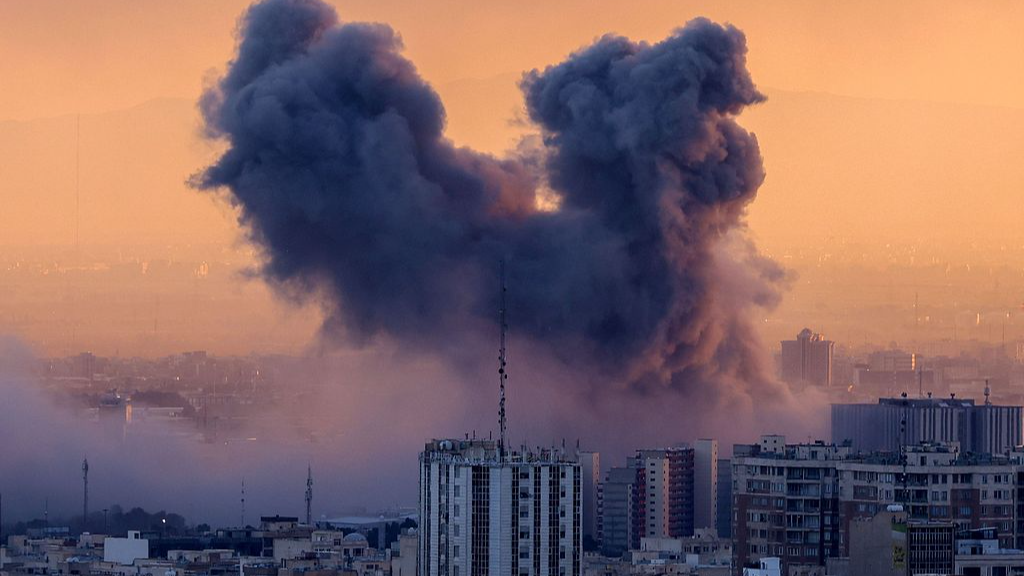
In a night of unprecedented violence that has pushed the Middle East to the brink of a total regional collapse, Israel launched a massive wave of airstrikes targeting the heart of Tehran. Entering Day 5 of a rapidly escalating conflict, the Israeli Air Force (IAF) focused its firepower on the nerve centres of the Iranian regime, including the Islamic Revolutionary Guard Corps (IRGC) headquarters and various Basij paramilitary facilities across the capital.
Initial reports from the Iranian Red Crescent and local medical sources suggest a catastrophic human toll, with over 1,000 deaths confirmed in Iran over the last 24 hours alone. The strikes have shattered the relative calm of the Iranian capital, causing widespread panic as anti-aircraft batteries lit up the night sky in a futile attempt to intercept precision-guided munitions. In immediate retaliation, Tehran launched hundreds of ballistic missiles and drones toward Israeli population centres, marking the most intense exchange of fire since the war began on March 1, 2026.
Day 5 of War: Precision Strikes on IRGC and Basij HQs
The latest round of Israeli operations, dubbed “Epic Fury” by some defence circles, was meticulously designed to decapitate Iran’s internal security and military command structures. According to official statements from the Israel Defense Forces (IDF), the targets included the Basij headquarters, the Tharallah command centre responsible for defending Tehran, and several missile production and storage sites in the western and southern districts of the city.
Witnesses in Tehran reported hearing at least a dozen massive explosions that rattled windows several kilometres away from the impact sites. State media confirmed that the blasts hit infrastructure in West Tehran and the southern port areas, while air defence sirens continued to wail long after the initial strikes. The IDF claimed that over 50 fighter jets participated in the mission, successfully neutralising radar systems and missile launch pads intended for use against the Israeli home front.
The Targeted Entities: IRGC, Basij, and Internal Security
The Basij, a paramilitary volunteer militia under the IRGC, has been a primary target for Israeli intelligence due to its role in domestic suppression and regional proxy management. By hitting these locations, Israel aims to disrupt the regime’s ability to coordinate ground-level resistance and internal security. Also hit was the Alborz Corps command, which oversees security for the Tehran District, further crippling the central government’s grip on the capital.
Iran’s Retaliation: Missile Barrages Target Jerusalem and Tel Aviv
As the dust settled in Tehran, the Iranian leadership vowed “no leniency” for the strikes. The IRGC launched its largest missile barrage of the week, with hundreds of projectiles crossing into Israeli airspace. While Israel’s “Arrow” and “Iron Dome” systems intercepted the majority of the threats, at least one cluster munition warhead reportedly impacted near the Tel Aviv metropolitan area, while another struck a target in West Jerusalem.
The scale of Iran’s retaliation indicates that despite the heavy bombardment of its storage facilities, its missile arsenal remains a potent threat. The psychological impact on Israeli citizens has been immense, with millions remaining in bomb shelters as sirens echoed from the Galilee in the north to the Negev desert in the south. The regional instability has reached a fever pitch, with neighbouring countries like Jordan and Turkey reportedly intercepting stray projectiles in their airspace.
Casualty Figures Rise Above 1,000
The humanitarian situation in Iran is deteriorating rapidly. With over 1,000 deaths confirmed across 24 provinces, hospitals in Tehran are overwhelmed with burn victims and trauma cases. The Red Crescent of Iran has issued an emergency appeal for medical supplies, noting that a significant portion of the casualties includes personnel from targeted military sites, though the high-density nature of Tehran means civilian neighbourhoods adjacent to IRGC facilities have also suffered “collateral damage.”
The loss of life is not limited to the capital. Strikes have been reported in the southern port of Bandar Abbas and the northwestern city of Tabriz. In the Indian Ocean, the conflict claimed the IRIS Dena warship, sunk by US forces just days prior, adding to the mounting list of Iranian naval and land-based losses. The death toll is expected to rise as search and rescue teams dig through the rubble of destroyed command centres.
Global Economic and Geopolitical Fallout
The direct strike on Tehran has sent shockwaves through global markets. Oil prices have surged to unprecedented levels as the Strait of Hormuz remains a flashpoint of tension. In India, the impact is being felt through rising fuel prices and concerns for the safety of the Indian diaspora in the Gulf region. The Ministry of External Affairs in New Delhi has activated a 24/7 control room, as over 1,100 Indian sailors remain stranded in the Persian Gulf due to the escalating hostilities.
Politically, the 2026 war has divided the international community. While the United States has openly supported Israeli operations, providing intelligence and conducting its own strikes on Iranian assets in the Indian Ocean, other global powers have called for an immediate ceasefire to prevent a global conflagration. The UN Security Council is scheduled to meet in an emergency session, though a resolution remains unlikely given the hardened stances of both Tehran and Jerusalem.
Strategic Analysis: Why Tehran, Why Now?
Military analysts at State Correspondents suggest that the decision to strike Tehran directly represents a shift in Israeli strategy from containment to deterrence through destruction. By hitting the IRGC and Basij within the capital, Israel is sending a clear message: no part of the Iranian regime is safe. This move follows months of escalating proxy attacks from Lebanon and Iraq, which the IDF now considers an “official declaration of war” by the Iranian state.
The timing is also critical. With Iranian leadership reportedly divided on how to handle the “Generation Z” uprising in Nepal and shifting alliances in the East, Israel has capitalised on a moment of perceived internal pressure within Iran to deliver a crippling blow to its military-industrial complex. However, the risk of a “cornered cat” scenario remains, as Iran’s conventional missile capabilities could still inflict significant damage on Israeli infrastructure if the conflict continues into a second week.
What to Expect on Day 6 and Beyond
As the sun rises over a scarred Tehran on March 5, 2026, the world waits to see if diplomatic channels can be opened. Currently, there are no signs of a de-escalation. Israel has vowed to continue strikes “with full force” for every projectile fired at its home front. Meanwhile, the IRGC has reportedly moved its remaining missile assets to underground “missile cities,” preparing for a prolonged war of attrition.
For the citizens of both nations, the cost is already too high. With thousands dead, major cities under fire, and the global economy in turmoil, the Day 5 strikes on Tehran may well be remembered as the moment the Middle East changed forever. State Correspondents will remain on the front lines of this story, providing verified updates as they happen.