

UN Security Council Rebukes US Over Venezuela Military Operation; Allies Join Condemnation Of Maduro Capture
Emergency Session And Global Condemnation
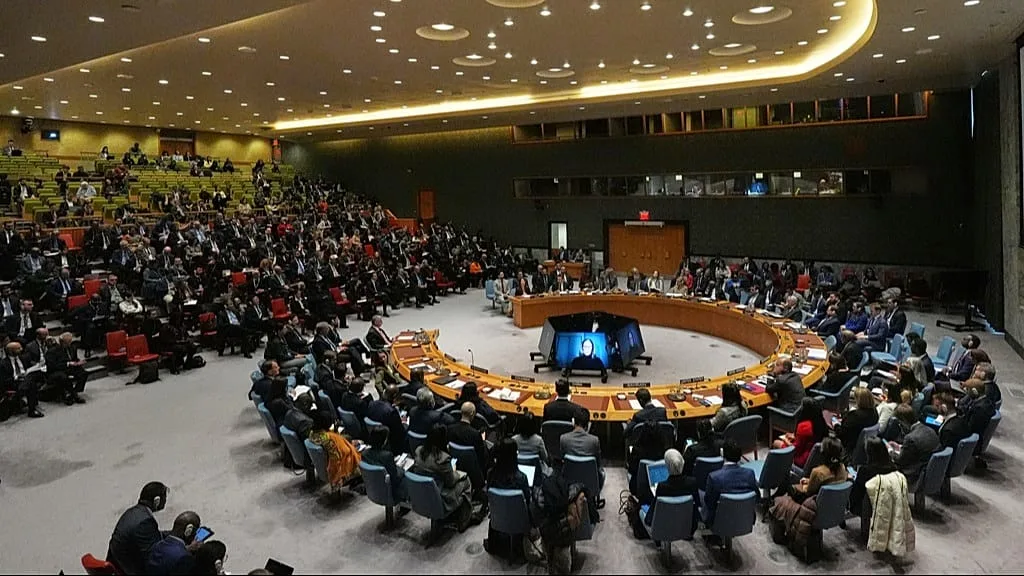
The UN Security Council convened an urgent meeting on Monday (January 5, 2026) following a dramatic US military operation in Venezuela over the weekend that resulted in the capture and detention of President Nicolás Maduro, with UN Secretary-General António Guterres warning that the Trump administration may have violated the UN Charter.
In a statement delivered by Under-Secretary-General for Political Affairs Rosemary DiCarlo, Guterres emphasised that the Council was meeting “at a grave time” and invoked the bedrock principle prohibiting the use of force against the territory and independence of any state, calling for “full respect” for the UN Charter.
Even US Allies Condemn The Operation
In a striking departure from typical diplomatic dynamics, France’s deputy ambassador criticised the military operation and Maduro’s detention, asserting that the action “erodes the very foundation of international order” and undermines the principles of sovereignty and peaceful dispute resolution.
The Colombian ambassador remarked that the situation echoed past instances of American intervention in Latin America and accused the United States of jeopardizing “international peace and security,” while emphasising that it is essential for Venezuelans to determine their own political destiny without external military interference.
What Happened In Venezuela
The US military operation unfolded across Caracas and the northern states of Miranda, Aragua and La Guaira on January 3, 2026, though the full extent of casualties and operational details remain unclear, with reports suggesting a multi-pronged incursion targeting government facilities and presidential security infrastructure.
The Trump administration has defended its actions by citing Article 51 of the UN Charter, which permits measures taken in self-defense, and referenced ongoing concerns about drug trafficking, though critics argue that the capture of a sitting head of state far exceeds the scope of counter-narcotics operations.
Venezuelan Response And Regional Alarm
Venezuela’s UN ambassador, Samuel Moncada, remained grave throughout the Security Council meeting and warned that if the “kidnapping of a head of state and bombings are accepted or minimized, the message to the world is catastrophic — that the law is optional and that force is the true arbiter of international order.”
Caracas has formally requested that the Security Council declare the US action illegal and issue a statement affirming the absolute respect for the sovereignty, political independence and territorial integrity of nations, specifically mentioning Venezuela.
International Reactions Beyond The UN
China’s Ministry of Foreign Affairs said it was “deeply shocked and strongly condemns the US for recklessly using force against a sovereign state and targeting its president,” adding that the attack “seriously violated international law, violated Venezuela’s sovereignty, and threatened the peace and security of Latin America and the Caribbean.”
South Africa’s Department of International Relations released a statement viewing the US actions “as a manifest violation of the Charter of the United Nations,” noting that the Charter “does not authorise external military intervention in matters that are essentially within the domestic jurisdiction of a sovereign nation.”
Limited Council Action Due To US Veto Power
Despite the widespread condemnation, the Security Council’s ability to take concrete action remains severely constrained because the United States holds veto power as a permanent member, meaning any resolution condemning or reversing the operation would be blocked.
The council’s session, convened at the request of Venezuela, Russia and China, serves primarily as a forum for diplomatic protest and public pressure rather than a mechanism capable of reversing the US military action or compelling the release of President Maduro.