



Army Steps Up Winter Patrols Along LoC In Jammu Amid Low Snowfall, Tightens Anti-Infiltration Grid
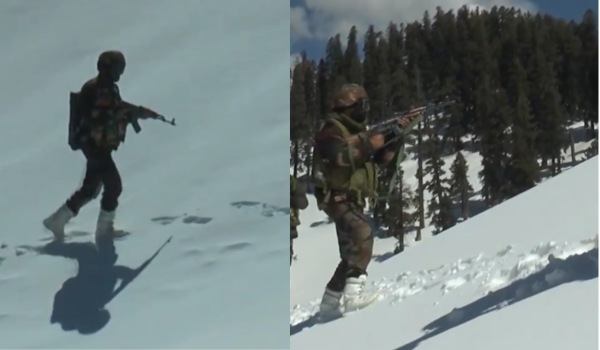
The Indian Army has intensified winter patrols in the higher reaches of the Jammu region, keeping a close watch over sensitive stretches of the Line of Control as traditional infiltration routes remain open due to the absence of heavy snowfall so far. Troops have been tasked with maintaining round‑the‑clock vigil on high ridgelines, dense forests and mountain passes that usually become inaccessible once deep snow sets in.
Winter Vigil Tightened Along Vulnerable Stretches
Defence sources said units deployed in forward areas of the Jammu division have strengthened their presence on dominating heights overlooking the LoC and key nullahs that have historically been used by infiltrators. Areas with thick forest cover and natural caves, including belts of Rajouri, Poonch and adjoining high terrain, are receiving special focus under the winter security plan.
Unlike normal winters, a lack of sustained heavy snowfall has kept many tracks open, forcing the Army to retain a summer‑like density of deployment instead of thinning out and pulling troops back to the hinterland. Officials say fog, low visibility and reduced civilian movement during the cold months can provide cover for small groups of infiltrators unless the grid remains fully active.
Use Of Technology And Joint Operations
To strengthen surveillance, formations in the sector are using unmanned aerial vehicles, long‑range observation devices, thermal imagers and ground sensors to monitor ridges, forest gaps and traditional crossing points. Patrols are also supported by communication networks that allow near real‑time sharing of inputs between forward posts, company operating bases and higher headquarters.
The Army is conducting joint operations with Jammu and Kashmir Police and other security agencies to track down suspected over‑ground worker networks and prevent them from providing logistics support to infiltrators. Search operations have been intensified in forested pockets where militants in the past have tried to use caves and underground bunkers to evade detection.
Threat Perception And Recent Attempts
Intelligence inputs suggest that a number of trained militants remain stationed at launch pads across the LoC, waiting to exploit any window created by weather or gaps in deployment. Officials point out that infiltration attempts typically rise before high passes close for the season, and that recent bids in sectors such as Uri and Poonch underline the continuing threat.
In one recent incident in the Uri sector, alert troops detected suspicious movement near forward posts and forced infiltrators to retreat after a brief exchange of fire, following which search operations were launched across nearby ridges and forest belts. Security forces maintain that an aggressive posture along the LoC, combined with village‑level intelligence in border districts, has been key to keeping infiltration numbers under control in the past few seasons.
Civilian Areas And Advisory
While the enhanced deployment is concentrated along the LoC and higher reaches, authorities have reassured residents in border villages that routine life will not be disrupted and that the measures are purely preventive in nature. Local communities have been urged to immediately inform security forces about any suspicious movement, unfamiliar faces or sudden activity in forested areas near their hamlets.
Officials say the overarching aim is to maintain a robust, layered counter‑infiltration grid through the winter months so that no group can establish fresh bases on the Indian side. Units deployed in Jammu region are expected to remain on heightened alert until heavy snowfall naturally closes higher routes or the threat assessment changes.