

PM Modi Urges Unity on Women’s Reservation Bill: Lok Sabha Expansion to 850 Seats in Parliament Showdown
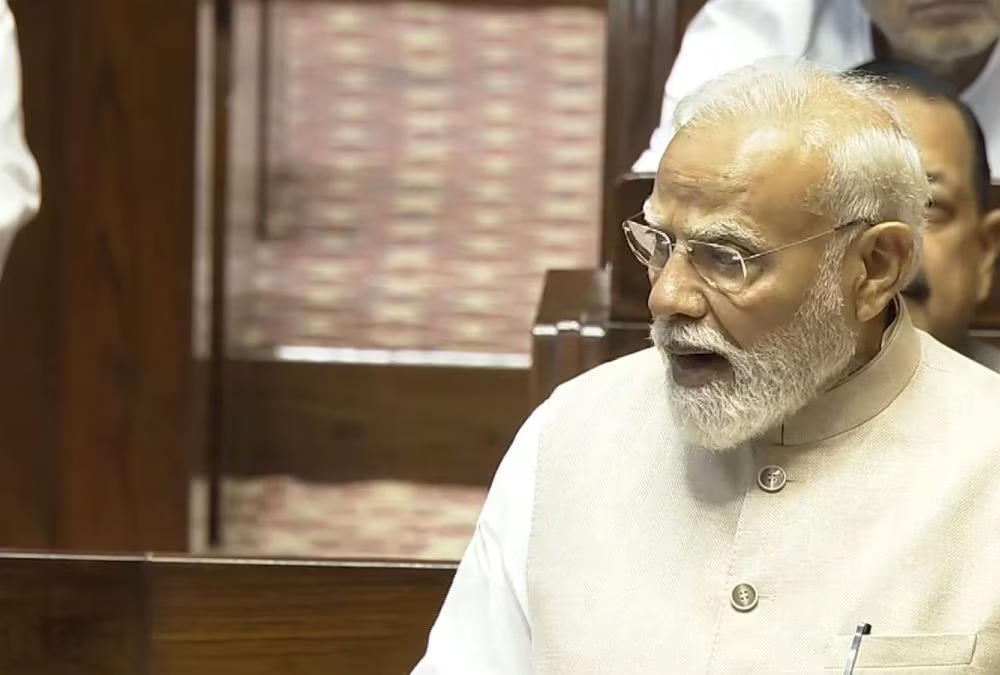
New Delhi, April 17, 2026 – In a charged atmosphere gripping the nation’s capital, Prime Minister Narendra Modi made a passionate plea to Members of Parliament (MPs) today, calling for unanimous support on the pivotal Women’s Reservation Bill. Describing the moment as one to “create history,” PM Modi emphasized unity across party lines, noting that “crores of women across India are watching with bated breath.” This comes amid a high-stakes special Parliament session where the Constitution (131st Amendment) Bill and Delimitation Bills are under intense debate. The Centre’s bold proposal to expand Lok Sabha seats to a maximum of 850 aims to operationalize the 33% women’s quota swiftly.
The Historic Push: From Nari Shakti Vandan Adhiniyam to Implementation
The Nari Shakti Vandan Adhiniyam, passed unanimously in 2023 as the 106th Constitutional Amendment, promised one-third reservation for women in Lok Sabha, state assemblies, and Delhi Legislative Assembly. However, its rollout hinged on a census and delimitation process, delaying benefits until potentially post-2031. Now, the government is accelerating this through the special three-day session from April 16-18, introducing amendments to bypass traditional timelines.
PM Modi’s intervention today highlighted the transformative potential: “India’s democracy will become stronger and more vibrant with women at the helm.” He referenced grassroots successes, where over 15 lakh women lead panchayats, crediting initiatives like Beti Bachao Beti Padhao and Ujjwala Yojana for paving the way. Opposition leaders, while supportive in principle, raised concerns over linking the quota to delimitation, fearing it disadvantages certain states.
Lok Sabha Expansion: 850 Seats and Delimitation Dynamics
At the heart of the debate is the Constitution (131st Amendment) Bill, 2026, proposing to hike Lok Sabha’s strength from 543 to up to 850 seats. This expansion, tied to a fresh delimitation based on the 2011 Census (with pending 2021 data), would allocate approximately 273 seats for women through rotation across constituencies. State assemblies and Union Territories would see similar increases.
The Delimitation Bill outlines the process, empowering a commission to redraw boundaries for equitable representation. Proponents argue this addresses population shifts since 1971, ensuring southern states aren’t penalized for better family planning. Critics, including Congress, decry it as a “northern bias,” demanding discussions before voting. A division vote saw 251 in favor and 185 against in Lok Sabha.
- Current Lok Sabha: 543 seats
- Proposed Max: 850 seats (effective ~816 post-reservation)
- Women’s Quota: 33% (~273 seats)
- Timeline: Effective by 2029 elections if passed
- Related Bills: UT Laws Amendment for uniform application
Political Battleground: Whips, Debates, and Women’s Voices
The BJP issued a three-line whip, mandating full attendance, signaling no room for absenteeism. PM Modi’s letter to floor leaders underscored the urgency: “Implement in true spirit for 2029 polls.” Opposition figures like Sonia Gandhi reiterated concerns over delimitation linkage, while Rahul Gandhi called for broader electoral reforms.
Women MPs from various parties voiced support. BJP’s Smriti Irani hailed it as “empowerment milestone,” while TMC’s Mahua Moitra questioned execution timelines. Outside Parliament, women’s groups rallied, chanting “Nari Shakti Zindabad,” amplifying the bill’s grassroots appeal.
Historical Context and Road Ahead
Women’s reservation journey dates to 1993 Panchayati Raj amendments, reserving 33% seats locally. National push gained momentum under Atal Bihari Vajpayee (2008 Bill, lapsed) and now Modi 2.0. The 2023 passage was unanimous, but implementation stalled. Today’s session revives hopes, with voting expected soon.
Challenges persist: Rotation of reserved seats every decade could disrupt constituencies, and OBC/SC/ST sub-quotas remain undefined. Legal experts predict Supreme Court scrutiny. Yet, PM Modi envisions it as cornerstone of Viksit Bharat by 2047.
Regional Ripples and Jammu & Kashmir Angle
For regions like Jammu & Kashmir, the bill promises enhanced female representation post-Article 370 abrogation. Local women leaders eye assembly seats, aligning with UT quota extensions.
A Step Towards Gender Justice?
As Parliament deliberates, the Women’s Reservation Bill stands at democracy’s crossroads. PM Modi’s clarion call resonates: End decades of waiting. With 850-seat expansion and delimitation, India edges closer to inclusive governance. Stay tuned to State Correspondents for live updates. Will history be made today?
Tags: Women's Reservation Bill, PM Modi, Parliament 2026, Nari Shakti, Delimitation