



PM Modi Unveils Rs 18,000 Crore Delhi Metro Expansion on Women’s Day: A Boost for Capital Connectivity
March 10, 2026 | State Correspondents News Desk
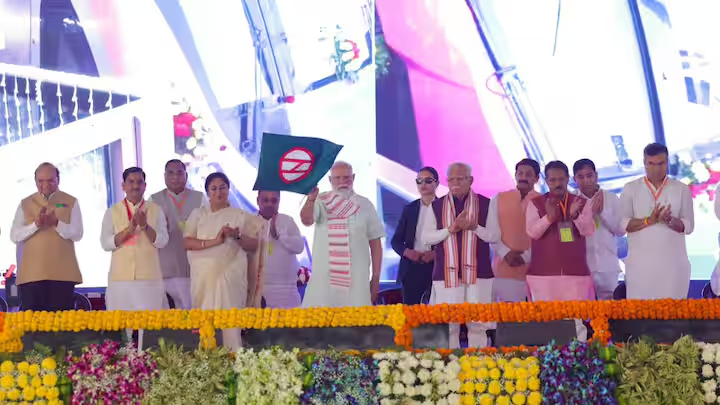
Prime Minister Narendra Modi has gifted the national capital a transformative transit upgrade, inaugurating two key Delhi Metro corridors valued at over Rs 18,000 crore on International Women’s Day, March 8. The launch not only completes the country’s first full ring metro line but also lays the groundwork for future expansions, symbolizing empowerment and progress for millions of commuters, especially women.
Key Highlights: Majlis Park-Maujpur-Babarpur Pink Line (12.3 km, 8 stations), Deepali Chowk-Majlis Park Magenta extension (9.9 km, 7 stations), and foundation stones for three Phase V(A) corridors totaling 16.1 km.
A Timely Tribute to Nari Shakti
The event at DDA Utsav Sthal resonated deeply with Women’s Day themes, as PM Modi praised the role of women in nation-building—from metro construction workers to daily riders benefiting from safer, faster travel. Delhi Chief Minister Rekha Gupta hailed it as a “huge gift for women’s safety,” noting enhanced access to areas like Burari, Bhajanpura, and Haiderpur Badli Mor.
Modi emphasized the double-engine government’s synergy post-BJP’s Delhi victory, crediting accelerated development for timely delivery. “This expansion embodies Nari Shakti’s new energy in every sector,” he stated, linking it to broader empowerment initiatives like Ladli Scheme aid for 70,000 girls and free cancer vaccines.
Pink Line Completes Historic Ring: 71.56 Km Loop
The Majlis Park-Maujpur-Babarpur stretch (12.3 km elevated, 8 stations) closes the Pink Line into a seamless 71.56 km ring, revolutionizing east Delhi connectivity. Stations like Jagatpur-Wazirabad, Sonia Vihar, and Khajuri Khas now link underserved pockets, slashing travel times by up to 50% and easing road congestion.
Engineering marvels include a Yamuna bridge and double-decker viaduct blending metro tracks with flyovers, showcasing indigenous innovation. Daily ridership is projected to surge by 2 lakh, reducing emissions equivalent to 50,000 cars annually.
Magenta Extension: Highest Elevated Stretch at 28m
The 9.92 km Deepali Chowk-Majlis Park extension on Magenta Line features seven elevated stations, peaking at 28.36 meters—one of India’s tallest. Areas like Madhuban Chowk, Prashant Vihar, and Bhalaswa gain direct airport and city access, benefiting IT hubs and residential belts.
This corridor extends Botanical Garden-Krishna Park services, fostering balanced growth in northwest Delhi. Commuters from Rohini and Pitampura can now bypass bottlenecks, saving hours weekly.
Phase V(A) Foundations: Future-Proofing NCR Transit
PM Modi laid stones for three corridors: 9.913 km underground Central Vista (RK Ashram Marg-Indraprastha), 2.263 km Aerocity-IGI T1 Golden Line underground, and 3.9 km elevated Tughlakabad-Kalindi Kunj Golden Line—totaling 16.1 km.
These Rs 33,500 crore projects (including housing) integrate Central Secretariat, airport ops, and trans-Yamuna links, eyeing 2028 completion. They promise seamless airport-metro integration and heritage zone access.
Women-Centric Design and Empowerment Focus
New stations boast women-only coaches, enhanced lighting, CCTV, and priority seating—directly addressing safety concerns. CM Gupta linked it to 7,000 smart classrooms and digital libraries built recently, positioning metro as a catalyst for girl child mobility and education.
DMRC’s campaigns like painting contests and quizzes on Women’s Day amplified the narrative, celebrating female engineers and operators driving the network.
Economic and Environmental Ripple Effects
Expected to generate 50,000 jobs in construction, ops, and vending, the expansion spurs realty booms along corridors. Property values in Maujpur and Bhalaswa could rise 20-30%, per experts, while daily 3 lakh extra riders cut fuel use by millions of litres yearly.
Green certifications, solar panels, and rainwater harvesting underscore sustainability, aligning with India’s net-zero goals. NCR integration eases Gurugram-Noida commutes too.
From Vision to Reality: Delhi’s Metro Milestone
Phase IV’s priority corridors operationalize years ahead, thanks to Centre-state coordination. With 450+ km network soon, Delhi leads urban mobility globally. PM Modi envisioned it as “a new chapter in inclusive growth”.
Tags:
Like and Follow State Correspondents Facebook Page Latest International News Iran US War Subscribe for alerts© 2026 State Correspondents. All rights reserved.