




UN Chief Calls For Restraint, Dialogue As Bangladesh Boils After Hadi’s Killing; Hindu Youth Lynched Amid Unrest
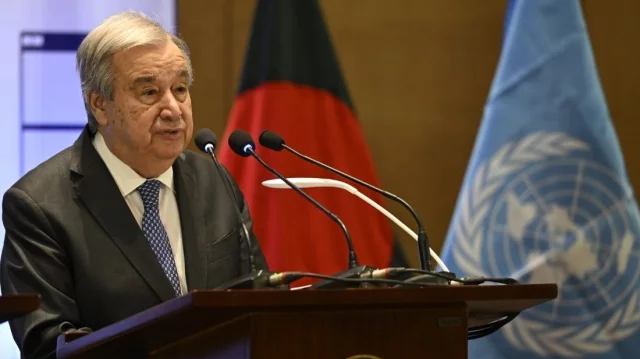
UN Secretary‑General António Guterres has appealed for calm in Bangladesh, urging all stakeholders to refrain from violence, reduce tensions and exercise maximum restraint after the killing of youth leader Sharif Osman Hadi triggered days of street protests, communal clashes and coordinated attacks on prominent media houses — even as the mob‑lynching of Hindu youth Dipu Chandra Das has deepened fears among minorities.
UN Condemns Hadi Killing, Seeks Probe
In a statement issued by his spokesperson in New York, Guterres condemned the killing of Hadi, a leading figure in last year’s protest movement, and extended his condolences to the activist’s family, calling the attack “deeply troubling” at a sensitive pre‑election moment for Bangladesh.
He urged the authorities to conduct a prompt, impartial, thorough and transparent investigation in line with international human rights standards so that those responsible for the shooting are held to account and public confidence in the rule of law is upheld.
- All sides should “refrain from violence, reduce tensions and exercise maximum restraint” to preserve a peaceful electoral environment.
- Authorities must ensure an enabling climate for free expression, peaceful assembly and safe political participation ahead of the February 2026 polls.
- Any response to unrest should fully respect human rights and avoid further loss of life or collective punishment.
Hadi’s Killing Sparks Unrest, Media Attacks
Sharif Osman Hadi, a prominent youth leader of the 2024 pro‑democracy uprising that forced Sheikh Hasina from power, was shot in the head by masked assailants in central Dhaka on 12 December and later died while being treated in a Singapore hospital.
News of his death set off violent protests in Dhaka and other cities, with mobs attacking and torching the offices of leading newspapers Prothom Alo and The Daily Star, looting computers and archives, and forcing Bangladesh’s biggest daily to halt publication for the first time in its history.
- Prothom Alo’s Dhaka office was vandalised, looted and set on fire, briefly shutting down both its print edition and online operations.
- The Daily Star building also came under attack, with journalists trapped inside until security forces and firefighters evacuated them.
- Reporters and camera crews have since reported threats and harassment while covering protests in the capital.
Hindu Youth Dipu Chandra Das Lynched Amid Protests
As the unrest escalated, a separate incident of mob violence shocked the country when Hindu garment‑factory worker Dipu Chandra Das was lynched in Bhaluka Upazila of Mymensingh district after allegations of “insulting Islam” spread on social media and among local residents.
According to eyewitness accounts and local media reports, the 25–30‑year‑old was beaten mercilessly by a large crowd, his body later dragged to the Dhaka–Mymensingh highway, tied up and set on fire, with videos showing onlookers cheering and recording the brutality on their phones.
Bangladesh’s interim government under Chief Adviser Muhammad Yunus has condemned the lynching as an attack on humanity, and security forces including the Rapid Action Battalion and local police have arrested at least 7–10 suspects after targeted operations in the area.
- The killing of Dipu Chandra Das has renewed fears among Hindus and other minorities, who see a pattern of communal targeting amid broader political unrest.
- Advocacy groups have criticised international organisations, noting that UN statements focused on Hadi’s murder have so far not named Das or directly addressed rising violence against minorities.
- Activists argue that the lack of explicit mention of Das in high‑level appeals undermines confidence that minority victims will receive equal attention and protection.
Communal Tensions And Anti‑India Anger
The unrest has also taken on a communal and geopolitical edge, with crowds vandalising cultural institutions and political offices, and some groups staging anti‑India demonstrations targeting symbols linked to New Delhi’s past backing of the Hasina government.
Analysts warn that Hadi’s image as a hardline, anti‑India voice and his rising political profile ahead of the February elections have turned his killing into a flashpoint that could deepen existing divides between secular and Islamist blocs, as well as between rival factions of the protest movement itself.
- Hadi emerged as a key student and youth leader during the 2024 uprising that forced Sheikh Hasina to step down and leave Bangladesh.
- He had reportedly planned to contest the February 2026 parliamentary polls, turning his activism into a formal political challenge.
- UN human rights chief Volker Türk has separately urged authorities to avoid heavy‑handed crackdowns and ensure accountability for all killings linked to the unrest.
UN Stresses Protection Of Rights, Media
The UN leadership has stressed that it is vital for Bangladeshi authorities to guarantee the rights to freedom of expression, peaceful assembly and the safety of journalists at this “critical time”, warning that intimidation and attacks on media only fuel mistrust and instability.
However, critics say that by not explicitly naming Dipu Chandra Das in public remarks, global institutions risk sending a message that minority victims are an afterthought, even as Guterres urges all parties to channel grievances through dialogue and democratic processes instead of violence.