




Canada Lists Islamic State–Mozambique And Online ‘Terrorgram’ Network As Terrorist Entities
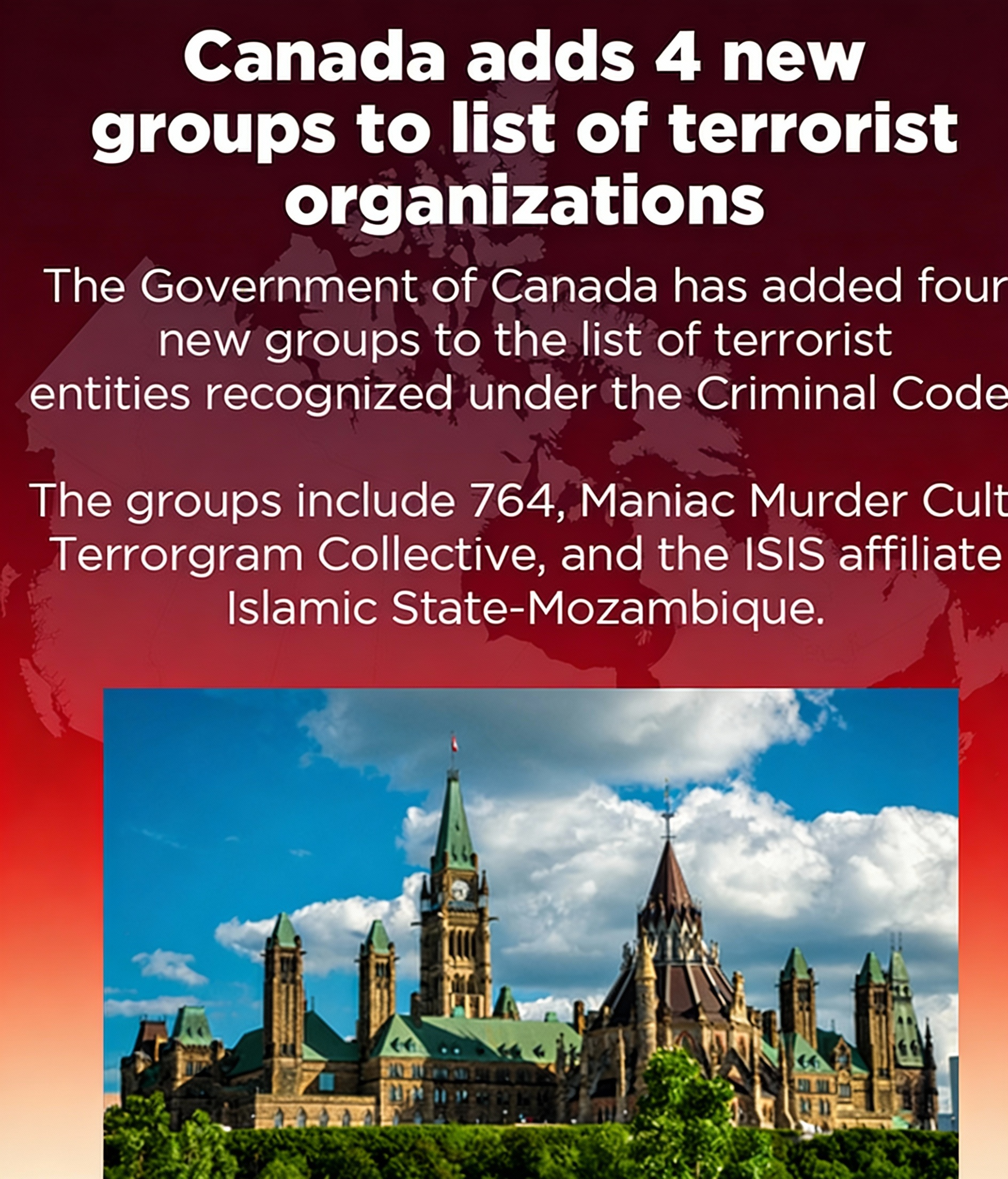
The Government of Canada has formally designated **Islamic State‑Mozambique (IS‑M)** and three ideologically motivated extremist networks – **764**, **Maniac Murder Cult** and the **Terrorgram Collective** – as terrorist entities under section 83.05 of the **Criminal Code**. Public Safety Minister Gary Anandasangaree said the move is aimed at tackling both overseas insurgent threats and online radicalisation of youth, especially white‑supremacist propaganda circulating on gaming and messaging platforms.
What The New Listings Mean
Once an organisation is listed as a terrorist entity in Canada, it becomes a criminal offence to **knowingly participate in, contribute to, or provide financial or material support** for that group, and authorities can freeze its assets and block fundraising under federal law. The new additions bring the total number of listed terrorist entities in Canada to **90**, giving law‑enforcement and intelligence agencies wider powers to investigate and disrupt their activities.
The listings also have immigration consequences, as members and supporters can be deemed inadmissible to Canada under the **Immigration and Refugee Protection Act**, and charities or online platforms linked to these groups can face regulatory action.
Islamic State–Mozambique: An ISIS Affiliate In Africa
**Islamic State‑Mozambique**, also known by aliases such as **Ansar al‑Sunna**, **Ahl al‑Sunna wa al‑Jamma** and **Islamic State Central Africa Province – Mozambique Province**, is an armed insurgent group based in northern Mozambique’s **Cabo Delgado** region. Emerging around 2015 as a radical sect, it evolved into a full‑fledged insurgency, carrying out attacks since 2017 aimed at seizing territory, targeting civilians, and replacing state authority with Sharia‑based governance.
The group was incorporated into the broader Islamic State network in 2019 and is now recognised as an official ISIS branch; it has executed complex raids on towns, beheaded civilians, attacked energy infrastructure and occasionally carried out cross‑border strikes in southern Tanzania. Ottawa says the listing will help clamp down on any fundraising, recruitment or facilitation activities linked to IS‑Mozambique that might pass through Canadian financial or online systems.
Terrorgram, 764 And Maniac Murder Cult: Online Extremist Networks
The **Terrorgram Collective** is described by Canadian authorities as a loose network of channels and users on the encrypted messaging app Telegram that promotes **white‑supremacist and accelerationist ideology**, glorifies past mass shooters and circulates “terrorist guides” encouraging lone‑actor attacks. Its propaganda includes instructions on building car bombs, sabotaging infrastructure and assassinating politicians and police officers, and has been cited as an inspiration in several real‑world plots and attacks worldwide.
**764** and **Maniac Murder Cult** are similarly labelled as **transnational ideologically motivated violent extremist (IMVE) networks** that recruit and radicalise mostly young men via social media and gaming platforms, blending edgy memes with explicit calls for racist violence. Canada is the **first country** to list 764 as a terrorist entity, a step officials present as a signal of leadership against emerging online‑only extremist ecosystems.
Why Canada Says The Move Matters
Ottawa argues that by publicly naming these organisations as terrorist groups, it can better **disrupt financing, deter sympathisers, and support international partners** facing similar threats. Officials also highlight the risk posed to children and teenagers, warning that online extremist communities like Terrorgram and 764 actively target youth with violent content and gamified propaganda.
Security experts say the latest listings reflect how modern terrorism now spans both **offline insurgencies** such as Islamic State‑Mozambique and **borderless digital networks** that incubate lone‑actor attacks, underscoring the need for coordinated action between governments, platforms and civil society.