



Bangladesh Tense After Hardline Leader Sharif Osman Hadi’s Death, Media Houses Attacked
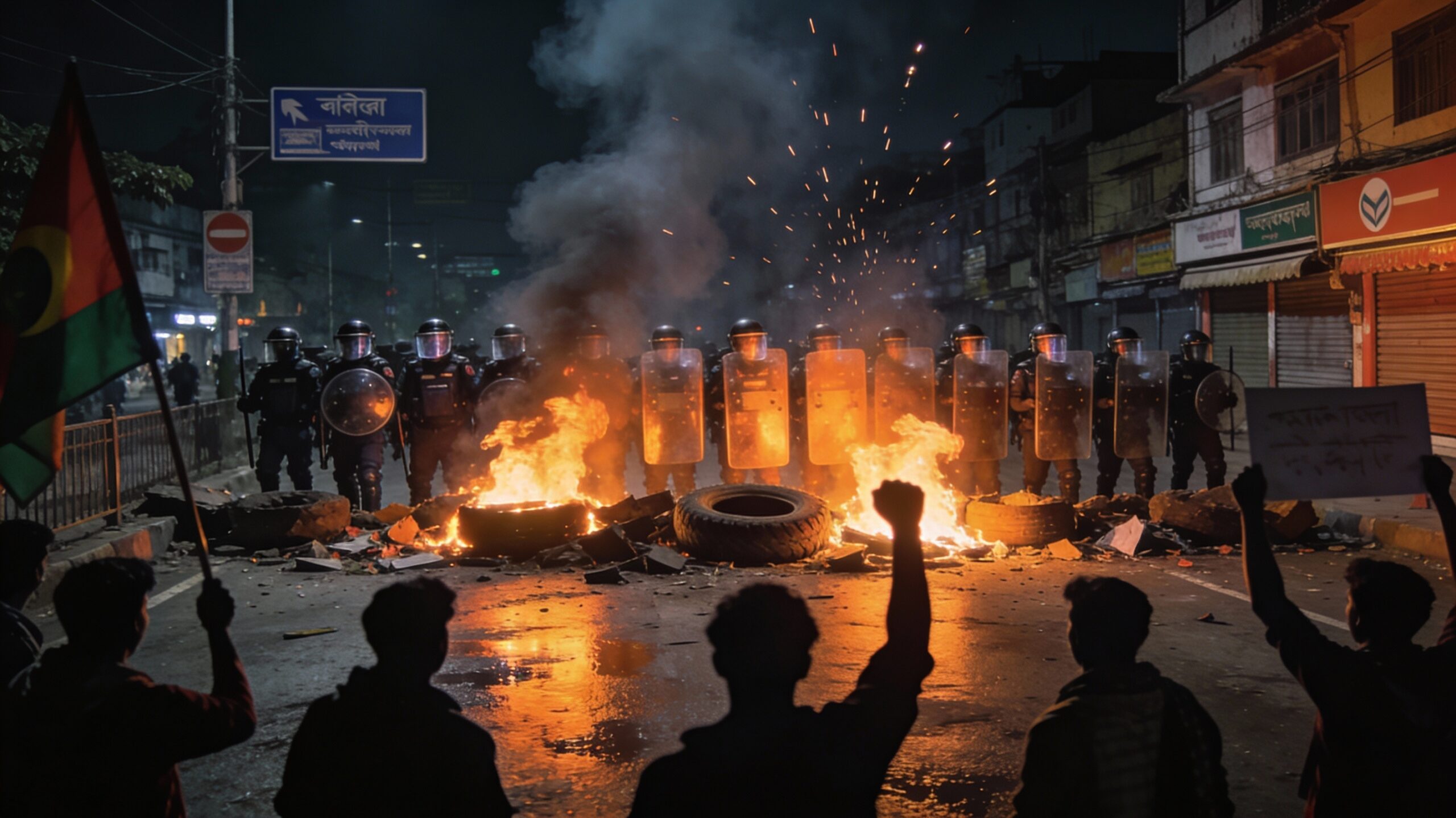
Violent protests have erupted across Bangladesh after the death of **Sharif Osman Hadi**, a radical youth leader known for his anti‑India rhetoric and “Greater Bangladesh” narratives, who succumbed to gunshot injuries at a Singapore hospital on 18 December. Hadi, 32, was a key face of the 2024 student‑led uprising and spokesperson of the **Inqilab Moncho** platform, and had been shot in the head by masked attackers on a motorbike during a Dhaka campaign event on 12 December.
Media Offices Set On Fire, Journalists Trapped
As news of Hadi’s death spread, thousands of supporters poured onto the streets of Dhaka, torching vehicles, blocking roads and targeting institutions they accused of being “anti‑movement”, including leading newspapers. The offices of **Prothom Alo** and **The Daily Star** in the capital’s Karwan Bazar area were stormed, vandalised and set ablaze, leaving dozens of journalists trapped inside until fire crews and security forces managed late‑night rescues.
Staff reported that more than **150 computers, laptops, cash and personal belongings** were looted during the attacks, with CCTVs smashed and sections of the buildings badly damaged by fire and smoke. International media‑rights groups have condemned the violence as one of the worst assaults on press freedom in Bangladesh in recent years.
Anti‑India Slogans And ‘Greater Bangladesh’ Anger
Protesters in Dhaka’s Shahbag area and other cities raised anti‑India slogans and waved placards accusing New Delhi of backing rival political forces, reflecting long‑standing resentment stoked by Hadi’s speeches about alleged Indian interference and the idea of a “Greater Bangladesh”. Demonstrators also gathered outside the Indian Assistant High Commission in Chattogram, prompting police deployment and diplomatic concern in New Delhi.
Analysts note that Hadi had built his following by blending Islamist themes with strong anti‑India messaging, and his killing risks deepening polarisation at a time when Bangladesh is already grappling with economic stress and a fraught transition under the interim government.
Government Calls For Calm, Announces Probe
Interim leader and Nobel laureate **Muhammad Yunus** confirmed Hadi’s death in a televised address, calling it an “irreparable loss” but urging supporters to desist from violence and respect the rule of law. The government has announced a **high‑level investigation** into the shooting, with police saying several suspects — including alleged human‑trafficking operatives from border districts — have been detained for questioning.
Authorities have imposed additional security measures in Dhaka, Gazipur, Chattogram and other hotspots, including night‑time restrictions, highway checkpoints and rapid‑action battalion patrols around media houses, minority neighbourhoods and diplomatic enclaves.
Fears Ahead Of 2026 Elections
The unrest comes just weeks before **national elections scheduled for 12 February 2026**, fuelling fears that street violence and targeted attacks could intensify as rival blocs mobilise their bases. Commentators warn that if the investigation into Hadi’s killing is seen as slow or politically manipulated, his death could become a rallying point for Islamist and ultra‑nationalist groups opposed to both India and the current interim administration.
With burned‑out newsrooms, shaken journalists and angry crowds still on the streets, Bangladesh’s leaders face mounting pressure to quickly restore order, protect the media and minorities, and deliver a credible probe into the attack that killed Sharif Osman Hadi before the country heads into a high‑stakes election year.