




War on the Water: US Forces Strike Iranian Sites as Hormuz Ceasefire Teeters on Collapse
Tensions reach a breaking point as the US Navy retaliates against Iranian “unprovoked” attacks, sending global oil prices into a tailspin despite White House assurances of an “intact” peace deal.
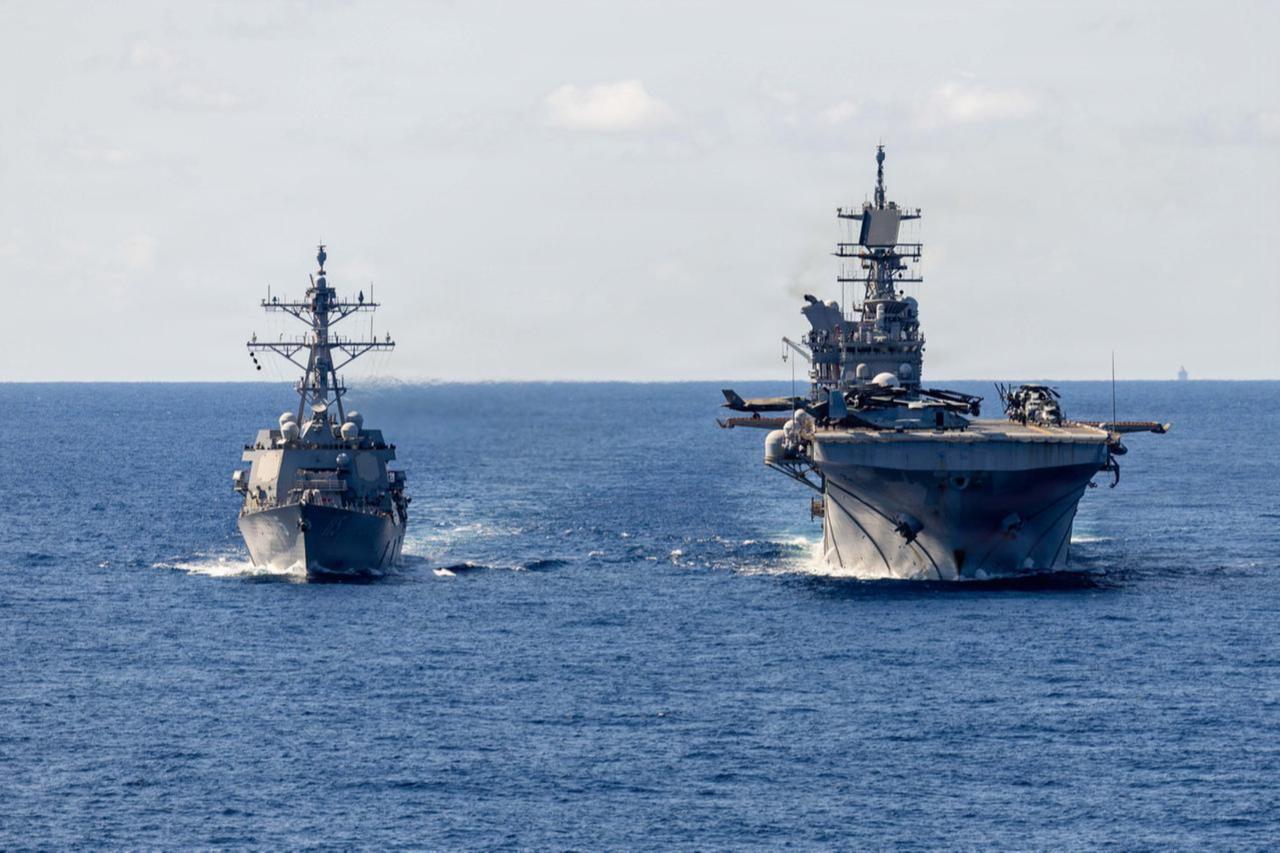
The fragile peace in the Middle East, brokered just weeks ago, was shattered today as U.S. Central Command (CENTCOM) confirmed a series of “self-defense strikes” against Iranian military targets in the Strait of Hormuz. The escalation comes after three U.S. Navy destroyers—the **USS Truxtun, USS Rafael Peralta, and USS Mason**—were targeted by a coordinated barrage of Iranian cruise missiles, drones, and fast-attack boats while transiting the strategic waterway. While the exchange of fire marks the most serious kinetic engagement since the April 8 ceasefire agreement, President Donald Trump has maintained a characteristically optimistic, if controversial, stance on the conflict’s status.
Trump’s Defiance: “The Ceasefire is Intact”
In a late-night social media post, President Trump downplayed the severity of the engagement. “Another failed attempt by Iran to disrupt our Freedom. Our boys are safe, their boats are gone. The Pakistani-mediated Ceasefire is very much INTACT, but we will always hit back harder. Big deal coming soon!” the President wrote. However, the disconnect between the administration’s rhetoric and the reality on the water has sent ripples of anxiety through the international community.
Diplomatic sources in Islamabad, which has been hosting the peace talks, describe the situation as “extremely precarious.” While both sides claim they do not seek all-out war, the U.S. military is taking no chances. Under the command of Secretary of Defense Pete Hegseth, the U.S. has maintained a strict naval blockade of Iranian ports, a move Tehran views as an act of war in itself. Today’s U.S. strikes reportedly hit Iranian drone launch sites on **Qeshm Island**, coastal radars at **Bandar Abbas**, and a naval facility in **Minab**.
The Economic Toll: Oil Market Mayhem
The immediate casualty of the military flare-up has been the global energy market. **Brent Crude** surged past the $100 per barrel mark this morning, trading at approximately $100.16—a sharp 7.3% increase following news of the strikes. Analysts at BMI warn that these prices may actually understate the physical stress on the market, as the Strait of Hormuz remains effectively choked for many commercial vessels.
With nearly 20% of the world’s oil supply flowing through this narrow chokepoint, the “Project Freedom” initiative—the U.S. effort to escort tankers—is now under immense pressure. Shipping insurance rates for vessels entering the Persian Gulf have skyrocketed by 400% in the last 24 hours, leading many majors to divert tankers around the Cape of Good Hope, adding weeks to transit times and millions to shipping costs.
Strategic Retaliation: The “Self-Defense” Narrative
The U.S. strikes were not random. According to General Dan Caine, Chairman of the Joint Chiefs of Staff, the targets were specifically linked to the intelligence and reconnaissance nodes that tracked the U.S. destroyers. “We took out the eyes and ears that were being used to target our sailors,” Caine stated in a Pentagon briefing. The use of F/A-18 Super Hornets from the **USS Abraham Lincoln** aircraft carrier highlights the overwhelming air superiority the U.S. is currently projecting over the Persian Gulf.
Iran, conversely, has accused the U.S. of violating the ceasefire first. The Iranian Ministry of Foreign Affairs stated that the American naval blockade is a “gross violation” of the Pakistan-mediated 15-point plan. Iranian state media has showcased footage of what it claims are “victorious” missile launches, though U.S. officials maintain that every Iranian projectile was successfully intercepted by the Aegis combat system.
What Lies Ahead: Peace or Purgatory?
As **State Correspondents** continues to track this developing story, the path forward remains clouded. The next round of talks in Islamabad, originally scheduled for this weekend, now hangs in the balance. While the Trump administration’s “maximum pressure” campaign via the blockade continues, the risk of a “miscalculation” in the tight confines of the Strait of Hormuz has never been higher.
For now, the world watches the oil tickers and the naval movements. If the ceasefire is indeed “intact,” it is by the thinnest of threads. We will bring you more updates as the situation in the Persian Gulf evolves.