
India Firmly Rejects Trump Aide’s Claim: “PM Modi Did Call President Trump”
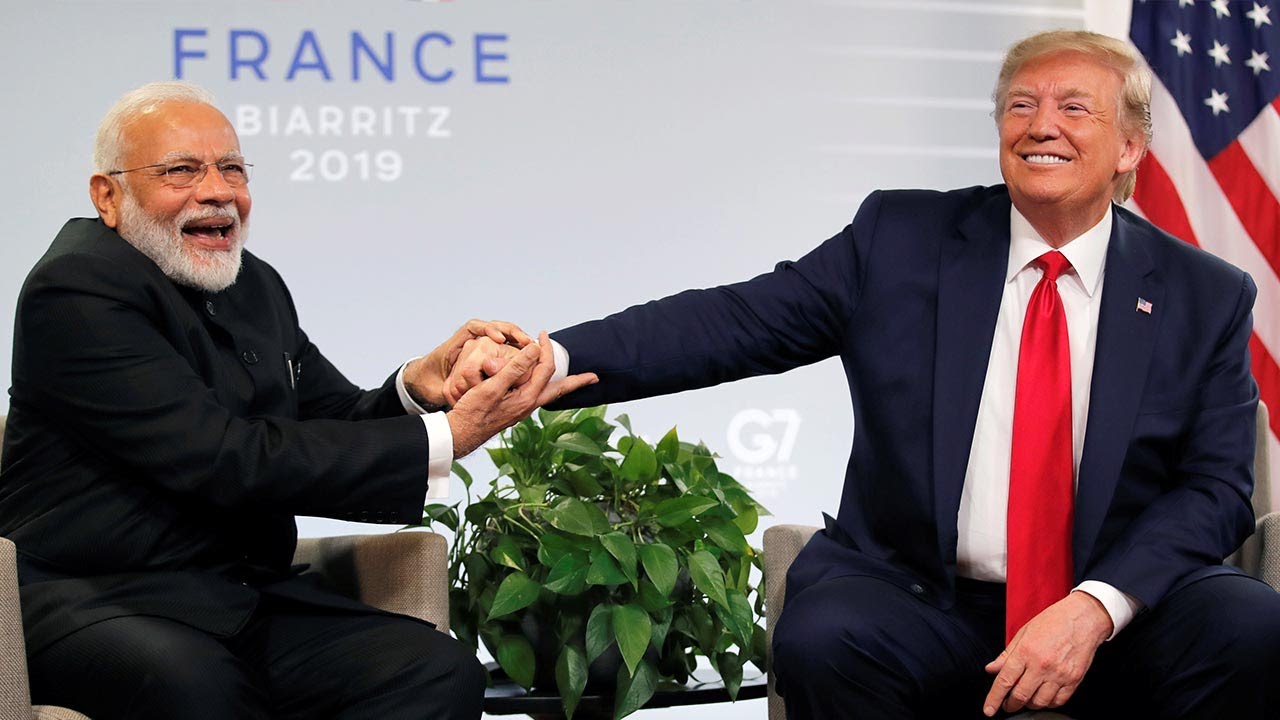
India’s government has categorically dismissed claims by a senior aide to US President Donald Trump that Prime Minister Narendra Modi failed to call the US President to finalize a crucial trade deal. The Ministry of External Affairs labeled the remarks as “not accurate,” highlighting the robust communication between the two leaders throughout 2025.
Trump Aide’s Controversial Claim
US Commerce Secretary Howard Lutnick, a close confidant of President Trump, claimed during a podcast interview that a nearly finalized India-US trade agreement collapsed because Prime Minister Modi declined to personally call President Trump to seal the deal.
Lutnick recounted: “It’s all set up… I said, ‘You got to have Modi call the President.’ They were uncomfortable doing it, so Modi didn’t call.” He suggested that India’s hesitation led to the deal’s failure and subsequent imposition of 50% tariffs on Indian imports by the Trump administration.
India’s Official Response
Ministry of External Affairs Statement (Jan 9, 2026):
“India and the US committed to negotiating a bilateral trade agreement as far back as February 13 last year. On several occasions, we have been close to a deal. The characterization of these discussions in the reported remarks is not accurate. Incidentally, Prime Minister Modi and President Trump have also spoken on the phone on eight occasions during 2025.”
Eight Modi-Trump Conversations in 2025
Contradicting Lutnick’s narrative, India emphasized the frequent high-level communication between the two leaders. The MEA highlighted specific instances:
Covering trade, defense, energy, technology, and strategic partnership
Key Modi-Trump Interactions (2025)
- February 13: Initial commitment to bilateral trade agreement
- July: Multiple attempted calls amid tariff tensions
- September: Birthday call; trade talks resume
- October: Diwali greetings and energy discussions
- December: Strategic partnership and Russian oil talks
- 8 Total Calls: Comprehensive bilateral engagement
Background: The Stalled Trade Deal
The controversy centers around a Bilateral Trade Agreement (BTA) between India and the US that appeared close to finalization in mid-2025. Negotiations had been underway since February 2025, with both sides reporting progress on multiple occasions.
Tensions escalated when:
- US imposed 25% reciprocal tariffs on Indian goods (August 2025)
- Additional 25% tariffs added over India’s Russian oil purchases
- Total tariffs reached 50% on key Indian exports
- President Trump publicly warned of further tariff hikes
India maintains that trade talks continue and both nations remain committed to a mutually beneficial agreement, despite the current tariff regime.
— MEA Official Spokesperson Randhir Jaiswal
Broader India-US Trade Context
The current friction occurs against a backdrop of complex trade dynamics:
- India’s Russian Oil: Continued purchases despite US pressure, citing energy security
- US Tariffs: 50% duties on Indian steel, aluminum, pharmaceuticals, and textiles
- Defense Cooperation: Strong iCET framework continues unaffected
- Technology Partnership: Semiconductor and AI collaborations progressing
Despite trade tensions, strategic partnership remains robust, with recent joint military exercises and intelligence-sharing at record levels.
Diplomatic Implications
The public contradiction highlights the delicate balance in India-US relations:
- India’s Position: Strategic autonomy in energy purchases and trade policy
- US Expectations: Alignment on reducing Russian oil imports and market access
- Both Leaders: Maintain personal rapport despite policy differences
Analysts view India’s firm response as a signal of confidence in bilateral ties and unwillingness to be portrayed as the party at fault in stalled negotiations.