



West Asia Conflict Today: Multi-Front War Redraws the Region’s Security Map
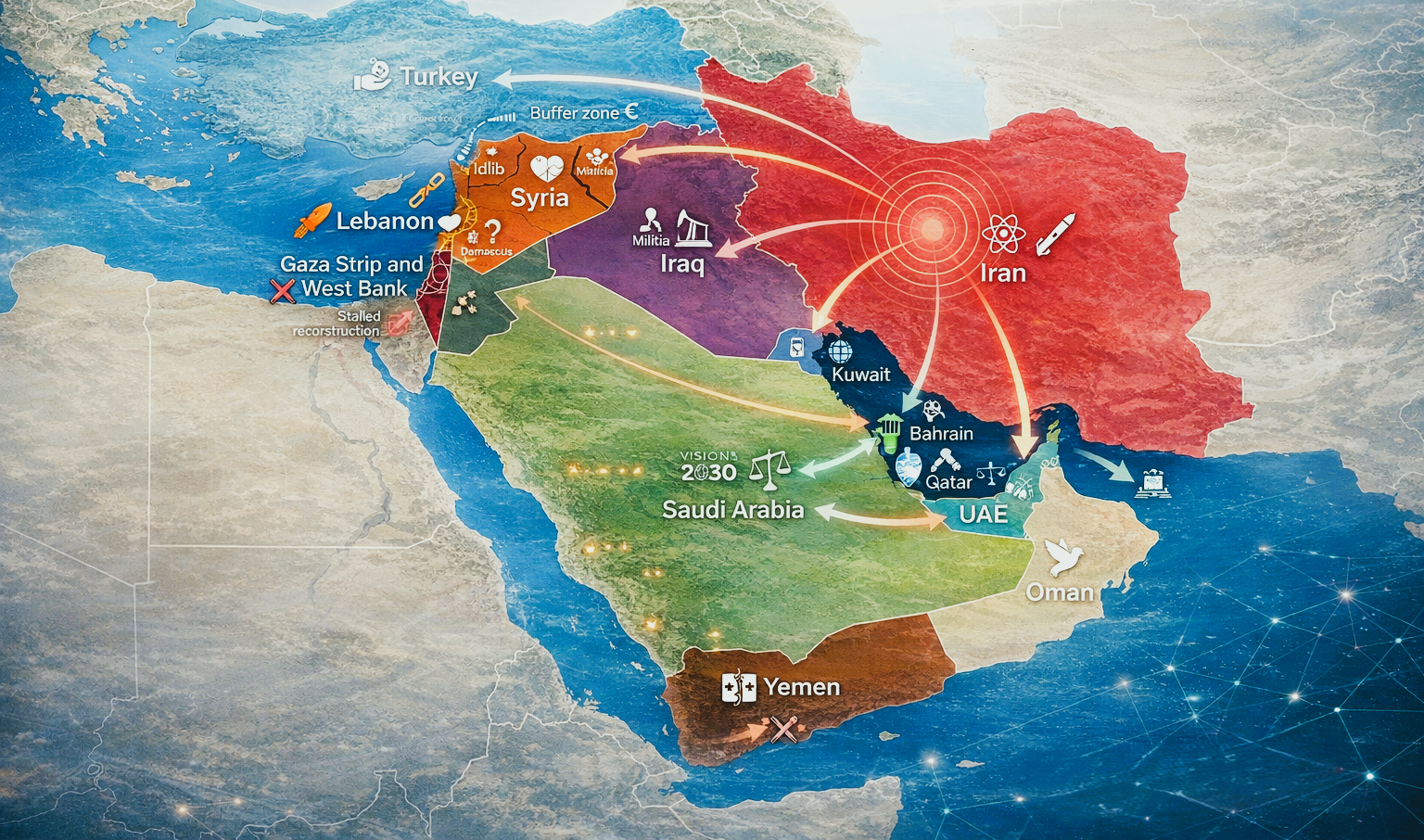
West Asia has plunged into one of its most dangerous phases in decades as coordinated US-Israeli strikes on Iran trigger fierce missile and drone retaliation, a new ground war in Lebanon, continued devastation in Gaza and widening attacks on energy infrastructure across the Gulf. The conflict, now in its third week, is reshaping regional alliances, roiling global oil markets and raising fears of an even larger confrontation.
How the Current West Asia War Began
The present escalation traces back to February 28, when the United States and Israel launched massive missile and bombing attacks on Iran, targeting its leadership, missile arsenal and nuclear infrastructure after talks over Tehran’s nuclear programme collapsed. Iranian Supreme Leader Ayatollah Ali Khamenei was killed in the opening salvo, a moment many analysts describe as a turning point for the region.
In the days that followed, Iranian forces responded with waves of missiles and drones fired at Israel, US bases and allied facilities across West Asia, including Qatar, Bahrain and Kuwait. Israel, in turn, expanded its own air campaign inside Iran, striking hundreds of military and command sites in central and western provinces and claiming to have severely degraded Tehran’s missile and enrichment capabilities.
What began as a series of “punitive strikes” has morphed into a multi-front war pulling in actors from Lebanon to the Gulf, with each new attack feeding a cycle of retaliation that diplomats are struggling to brake.
Iran–Israel Front: Missiles, Drones and Deep Strikes
Since early March, locations across Israel have endured repeated salvos of Iranian missiles, including a significant number equipped with cluster warheads that scatter dozens of bomblets over wide areas. Civilian neighbourhoods such as Beit Shemesh, Yehud and Ramat Gan have been hit, with one strike on Ramat Gan killing two elderly residents when a missile tore into their apartment block.
Recent barrages have also damaged critical infrastructure, including Tel Aviv’s Savidor Central rail hub, temporarily shutting large parts of Israel’s train network and amplifying fears that transport and economic centres are now prime targets. Israeli air defences intercept many incoming missiles, but interceptor debris and unexploded submunitions continue to pose deadly risks on the ground.
Israel has responded with its own deep strikes inside Iran, hitting military bases, missile factories and even space research facilities in cities such as Tehran, Karaj, Isfahan and Tabriz. Israeli officials claim that Iran can no longer produce new ballistic missiles or enrich uranium at previous levels, a claim Tehran angrily denies even as it continues firing missiles and drones.
Lebanon Front: A New Ground War with Hezbollah
Parallel to the Iran theatre, Israel and Hezbollah are locked in a fierce conflict that has escalated into a full-fledged war on Lebanese soil. Since early March, Hezbollah has launched hundreds of rockets and drones into northern Israel, targeting bases such as Ramat David Airbase and key monitoring posts in the Galilee and Golan Heights.
Israel has replied with heavy airstrikes on Hezbollah strongholds in Beirut’s southern suburbs and across southern Lebanon, including strikes on high-rise buildings said to house command centres and drone warehouses. On March 16, the Israeli military confirmed the start of “targeted ground operations” in southern Lebanon, pledging to create a forward defensive zone and push Hezbollah forces away from the border.
The human cost is mounting rapidly: more than 1,000 people have been killed in Lebanon and nearly one million displaced, representing close to a fifth of the country’s population. Aid agencies warn of a deepening humanitarian crisis as towns like Khiyam come under encirclement and basic services buckle under the strain.
Gaza and the West Bank: The Long War Continues
Even as attention shifts to Iran and Lebanon, the war in Gaza and tensions in the occupied West Bank remain unrelenting. Since October 2023, Israeli operations in Gaza have killed more than 72,000 people, most of them women and children, and left much of the enclave in ruins, according to some tallies cited by regional media.
Following the outbreak of the Iran war, Israel closed the Rafah crossing with Egypt, a vital lifeline for humanitarian aid and medical evacuations. In the West Bank, settler violence and military raids have continued, even as global focus shifts to the new fronts with Iran and Hezbollah.
Analysts warn that developments in Gaza, Lebanon and Iran are intertwined: each new escalation on one front hardens political positions on the others, reducing space for ceasefire or de-escalation initiatives.
Gulf Under Fire: Iran’s Expanding Drone and Missile Campaign
Iran’s retaliation is not limited to Israel and US bases; it has increasingly targeted energy and industrial facilities in Saudi Arabia, the United Arab Emirates and Kuwait through drones and cruise missiles. Reports from regional outlets and defence ministries indicate that air defences in Riyadh, Abu Dhabi and other capitals have intercepted many projectiles, but some refineries and gas installations have still suffered disruption.
Saudi Arabia and the UAE say they have shot down hundreds of drones and multiple ballistic missiles since the conflict began, while also acknowledging isolated hits on infrastructure. The UK has deployed additional Typhoon fighter jets to Qatar to bolster air defence and signal support for Gulf partners worried about spillover.
These attacks have heightened fears of a broader regional conflagration that could directly threaten shipping lanes and energy flows through the Strait of Hormuz, one of the world’s most critical chokepoints for oil and gas exports.
Energy Shock and Global Economic Fallout
Oil prices have already jumped more than five percent on some trading days as markets react to the risk of prolonged disruption to Iranian and Gulf energy exports. Insurance premiums for vessels transiting the Strait of Hormuz and the Red Sea have surged, while several shipping companies have diverted tankers around Africa, adding costs and delays.
Aviation routes across West Asia have also been scrambled, with earlier closures of Israeli airspace and warnings around parts of Iranian and Lebanese airspace forcing airlines to reroute long-haul flights. Tourism and business travel into the wider region have slumped, stranding hundreds of thousands of passengers and hitting service economies in hubs like Dubai and Doha.
Economists caution that a prolonged conflict could feed global inflation, particularly through higher fuel and freight costs, complicating recovery plans in many developing economies heavily dependent on imported energy.
Diplomacy, Red Lines and India’s Balancing Act
Diplomatic activity has intensified but with limited visible effect so far. Iran has publicly outlined three broad conditions to end hostilities, including guarantees against future attacks and recognition of its security concerns, even as it continues missile and drone strikes. The United States insists that military pressure will continue until Iran’s “destabilising capabilities” are significantly rolled back.
US President Donald Trump has said he is not currently sending ground troops into Iran, even as reports suggest Washington is weighing the option of deploying thousands of additional soldiers to the region to reinforce bases and deterrence. US Defence Secretary statements describing the coalition as “on plan” and “winning decisively” contrast with growing international alarm over casualties and humanitarian fallout.
India, which has deep ties with both Gulf producers and Israel while maintaining working relations with Iran, is closely monitoring the situation. External Affairs Minister S. Jaishankar has held calls with Israeli counterpart Gideon Sa’ar on the conflict even as New Delhi pushes for restraint, safe passage for Indian nationals and stability in energy supplies critical to the Indian economy.
Frequently Asked Questions on the West Asia Conflict
Tags:
Like and Follow State Correspondents Facebook Page Latest International News Iran US War Subscribe for alerts© 2026 State Correspondents. All rights reserved.