



Iran–US Gulf War: Drone Strike Disrupts Dubai Flights, Global Travel on Edge
-
>Fresh drone strike near Dubai International Airport sparks fire and brief suspension of flights.
>Attack comes amid an escalating Iran–US Gulf war and a series of missile and drone barrages across UAE and other Gulf states.
>Closure of the Strait of Hormuz and repeated strikes are pushing up oil prices and disrupting global shipping and aviation.
A fresh wave of Iranian drone and missile attacks has once again pushed Dubai, one of the world’s busiest aviation hubs, into the crosshairs of the expanding Iran–US Gulf war.
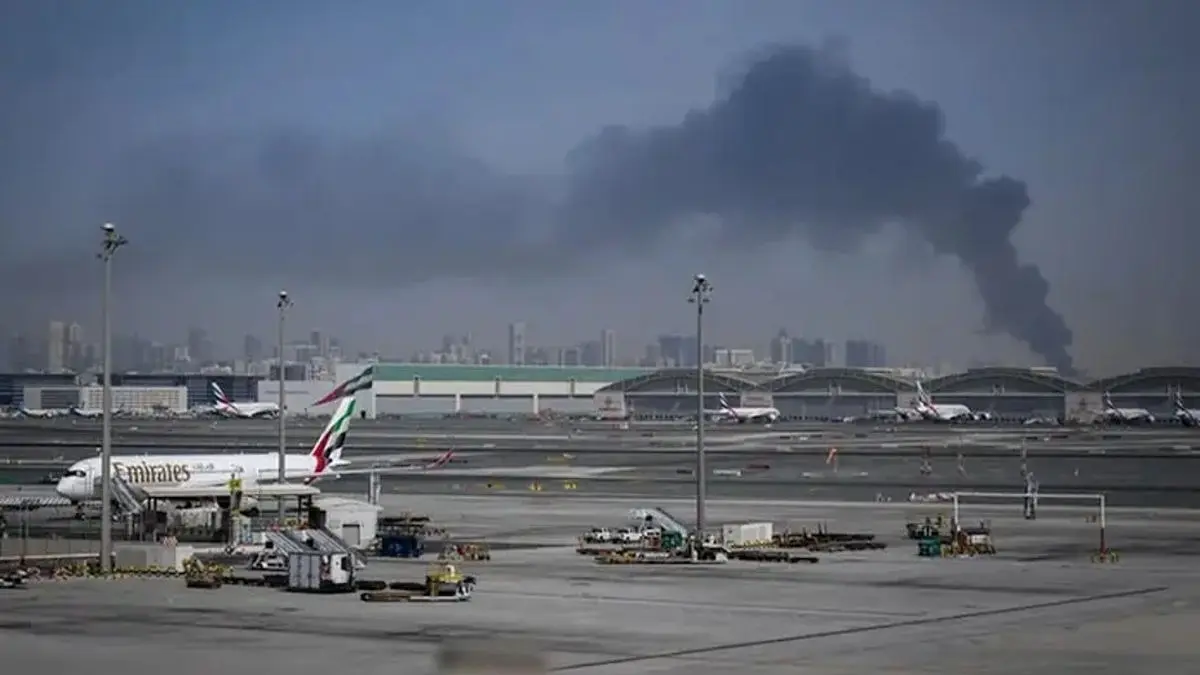
Authorities in the United Arab Emirates confirmed that a suspected Iranian drone struck a fuel tank in the vicinity of Dubai International Airport, triggering a fire and forcing a temporary suspension of flights as emergency teams rushed to contain the blaze.
Fresh Drone Strike Near Dubai Airport
According to local officials and regional media reports, the latest incident involved an explosive‑laden drone that impacted fuel infrastructure close to Dubai International, sending flames and black smoke into the air.
Flight‑tracking data and airport sources indicated that several incoming aircraft were briefly held in holding patterns or diverted to Al Maktoum International Airport, while departures were paused as firefighters and civil defence teams battled the blaze and conducted safety checks on runways and nearby facilities.
Officials later said that the fire had been brought under control and that limited operations resumed after safety clearances, but the disruption added to growing anxiety among passengers and airlines already rattled by multiple strikes in recent weeks.
Part of a Wider Pattern of Iranian Strikes
The attack is not an isolated incident but part of a sustained Iranian campaign targeting the UAE and other Gulf states since late February, after US and Israeli forces carried out coordinated strikes on Iranian territory and leadership targets.
In response, Iran has launched hundreds of ballistic missiles and drones across the region, hitting or threatening strategic locations in the UAE, Bahrain, Saudi Arabia, Qatar, Kuwait, Oman and Israel, while also warning that key Emirati ports could face further escalation.
Official figures from UAE authorities suggest that while most incoming projectiles have been intercepted by layered air‑defence systems, debris from interceptions and a handful of successful strikes have caused casualties, damaged civilian infrastructure, and sparked fires in locations including Abu Dhabi, Dubai and the port of Fujairah.
Dubai Airport: Repeated Target in the New Phase of War
Dubai International Airport, already hit or threatened at least three times since the current escalation began, has emerged as a symbol of how a conflict that started as a confrontation between Iran and Western powers is now spilling into civilian and commercial spaces.
Previous incidents saw concourses evacuated, passengers moved to shelters, and operations partially suspended as explosions and air‑defence interceptions shook the city’s skyline, prompting global headlines and fears about long‑term damage to Dubai’s reputation as a safe transit hub.
Global Aviation and Passenger Chaos
The continuing attacks have forced airlines around the world to reroute or cancel flights that would typically use Gulf hubs as transit points between Asia, Europe, Africa and the Americas.
Travel industry analysts note that passengers are increasingly wary of routing through high‑risk airspace, and several carriers have temporarily reduced frequencies to Dubai, Abu Dhabi and other regional airports while they reassess security and insurance costs.
Insurers have reportedly raised war‑risk premiums for flights and aviation assets operating in the wider Gulf region, adding further pressure on ticket prices and margins at a time when airlines were hoping for a full post‑pandemic recovery.
Strait of Hormuz Shutdown and Oil Price Shock
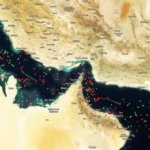
Beyond aviation, the Iran–US confrontation has effectively choked off traffic through the Strait of Hormuz, the narrow waterway between Iran and Oman that handles roughly a fifth of the world’s oil and a significant share of global LNG supplies.
Iran’s Revolutionary Guard has openly threatened vessels attempting to transit the strait, and multiple tankers have reportedly been attacked or disabled, leaving dozens of ships anchored off the UAE coast and near Fujairah as they wait for safe passage.
This has fuelled a sharp spike in oil prices, with benchmark Brent crude climbing amid fears of prolonged disruption, while global gas markets brace for tighter supplies if production and exports from Qatar, Saudi Arabia and Iraq remain constrained.
Economic Ripples: From Pump Prices to Inflation
Analysts warn that a sustained closure of Hormuz and continuing attacks on Gulf energy infrastructure could trigger a new wave of inflation, hitting fuel‑importing countries across Asia and Europe hardest and complicating the task of central banks already battling volatile prices.
For households, this can translate into higher petrol and diesel prices, steeper airfares and increased costs for imported goods, as logistics chains adjust to longer routes and higher insurance costs on both shipping and aviation.
Impact on Indian and South Asian Travellers
With millions of Indians and South Asians living and working in the Gulf, and many more using Dubai as a transit hub, the latest strike has sparked fresh concern among families watching the crisis unfold from afar.
Travel agents in India report a rise in queries about the safety of flying through Gulf hubs and the possibility of rebooking via alternative routes through Istanbul, Doha or European gateways, although seat availability and higher fares limit options for budget‑conscious passengers.
Indian carriers and Gulf airlines are also closely monitoring advisories from aviation regulators and defence establishments, with contingency plans ready for rapid route adjustments if risk levels rise further.
What Officials and Gulf Leaders Are Saying
UAE leaders have condemned the Iranian barrage as a blatant violation of sovereignty and have vowed to defend their territory while working with international partners to prevent further escalation.
High‑level consultations among Gulf Cooperation Council states have produced strong statements of unity, with Saudi and Emirati leaders warning that repeated attacks on airports, ports and energy facilities pose a direct threat to regional stability and global economic security.
Iran, for its part, frames the strikes as retaliation for US and Israeli operations launched from or supported by bases and infrastructure in the UAE and other Gulf countries, accusing them of facilitating attacks on Iranian soil and strategic assets.
What Next: Risk of a Wider, Long‑Term Crisis
Diplomats and security experts fear that the targeting of civilian airports and major commercial ports may push the conflict into a far more dangerous phase, where miscalculation or technical failure could cause mass casualties even if parties claim to be striking only military or logistical nodes.
International calls for de‑escalation have intensified at the United Nations, but so far neither Tehran nor Washington and its allies appear willing to back down, with both sides signalling readiness for a prolonged confrontation if necessary.
For travellers, airlines, shipping companies and ordinary citizens across the Gulf and beyond, the latest drone strike near Dubai airport is a stark reminder that the Iran–US Gulf war is no longer confined to the realm of diplomacy and distant airbases; it is increasingly shaping daily life, economic decisions and a new sense of uncertainty about the future of global mobility.
Tags:
Like and Follow State Correspondents Facebook Page Latest International News Iran US War Subscribe for alerts© 2026 State Correspondents. All rights reserved.