

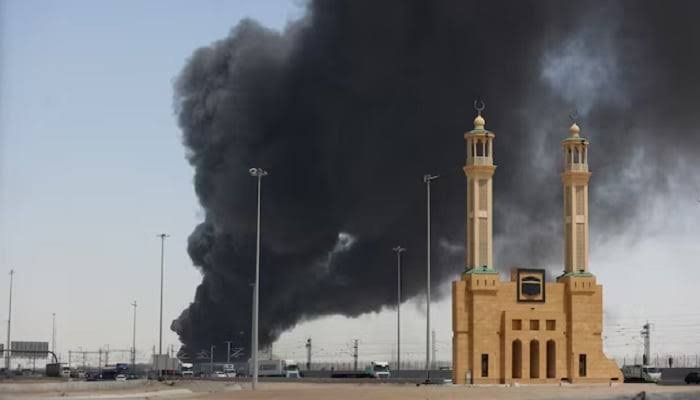
Middle East Boiling Point: Missile and Drone Barrage Targets Riyadh; King Khalid Airport Disrupted as Global Crude Surges
Regional tensions flare following precision strikes against Saudi critical infrastructure, triggering ground stops for commercial flights and jolting energy markets worldwide.
Geopolitical fault lines across the Middle East widened sharply on Monday after a coordinated series of drone and missile strikes targeted Riyadh and peripheral critical infrastructure, causing immediate disruptions to commercial aviation and sparking fresh volatility across international crude oil markets.
Air defense batteries were engaged as incoming projectiles and unmanned aerial vehicles threatened strategic locations across the metropolitan expanse. While air defense systems reportedly intercepted several incoming threats, the operational footprint of the attack forced civil aviation regulators to impose strict air traffic restrictions to ensure passenger safety.
The escalation has triggered immediate friction in world energy hubs. International commodity traders responded rapidly to the perceived threat to Gulf crude flows, factoring in a renewed risk premium as regional security guarantees come under intense strain.
Key Strategic Takeaways
- Infrastructure Vulnerability: The direct targeting of civic and logistical nodes near Riyadh marks an escalatory shift, heightening vulnerabilities for regional supply chains.
- Airline Rerouting: Multiple commercial airlines operating between Europe, South Asia, and the Gulf began reviewing high-altitude air corridors over the Arabian Peninsula.
- Global Economic Impact: Heightened crude volatility poses direct inflationary pressures for major net-importing economies across Asia, including India, where fuel price stability remains closely tied to Gulf security.
Security analysts warn that persistent attacks on core transport and logistics nodes could unravel delicate diplomatic maneuvers in the region, pulling commercial shipping and passenger transit further into the crosshairs of asymmetric warfare.
Emergency management and security personnel across the capital continue damage assessments and post-interception cleanup, while diplomatic capitals closely monitor developments for signs of retaliatory counter-offensives.