

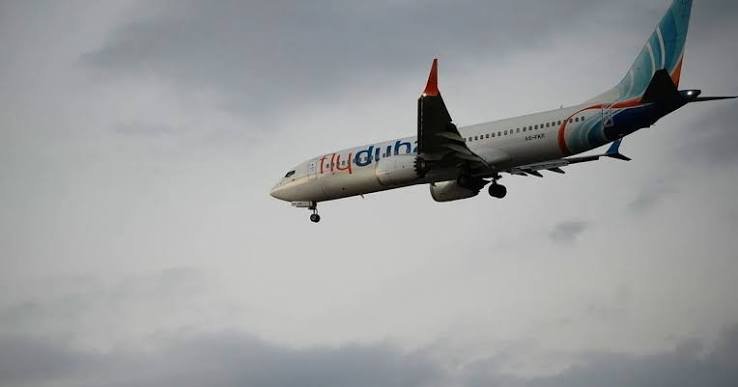
FlyDubai Flight Deck Crisis Sparks Global Aviation Security Overhaul: Probe Focuses on Cockpit Access, Vetting Lapses, and Off-Duty Entrant Protocols
DUBAI / NEW DELHI: The international civil aviation sector has entered a state of heightened alert as multinational aviation investigators, intelligence agencies, and regulatory watchdogs intensify inquiries into the catastrophic security breach aboard FlyDubai Flight 1073. What initially appeared to be an isolated violent confrontation at 34,000 feet has evolved into an exhaustive audit of global commercial aviation defenses, exposing critical structural loopholes in how flight deck access, off-duty positioning crew, and cockpit locking mechanisms operate during high-altitude operations.
The incident, which saw the Boeing 737 passenger jet enter an uncontrolled plunge of over 16,000 feet within two minutes near the Saudi-Jordanian frontier, narrowly avoided mass casualty due to the intervention of passengers and off-duty pilots traveling as commercial travelers in the passenger cabin. With civil aviation authorities across the Middle East, Europe, and Asia convening emergency safety reviews, the focus has shifted firmly onto systemic procedural oversights that permitted an internal threat to breach standard defenses.
Core Pillars of the Investigation
- Cockpit Architecture Paradox: Post-9/11 fortified door systems proved effective at keeping cabin threats out, but hindered outside intervention when a threat originated inside the flight deck.
- The Off-Duty Entrant Factor: Scrutiny over regulatory oversight concerning positioning (“deadheading”) aircrew, jumpseat privileges, and their emergency command transition protocols.
- Screening & Insider Threat Gaps: Questions surrounding airline security vetting, continuous background surveillance, and radicalization monitoring among active flight crews.
- Air Defense Escalation: Rapid scramble of regional fighter jets underscored how swiftly internal cockpit emergencies risk escalating into geopolitical crises and shoot-down protocols.
Descent into Chaos: Plunge at 34,000 Feet
Flight 1073 was cruising en route with more than 170 passengers and crew when a violent struggle erupted inside the locked flight deck. The co-pilot launched an unprovoked stabbing attack against the Indian-origin pilot-in-command, Captain Machhchar, attempting to seize control of the aircraft and send it into an irrecoverable nosedive. The plane immediately began a steep, terrifying descent, dropping from cruising altitude to roughly 17,000 feet as radar transponders transmitted general distress signals.
Critically wounded and fighting for survival, the captain managed to unlock the armored cockpit security door latch from within before collapsing. Alerted by the terrifying G-forces and alarms, courageous passengers and cabin attendants rushed the flight deck to restrain the assailant. However, the turning point in stabilizing the aircraft arrived through the presence of two off-duty FlyDubai pilots traveling in the passenger cabin. The off-duty airmen entered the cockpit, leveled the aircraft, and coordinated with Saudi air traffic controllers to execute an emergency landing at Tabuk Airport in northwestern Saudi Arabia.
“The post-2001 security infrastructure was constructed entirely on the premise that the threat exists outside the flight deck door trying to break in. When the threat sits inside the flight controls, that very door becomes a trap for the victims.” — Senior Aviation Safety Auditor, Global Flight Operations
The Paradox of the Armored Cockpit Door
The FlyDubai crisis has reignited intense debate surrounding the design of modern cockpit security doors mandated across the world following the September 11 attacks. While these ballistic, blast-resistant bulkheads have successfully prevented external hijackers from storming the flight deck for over two decades, they present an acute vulnerability when rogue personnel manipulate the lock.
Current systems utilize electronic keypads outside the cabin paired with timed entry overrides. If an individual inside the cockpit actively toggles the denial switch, cabin crew are completely locked out, regardless of emergency access codes. Had the wounded commander not mustered the strength to disengage the security latches, rescue attempts by passengers and crew would have been mechanically impossible, guaranteeing a fatal outcome. Regulators are now reviewing whether automated behavioral monitoring or biometric multi-party authorizations should be required to override emergency entry protocols.
| Security Domain | Current Mandate | Proposed Reform Under Investigation |
|---|---|---|
| Flight Deck Access | Sole interior pilot veto over cabin entry | Independent biometric override / secondary unlock |
| Off-Duty Crew Oversight | Standard crew screening & jumpseat privileges | Enhanced pre-boarding vetting for non-operating crew |
| Psychological Profiling | Periodic annual medical & licensing exams | Continuous behavioural tracking & intelligence cross-checks |
| Airborne Intervention | Cabin crew armed only with basic restrains | Formalized onboard air-marshal and active-pilot integration |
Procedural Oversights and Global Regulatory Repercussions
A primary focal point for investigators is determining how intelligence and psychological red flags slipped past administrative safety filters. Emerging reports suggest that the rogue co-pilot had harbored extremist ideological inclinations for months prior to the incident, raising sharp questions about background checks, institutional surveillance, and peer-reporting mechanisms within regional air carriers. The International Civil Aviation Organization (ICAO) and aviation authorities across the globe have initiated high-level consultations to tighten continuous behavioral vetting for licensed commercial pilots.
Simultaneously, the vital role played by off-duty pilots has prompted a comprehensive reassessment of deadhead aircrew rules. While off-duty aviators proved to be the ultimate saviors in the FlyDubai incident, aviation security bodies are evaluating protocols regarding off-duty flight deck entry, communication chains during cabin emergencies, and standard operating procedures when commercial pilots must assume control of an unfamiliar operational cockpit mid-flight.
Geopolitical Ripples and Future Sky Safety
The close call also triggered alarming defensive protocols across regional borders. Air defense commands scrambled interceptor jets and placed anti-aircraft batteries on high alert, with contingency shoot-down frameworks activated as the Boeing 737 veered erratically across crowded air corridors. The averted catastrophe highlights that insider flight deck crises are not merely corporate airline emergencies, but major geopolitical flashpoints capable of igniting broader regional military confrontation.
As flight data recorders and cockpit voice logs undergo forensic analysis, the aviation community faces an unavoidable imperative: the safety architecture that has governed commercial aviation for twenty-five years must adapt immediately to eliminate the threat of insider weaponization, ensuring the skies remain safe for millions of travelers worldwide.