

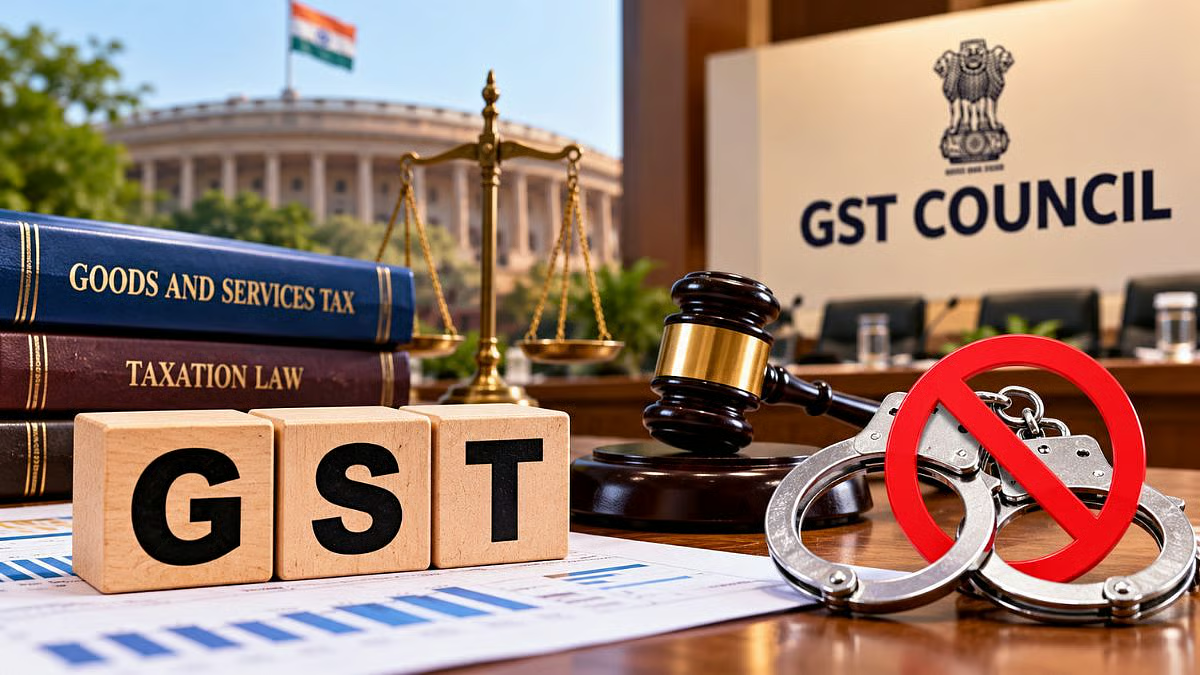
GST Decriminalization Shield: Council Strips Arrest Powers, Raises Prosecution Threshold to ₹5 Crore
A paradigm transition toward trust-based governance delivers immense relief to trade bodies, micro-enterprises, and traders across Jammu & Kashmir and the nation.
In what is being hailed as the most consequential structural overhaul of the indirect tax administration since the rollout of the Goods and Services Tax in 2017, the 57th GST Council has officially dismantled draconian enforcement barriers by removing officer arrest powers and significantly lifting the threshold required to initiate criminal prosecution.
Chaired by Union Finance Minister Nirmala Sitharaman alongside state finance representatives, the Council resolved that punitive, custodial provisions inherited from pre-GST excise and service tax regimes no longer align with India’s modern economic architecture. Moving forward, the threshold for invoking criminal prosecution has been escalated from ₹1 crore to a steep ₹5 crore, fundamentally insulating businesses against coercive enforcement for routine operational or clerical disputes.
Transition from Coercion to Civil Recovery
For years, business federations and MSME associations had voiced deep concern over the omnipresent threat of criminal liability stemming from ambiguous valuation parameters, transient invoice mismatches, or unintended delayed filings. Under the restructured guidelines, tax administrators will strictly employ civil recovery protocols—including recovery proceedings, statutorily prescribed interest, and structured penalties—rather than resorting to criminal detentions.
The Council clarified that criminal proceedings are now strictly ring-fenced for rare, high-value economic sabotage, such as deliberate fake invoicing networks, syndicates operating fraudulent Input Tax Credit (ITC) mills, and systematic tax evasion exceeding the ₹5 crore threshold.
Comparative Snapshot: Key Enforcement Changes
| Regulatory Provision | Previous Framework | Reformed 57th Council Framework |
|---|---|---|
| Officer Arrest Powers | Discretionary power vested with tax authorities for specified offenses. | Withdrawn; authorities mandated to pursue civil & financial recovery remedies. |
| Criminal Prosecution Ceiling | ₹1 Crore tax default limit. | Raised to ₹5 Crore; minor & mid-tier disputes insulated from criminal litigation. |
| General Default Penalties | Up to ₹25,000 where no specific penalty was outlined. | Reduced to ₹10,000; preventing disproportionate fiscal exposure for minor defaults. |
| Dispute Settlement Route | Early invocation of penal charges and show-cause litigation. | Algorithmic data reconciliation and administrative adjudication prioritized. |
Direct Impact on Jammu & Kashmir’s Trading Fraternity
The sweeping decriminalization has been met with immediate acclaim across commercial hubs in Jammu, Srinagar, and peripheral industrial zones. Small manufacturers, transport logistics providers, and emerging entrepreneurs across Jammu & Kashmir frequently navigate supply chain lags, banking downtime, and vendor-matching discrepancies that previously risked harsh enforcement notices.
Local trade representatives noted that insulating transactions below ₹5 crore provides vital breathing room for regional MSMEs, enabling them to expand inventory and engage in interstate commerce without fear of disproportionate regulatory overreach. By relying increasingly on automated data matching and electronic audit trails, the revised GST framework establishes a transparent, business-friendly environment built on predictable compliance rather than administrative distress.