




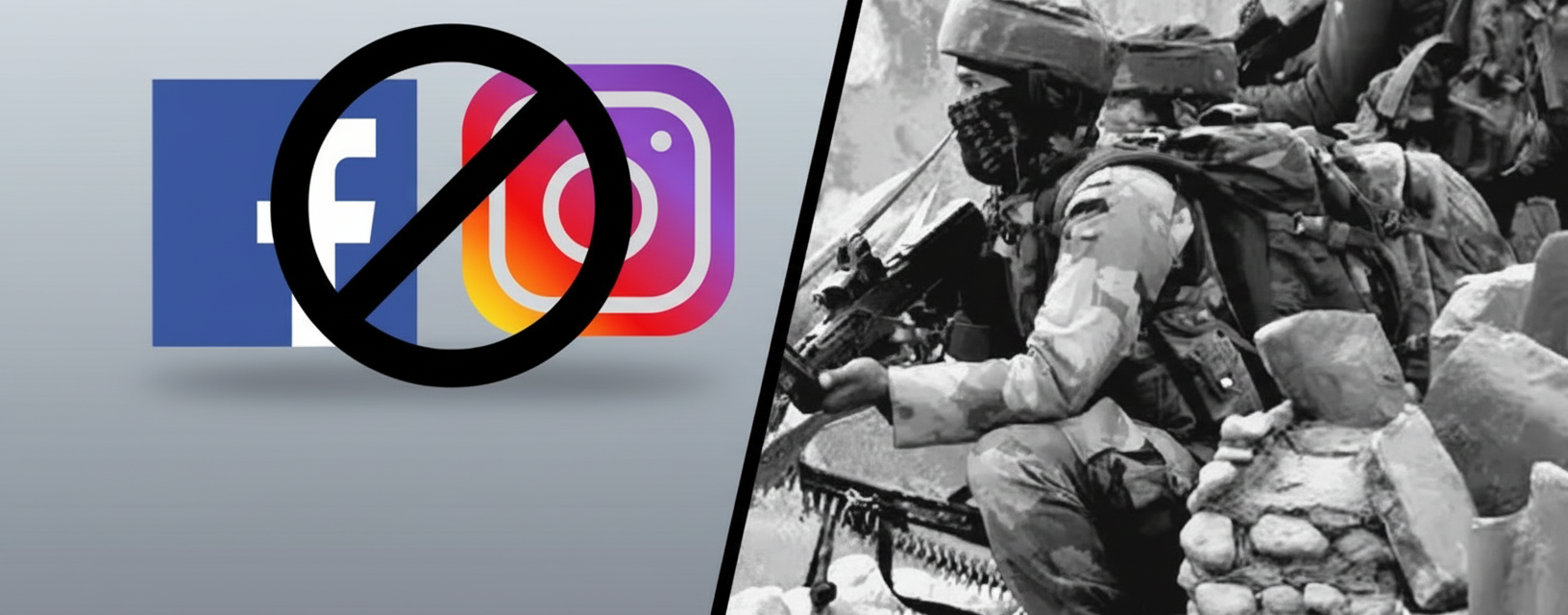
Indian Army Issues Strict New Social Media Guidelines To Protect Operational Security
The Indian Army has issued a fresh set of strict social media and digital communication guidelines for all ranks, allowing only limited and “passive” use of popular platforms to safeguard operational security and sensitive information.
The revised policy, promulgated through Army Headquarters and the Directorate General of Military Intelligence (DGMI), formalises view‑only access to apps like Instagram and tightens rules for WhatsApp, Telegram, X, YouTube and other services amid concerns over data leaks and online honey‑trap attempts targeting military personnel.
Instagram Allowed Only In View‑Only Mode
Under the new guidelines, Army personnel are permitted to log in to Instagram strictly for “viewing and monitoring” purposes, which the force describes as passive participation.
Soldiers and officers are barred from posting photos or videos, commenting, liking, sharing content or sending messages on the platform, and no personal views, opinions or reactions may be expressed through Instagram under any circumstances.
Limited, Controlled Use Of Messaging Apps
The advisory clearly differentiates between social networking and messaging platforms, allowing Skype, WhatsApp, Telegram and Signal only for the exchange of unclassified information of a general or personal nature.
Communication on these apps is restricted to known and verified contacts, with the entire responsibility of correctly identifying the recipient placed on the individual user, who can face disciplinary action for any breach or negligence.
Passive Use Of X, YouTube, Quora And Others
For platforms such as X (formerly Twitter), YouTube and Quora, the Army has authorised only passive use, permitting personnel to consume news and general information but strictly prohibiting any form of active participation.
Uploading user‑generated content, posting messages, live‑streaming, or sharing location‑tagged material that could reveal troop movements, deployment details or other operational patterns remains completely banned under the updated framework.
LinkedIn And Professional Networking Under Watch
LinkedIn has been categorised as a professional networking tool that can be used primarily for uploading resumes and exploring information related to potential employers, job roles and professional collaborations.
Even on LinkedIn, personnel are required to strictly adhere to security protocols and avoid sharing unit details, operational roles, or any classified background that could be exploited by hostile intelligence agencies.
Ban On VPNs, Cracked Software And Risky Websites
The new instructions reiterate an explicit caution against the use of VPN services, torrent portals, cracked or pirated software, anonymous web proxies, free movie and file‑sharing platforms, and unverified chat rooms accessed from personal or official devices.
The Army has warned that such tools and websites can introduce malware, facilitate data exfiltration or create digital footprints that expose locations and systems, thereby undermining the security architecture of critical military networks.
Background: Earlier Ban On 89 Apps
The revised policy builds on earlier measures taken in July 2020, when personnel were ordered to delete 89 applications, including Facebook, Instagram and TikTok, following repeated cases of misuse and intelligence‑driven honey‑trap operations.
Over time, the force has gradually allowed limited access to some platforms but only within tightly defined boundaries, supported by continuous monitoring and strict disciplinary provisions for violations of cyber hygiene norms.
Balancing Digital Awareness With Security
Senior Army leadership has framed the changes as a pragmatic attempt to balance soldiers’ need to stay digitally aware and connected with families while ensuring that no operational or location‑specific data is ever compromised online.
The updated social media guidelines are part of a broader push to strengthen information security, following multiple instances in which personnel were targeted online and sensitive inputs were inadvertently shared with suspected foreign handlers.