



Iran’s Missile Strike Damages Tel Aviv Rail Hub, Halts Train Services Across Israel
In one of the most dramatic strikes of the ongoing Iran–Israel confrontation, an Iranian missile barrage has damaged Tel Aviv’s key Savidor Central rail hub, a busy station that functions like a metro interchange for thousands of daily commuters. While authorities reported no casualties at the station itself, the attack has paralysed rail movement across Israel and reignited concerns over the vulnerability of civilian infrastructure in the West Asia war.
How the Strike Unfolded at Tel Aviv’s Main Rail Hub
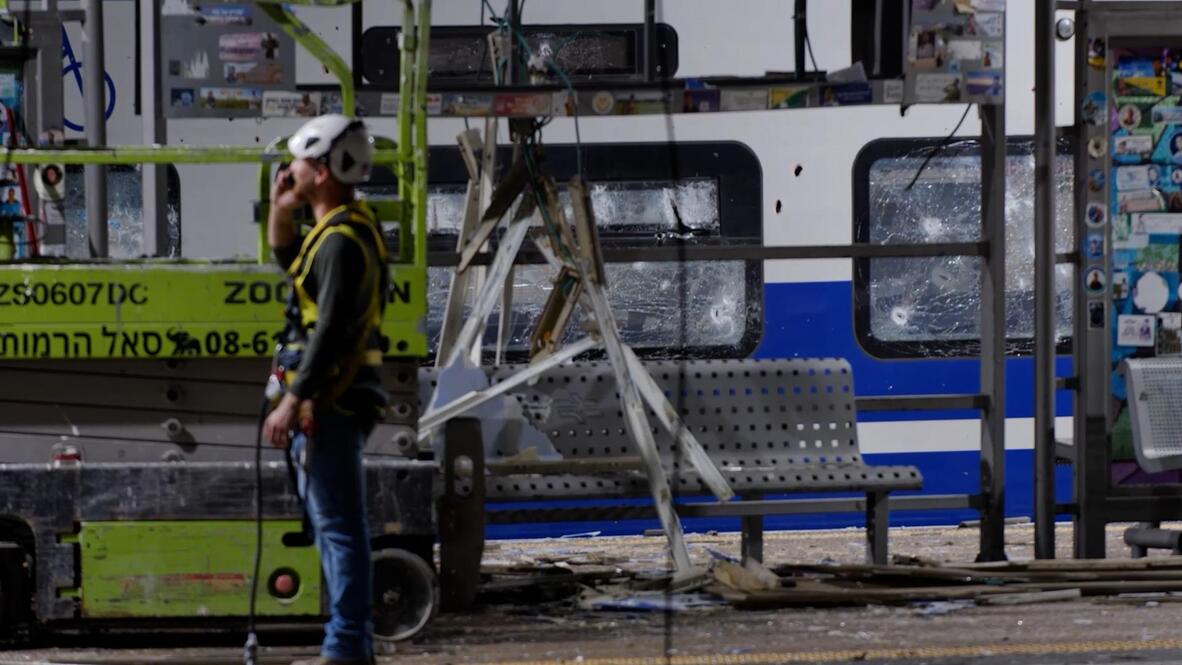
According to footage and eyewitness accounts shared by multiple international outlets, the latest missile wave from Iran triggered air-raid sirens across central Israel before fragments and possible cluster submunitions slammed into the Savidor Central rail complex. Platforms were left strewn with twisted metal, shattered glass and debris from damaged roofing and train coaches, as emergency crews rushed in to cordon off the area and search for anyone who might have been trapped.
Israel Railways issued an urgent statement announcing that train services to and from the station had been suspended, with the disruption cascading into a temporary nationwide shutdown of intercity and commuter routes. To keep essential movement going, officials deployed shuttle buses linking Herzliya, Tel Aviv Savidor Central and Ben Gurion Airport, but commuters reported long delays and confusion at alternative pickup points.
Visuals from local and international broadcasters showed platforms scorched black, overhead structures bent out of shape and rail lines covered with debris, even as loudspeakers repeatedly asked people to stay away from the impacted sections of the station. Railway engineers and bomb-disposal experts were seen inspecting the tracks and overhead wiring, checking for unexploded submunitions and structural damage before any partial reopening could be considered.
Ramat Gan Casualties and the Wider Human Cost
While the Savidor hub itself escaped fatalities, the same barrage proved deadly in the nearby city of Ramat Gan, just east of Tel Aviv. Emergency services said an elderly couple in their seventies died when a missile armed with cluster submunitions struck their residential building, collapsing part of the roof close to their safe room.
Medics from Magen David Adom and local responders described scenes of chaos as shrapnel and bomblets ripped through vehicles and side streets, even in areas where residents had less than a minute to rush to shelters. The deaths in Ramat Gan added to a rising civilian toll from Iranian missile attacks since the war began, which regional media now estimate to be in double digits.
Israeli police said bomb squads were deployed at numerous impact sites across the greater Tel Aviv district to neutralise unexploded fragments and secure residential zones. Officials repeatedly urged the public to strictly follow siren alerts and remain in protected spaces until given the all-clear.
Iran’s Message: ‘Revenge’ for Targeted Killings
Iranian state-linked outlets and Revolutionary Guard Corps statements framed the missile wave as “revenge” for the killing of senior Iranian figure Ali Larijani in an earlier Israeli strike, part of a tit-for-tat cycle that has intensified the West Asia war. Tehran has portrayed its barrages as calibrated retaliation against what it calls Israeli and American aggression, even as many of the impacts have fallen on or near civilian infrastructure.
International analysts note that by targeting high-visibility sites such as major rail stations, residential towers and airports, Iran is signaling its ability to hit symbols of normal life and economic activity far from frontline zones. The use of cluster warheads in some missiles, which scatter dozens of bomblets over a wide radius, has drawn condemnation from human-rights advocates because of the long-term risk posed by unexploded submunitions.
The latest barrage is part of a broader series of Iranian strikes on Israeli territory documented since late February, with incidents ranging from earlier hits on Beit Shemesh and Yehud to repeated waves over central Israel. Defence experts say the Tel Aviv rail hub attack represents a dangerous escalation in terms of psychological impact and disruption, even though casualty numbers at the station itself remained low.
Commuters Caught in the Crossfire of a Strategic War
For ordinary Israelis, the most immediate impact of the strike has been on daily mobility, as the rail shutdown forced thousands to scramble for buses, taxis and carpools during peak hours. Savidor Central is not just a long-distance rail terminal; it is also a key interchange for suburban and urban transit, making it functionally similar to a metro hub for Tel Aviv’s wider region.
Passengers interviewed by local media described being hurried into shelters as sirens blared, only to emerge later to find platforms littered with glass, debris and mangled metal. Many expressed shock that a place associated with routine commutes and family travel had suddenly turned into a frontline of the Iran–Israel confrontation.
Transport officials have said that full restoration of services will depend on structural assessments, repairs to signalling systems and clearance of all explosive remnants. Until then, traffic on alternate lines and highways is expected to remain heavier than usual, with commuters warned to expect delays and last-minute route changes.
Escalating Pattern: From Airports to Railway and ‘Metro’ Stations
The damage at Savidor Central comes just days after earlier Iranian missiles were reported near Israel’s Ben Gurion Airport and other strategic nodes, underscoring a pattern of strikes on high-profile transport and economic assets. In multiple attacks, shrapnel and fragments have hit railway infrastructure, road junctions and bus depots, forcing repeated temporary shutdowns and putting severe stress on emergency services.
Analysts warn that such attacks aim to stretch Israel’s air defence resources and expose weak points where interceptor debris or cluster bomblets can still cause significant damage, even when main warheads are partially neutralised in the air. The visual of a “direct hit” on a station used daily by commuters carries powerful psychological weight, feeding a sense that nowhere is entirely safe.
Israeli authorities say they are adjusting interception patterns and shelter protocols in light of the new tactics, and have urged citizens to treat every siren with utmost seriousness, whether they are at home, at work or on public transport. Commuter hubs, underpasses and station concourses are being reviewed to ensure that protected areas are clearly marked and accessible within the standard response time.
International Reactions and Fears of Further Escalation
The strike on the Tel Aviv rail hub has drawn sharp reactions from Western capitals and regional players, who see the targeting of major civilian transport nodes as a dangerous crossing of red lines. Diplomats have reiterated calls for de-escalation, even as they acknowledge that both Iran and Israel appear locked into a cycle of retaliation following senior-level assassinations and attacks on strategic facilities.
Humanitarian agencies have voiced concern that continued missile exchanges over densely populated regions could lead to mass-casualty incidents if a warhead or cluster payload were to score a direct hit on a packed station, mall or high-rise. The near-miss at Savidor Central, where physical destruction was high but casualty numbers limited, is being cited as a reminder of how narrow that margin can be.
Regional observers in West Asia argue that as long as political and diplomatic tracks remain stalled, pressure will continue to build on both sides to demonstrate strength through headline-grabbing strikes. In that climate, civilian infrastructure such as rail hubs and “metro-style” stations risk becoming recurring targets and symbols in a war that is already shaking energy markets and global security calculations.
Frequently Asked Questions on Iran’s Strike at Tel Aviv’s Rail Hub
Tags:
Like and Follow State Correspondents Facebook Page Latest International News Iran US War Subscribe for alerts© 2026 State Correspondents. All rights reserved.