




India Invokes Essential Commodities Act Amid Worsening LPG Crisis
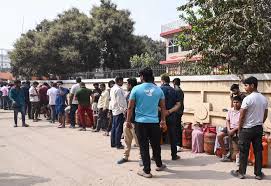
India has triggered emergency provisions under the Essential Commodities Act, 1955, as the country battles a mounting liquefied petroleum gas (LPG) crisis linked to the conflict in West Asia and disruptions around the Strait of Hormuz. The Union government has also ordered companies across the oil and gas value chain to share granular, near real-time data with the Petroleum Planning and Analysis Cell (PPAC) in a bid to safeguard domestic consumers and prevent shortages.
Why India Is Facing an LPG Squeeze
The latest turbulence in the Gulf region has severely disrupted liquefied natural gas and LPG traffic through the crucial Strait of Hormuz, a marine chokepoint through which a significant share of India’s fuel imports normally pass. India is the world’s second-largest importer of LPG and depends on foreign suppliers for a substantial portion of its annual consumption of over thirty million tonnes, making it especially vulnerable to sudden external shocks.
Officials insist that crude oil and refined fuel stocks are currently adequate and that refineries are operating at full capacity, but they acknowledge that the LPG situation remains “worrisome” with long queues outside distributors in several states. In several metropolitan areas, commercial LPG cylinders used by restaurants, hotels and catering units have been in short supply, forcing many establishments to curtail operations or temporarily shut their kitchens.
To reduce pressure on the system, the Centre has urged households already connected to piped natural gas (PNG) networks to surrender extra LPG connections and has encouraged the use of alternate fuels such as kerosene and coal where feasible. State governments have also been advised to fast-track permissions for gas pipeline projects and clear pending applications within tight timelines so that more consumers can gradually move to PNG for their cooking needs.
What the Essential Commodities Act Allows the Government to Do
The Essential Commodities Act is a central law enacted in 1955 to enable the government to control the production, supply, distribution and trade of key goods whenever disruptions or unfair practices threaten normal life. By invoking Section 3 of the Act for petroleum products and natural gas, the Centre can now issue binding orders regulating how these fuels are produced, stored, transported and sold across the country.
Natural gas supplies have been placed under a graded priority system that gives top preference to segments directly affecting common consumers, including piped gas for households, compressed natural gas used in public transport and crucially, feedstock for LPG production. Lower-priority industrial users are likely to see their allocations curtailed so that enough fuel can be diverted towards essential categories such as domestic LPG cylinders.
Mandatory Data Sharing with PPAC: What Has Changed
A fresh government notification has designated the Petroleum Planning and Analysis Cell as the nodal agency to collect, compile and analyse information from every entity involved in the oil and gas supply chain. Producers, refiners, storage operators, importers, exporters, transporters, marketers, distributors and major consumers of petroleum products and natural gas are all covered by the mandate.
These entities must now share detailed data on production levels, import and export volumes, inventory positions, pipeline flows and end-user consumption at prescribed intervals, effectively giving the government a near real-time dashboard of the entire sector. Crucially, companies are no longer allowed to withhold information by citing commercial confidentiality or proprietary contracts, a clause that has been clearly overridden in the public interest.
Officials argue that this centralised data architecture will help the oil ministry detect localised stress much earlier, redirect supplies where required and take calibrated decisions on any future restrictions on exports or diversion of stocks. While India has so far refrained from imposing blanket bans on refined fuel exports, policymakers have signalled that protecting domestic LPG users will remain the top priority if conditions worsen further.
Government Response: From Refinery Orders to Extra LPG for States
In parallel with the data directive, refiners and petrochemical complexes have been instructed to maximise LPG output by rerouting key hydrocarbon streams such as propane and butane into the LPG pool rather than using them for petrochemicals. Under the same framework, a sizeable portion of the LPG thus produced must be supplied to state-run oil marketing companies that dominate the domestic cylinder distribution network.
The Centre has also offered state governments an additional 10 percent allocation of commercial LPG, provided they commit to accelerating the long-term transition of bulk users toward piped gas and other cleaner fuels. Many states have been asked to appoint dedicated nodal officers to coordinate the rollout of city gas distribution networks, grant deemed approvals for pending pipeline projects and even consider relaxing or waiving road restoration charges for time-bound works.
At the same time, public sector oil companies are promoting digital booking channels, discouraging panic multiple bookings and expanding delivery authentication systems aimed at preventing diversion and black marketing of LPG cylinders. Central authorities maintain that average delivery times for domestic cylinders remain in the range of two to three days in most regions, insisting that pictures of long queues largely reflect demand spikes and hoarding behaviour rather than a complete breakdown of supply.
How the LPG Crisis Affects Households and Businesses
For ordinary households, the most immediate concern is the prospect of delayed refills or temporary stock-outs at local distributors, particularly in urban and semi-urban clusters that rely heavily on cylinder-based LPG rather than piped gas. In response, many families have begun placing refill orders earlier than usual, adding to the surge in bookings that distributors are struggling to handle smoothly.
Commercial users, including restaurants, small eateries, hotels and institutional kitchens, have been hit even harder, as they typically depend on larger, costlier cylinders that are more susceptible to supply adjustments during crises. Reports from several cities indicate that some food businesses have scaled down menus, restricted working hours or temporarily switched to alternate fuels while waiting for regular LPG supplies to stabilise.
Industry associations warn that prolonged uncertainty could hurt employment in the hospitality and services sector, especially in smaller establishments that lack the financial cushion to absorb sudden cost spikes or frequent disruptions. However, energy experts also view this episode as a wake-up call that underscores the importance of diversifying fuel sources, building strategic reserves and strengthening domestic infrastructure for gas-based distribution.
What Consumers Should and Should Not Do
-
>Avoid panic booking: Officials have repeatedly appealed to consumers not to place multiple or unnecessary refill orders, as this clogs the system and makes it harder to prioritise genuinely needy households.
>Use official channels: Customers are advised to rely on authorised distributors and digital platforms of oil marketing companies rather than unverified intermediaries who may overcharge or divert cylinders.
>Report malpractice: Any suspected hoarding, black marketing or overpricing of LPG cylinders can be reported to local authorities under provisions of the Essential Commodities Act.
>Consider fuel alternatives where safe: In regions where it is practical and safe, limited use of alternative fuels such as kerosene or induction cooktops can ease pressure on immediate LPG demand.
For their part, policymakers are expected to keep balancing short-term firefighting with long-term reforms, from expanding PNG coverage and boosting domestic LPG production to diversifying import sources beyond traditional West Asian suppliers. The current crisis has laid bare just how central LPG has become to cooking energy in Indian homes and how vulnerable that dependence is to geopolitical shocks far beyond the country’s borders.
Frequently Asked Questions on India’s LPG Crisis
Tags:
Like and Follow State Correspondents Facebook Page Latest International News Iran US War Subscribe for alerts© 2026 State Correspondents. All rights reserved.