



Strait of Hormuz Shut Down: Oil Above $100 as Global Energy Crisis Deepens
-
>Commercial traffic through the Strait of Hormuz has dropped by around 70–80%, with hundreds of tankers stranded or rerouted.
>Brent crude has surged back above the 100‑dollar mark as markets price in the biggest oil supply disruption in modern history.
>Energy‑importing nations from Asia to Europe face rising fuel costs, inflation risks and fears of a prolonged global energy crunch.
The Strait of Hormuz, the world’s most strategic oil and gas chokepoint, has been thrown into unprecedented turmoil as the Iran conflict intensifies, sending oil prices soaring above 100 dollars per barrel and shaking financial markets worldwide.
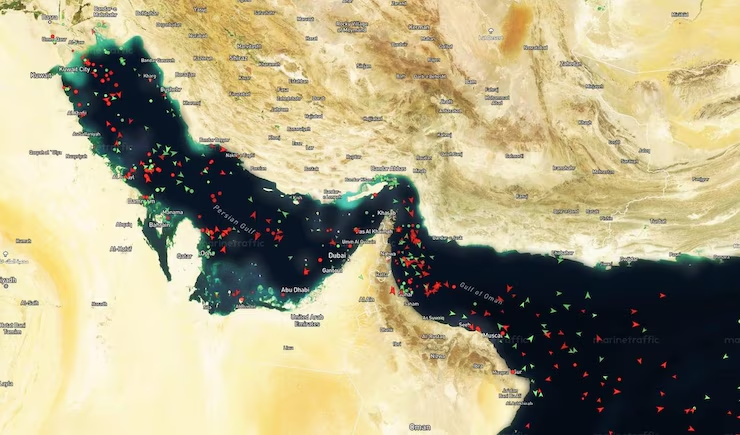
Following joint US‑Israeli strikes on Iranian targets late last month, Tehran’s Revolutionary Guard has threatened to attack any vessel attempting to navigate the narrow waterway, prompting shipping giants and insurers to pull back and leaving a forest of stranded tankers clustered at the Gulf’s edges.
Strait of Hormuz: World’s Energy Lifeline Under Siege
Roughly a fifth of the world’s crude oil and liquefied natural gas moves through the 21‑mile‑wide Strait of Hormuz, which connects the Persian Gulf to the Gulf of Oman and the Arabian Sea.
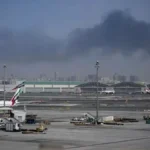
Over the last two weeks, Iran has used missile and drone attacks, radio threats and live‑fire incidents to effectively restrict passage, even as it stops short of formally declaring a blockade, creating a climate in which commercial traffic has “essentially ceased,” according to maritime tracking firms.
Industry data shows that seaborne traffic through the strait has fallen by around 70–80 percent at various points during the crisis, with at least four to five tankers damaged and more than 150–200 vessels forced to anchor or drift outside the danger zone.
Iran’s Closure Threats and Limited Exceptions
Senior commanders of Iran’s Islamic Revolutionary Guard Corps have declared on state television that the Strait of Hormuz is “closed” and warned that any ship attempting to cross will be set ablaze, vowing that “we will not let oil be exported from the region” as long as the campaign of Western strikes continues.
In practice, Tehran has carved out narrow exceptions, signalling that Chinese‑linked vessels and a handful of ships from neutral or friendly countries such as Turkey, India and Saudi Arabia may be allowed to pass, even as Western‑flagged or Western‑insured tankers remain prime targets.
Ship‑tracking reports show rare transits by Chinese‑operated bulk carriers and select gas and oil tankers, including Indian‑flagged vessels, but these isolated passages do little to offset the near‑total freeze in regular commercial flows.
Oil Prices Blast Past 100 Dollars
As tankers sit idle and exporters slash shipments, benchmark Brent crude has surged back above 100 dollars per barrel for the first time in years, with intraday spikes approaching 115–120 dollars at moments of peak panic.
Analysts at leading investment banks warn that if the disruption at Hormuz lasts more than a few weeks, the world could be facing the largest single oil supply shock in modern history, with scenarios of prices climbing towards 150 dollars per barrel not being ruled out.
Even massive coordinated releases from strategic petroleum reserves and emergency messaging from Western governments have so far failed to calm markets, as traders focus on the daily reality of ships unable or unwilling to load crude from Saudi Arabia, Iraq, Kuwait, the UAE and Qatar.
The Biggest Supply Disruption in Decades
Energy experts point out that the current shock combines two blows at once: a steep fall in exports through Hormuz and simultaneous damage or shutdowns at refineries, gas fields and export terminals across the Gulf caused by missile and drone attacks.
Qatar has reportedly halted some liquefied natural gas production and moved towards declaring force majeure on shipments, while Saudi Arabia has temporarily shut at least one major refinery after a drone strike, deepening fears of sustained supply tightness.
Shipping and Insurance: War‑Risk Surcharges Soar
Marine insurers have responded to the rising violence by withdrawing war‑risk coverage for vessels entering the Persian Gulf and the Strait of Hormuz, a move that effectively prices many shippers out of the route or forces them to charge sky‑high freight rates.
Notices from major protection‑and‑indemnity clubs and underwriters state that war‑risk policies for the region are being cancelled or heavily restricted, prompting shipping companies to steer clear and leaving charterers scrambling for insured tonnage.
As a result, tanker day rates from the Middle East to Asia have hit multi‑year highs, while about 10% of the world’s container fleet is caught up in wider delays, raising the risk that cargo congestion will soon spill over into European and Asian ports far from the Gulf itself.
Global Energy Crunch and Inflation Fears
For energy‑importing nations, the combination of soaring crude prices, higher freight costs and strained gas supplies is feeding directly into worries about a new wave of inflation and slower economic growth.
Households and businesses are already confronting higher petrol and diesel prices, costlier air travel, and mounting electricity and heating bills, at a time when many economies were only just emerging from previous inflation shocks.
Central banks across Asia and Europe face the prospect of having to balance the fight against inflation with the risk of choking off growth, as the Iran conflict injects fresh volatility into commodity markets and investor sentiment.
Asia in the Crosshairs: India, China, Japan
Asian economies, which rely heavily on Middle Eastern crude and LNG, are among the hardest hit by the effective closure of Hormuz.
Refiners in India, China, Japan and South Korea are reviewing stock levels and emergency plans, with some exploring alternative supplies from Russia, the United States and West Africa, even as they grapple with higher shipping times and logistical constraints.
Analysts note that India may increase purchases of discounted Russian oil where possible, while also pushing domestic refiners to optimise throughput and fuel blending to cushion consumers from the full impact of the price spike.
Impact on Indian Consumers and the Rupee
For India, one of the world’s largest crude importers, sustained prices above 100 dollars a barrel risk widening the current account deficit, putting downward pressure on the rupee and straining government finances through higher fuel subsidies or tax adjustments.
Any prolonged spike would make it harder to keep domestic petrol and diesel prices stable, potentially feeding into food and transport costs and re‑igniting inflationary pressures just as policymakers were attempting to consolidate growth.
Western Response: Escorts, Reserves and Diplomacy
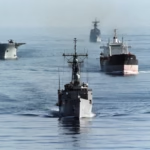
In Washington and European capitals, leaders describe the current disruption as a grave threat to global economic stability and have floated a range of measures, from naval escorts for tankers to coordinated stock releases and new sanctions on Iranian entities.
The United States has signalled that its Navy could begin formally escorting commercial vessels through the strait if required, while agencies such as the International Energy Agency are preparing contingency plans for further drawdowns of strategic reserves.
At the same time, diplomats are quietly exploring back‑channel talks to reduce tensions, conscious that a miscalculation involving a tanker, naval vessel or energy facility could escalate the crisis far beyond the Gulf.
Uncertain Road Ahead
Market strategists caution that much now depends on how long the Strait of Hormuz remains effectively shut and whether Iran and its adversaries choose to widen or de‑escalate the conflict in the coming weeks.
Futures curves suggest that traders still expect prices to ease over the longer term, but the steep jump in near‑term contracts reflects deep scepticism that normal traffic can resume quickly without a credible security framework and political understanding.
Until then, the sight of stranded super‑tankers at the mouth of the Strait of Hormuz will remain a powerful symbol of a world once again learning how tightly its prosperity is tied to a narrow waterway in a volatile corner of the Middle East.
Tags:
Like and Follow State Correspondents Facebook Page Latest International News Iran US War Subscribe for alerts© 2026 State Correspondents. All rights reserved.