




Centre Clears ₹3,200 Cr Dulhasti‑II Hydropower Project on Chenab in J&K
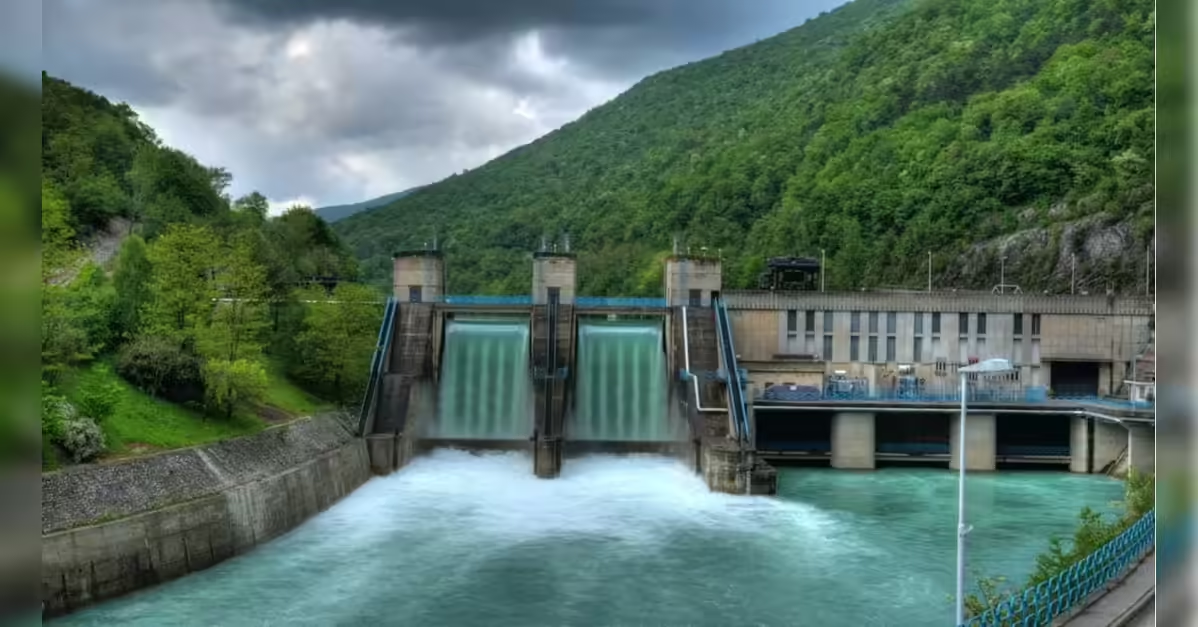
The existing Dulhasti Stage‑I power station on the Chenab River in Kishtwar district, Jammu and Kashmir.
In a major boost to Jammu and Kashmir’s power sector, the Union Environment Ministry’s Expert Appraisal Committee (EAC) has granted environmental clearance to the 260 MW Dulhasti Stage‑II hydropower project on the Chenab River in Kishtwar district, at an estimated cost of over ₹3,200 crore.
Project Details and Capacity
Dulhasti Stage‑II is a run-of-the-river scheme with an installed capacity of 260 MW, to be developed as an extension of the existing 390 MW Dulhasti Stage‑I Hydroelectric Project, which has been operational since 2007 under NHPC Limited.
The new project will draw water from the existing Dulhasti power station through a separate head race tunnel of about 3.7 km length and 8.5 m diameter, forming a horseshoe-shaped pondage for Stage‑II. It will feature a surge shaft, pressure shaft, and an underground powerhouse housing two units of 130 MW each.
Land and Location
The project will be located in village Dul, Kishtwar district, and will require a total land area of around 60.3 hectares, including about 8.27 hectares of private land from the villages of Benzwar and Palmar.
Officials said the project will be implemented by NHPC Limited and is expected to strengthen regional power generation, create local employment, and support the government’s push for clean energy in the Union Territory.
Strategic and Geopolitical Significance
The approval comes at a time when the Indus Waters Treaty with Pakistan remains suspended following the Pahalgam terror attack in April 2025. The EAC noted that the project’s parameters were originally designed in line with the 1960 treaty, but the clearance now paves the way for India to fully utilize its rights over the Chenab, one of the western rivers allocated to Pakistan under the treaty.
Experts see this as part of a broader strategy to accelerate hydropower development on the Chenab, Jhelum, and Indus basins, reinforcing India’s hydroelectric and strategic position in the region.
Environmental and Regional Impact
The EAC emphasized the need for robust environmental flow regimes, protection of aquatic and riparian biodiversity, and a structured river conservation strategy for the Chenab basin.
With this clearance, the government can now proceed to float tenders for construction, which is expected to generate thousands of direct and indirect jobs in Kishtwar and surrounding areas during the project’s execution phase.
Next Steps
With environmental clearance in place, NHPC will move to the detailed project report (DPR) finalization and tendering process. The project is expected to take several years to complete, with commercial operation likely in the early 2030s.
Local leaders and civil society groups have welcomed the project, calling it a long-overdue step towards harnessing J&K’s vast hydropower potential and ensuring energy security for the region.