



Centre Clears Big Expansion Of MBBS, PG Seats To Tackle Doctor Shortage
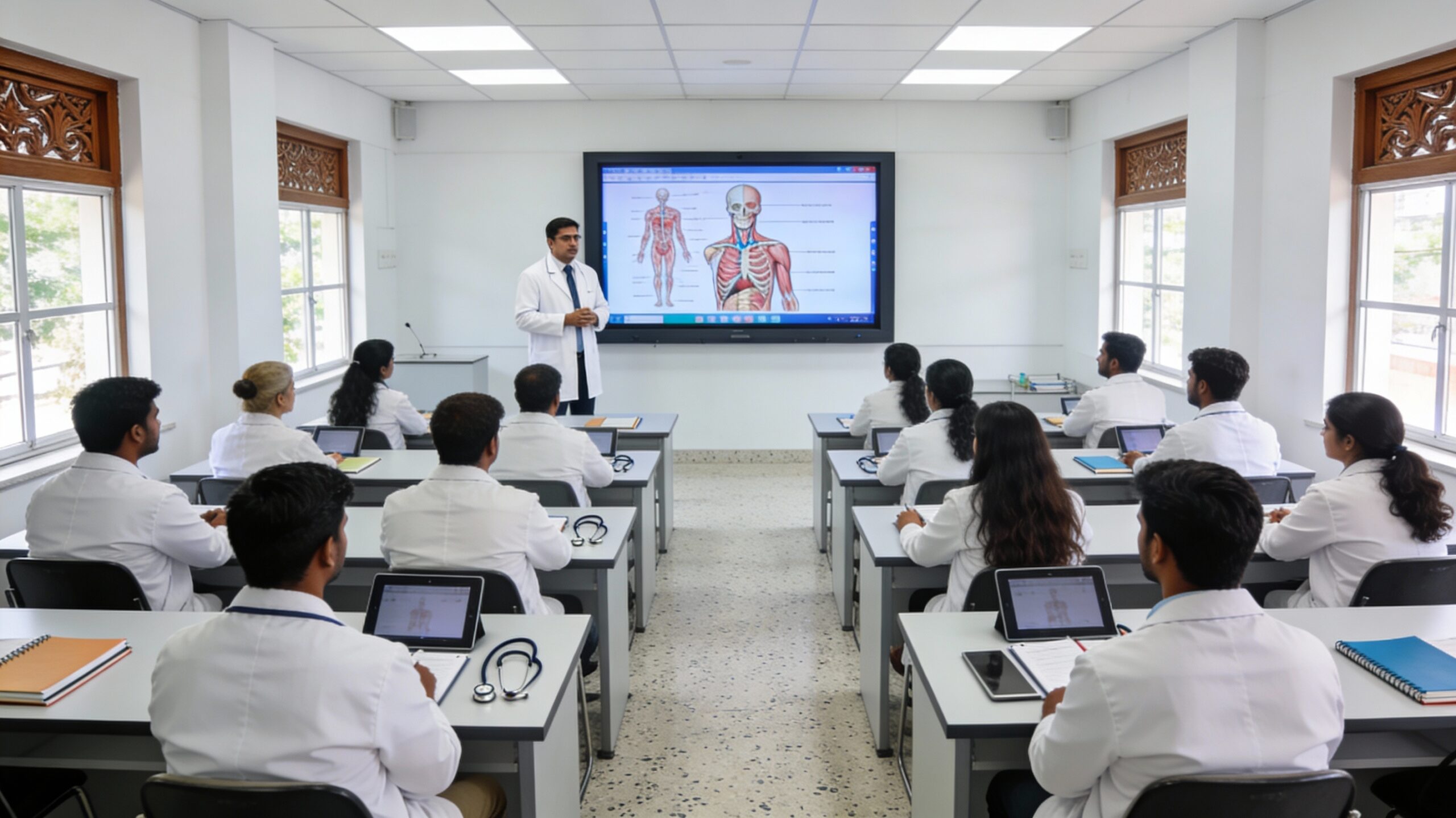
The Centre has approved 10,023 additional medical education seats to be created in government institutions between 2025–26 and 2028–29 as part of a new phase of centrally sponsored schemes for undergraduate (MBBS) and postgraduate (PG) expansion. Officials say the move is aimed at boosting the supply of doctors and specialists, reducing India’s dependence on foreign medical colleges and strengthening public health infrastructure, especially in underserved states.
Over 10,000 New Seats In Next Phase
Data shared in Parliament show that 10,023 new seats will be added in government medical colleges and standalone PG institutes under Phase‑III of the Centrally Sponsored Scheme (CSS) for 2025–26 to 2028–29. The Union Cabinet has separately cleared a plan to increase 5,000 PG seats and 5,023 MBBS seats in existing government institutions, with the Centre bearing a major share of the capital cost up to an enhanced ceiling of around ₹1.5 crore per seat.
These fresh approvals are over and above the big capacity jump already recorded in recent years: between academic years 2020–21 and 2025–26, India added 48,563 MBBS seats and 29,080 PG seats, taking total medical intake to historic highs.
Record Surge In Colleges And MBBS Intake
The National Medical Commission (NMC) has informed that India now has over 800 medical colleges, with MBBS capacity rising by about 141% since 2013–14 to around 1.37 lakh seats for 2025–26. In October alone, the regulator approved 10,650 new MBBS seats and sanctioned 41 new medical colleges, marking the largest single‑year undergraduate expansion and pushing total MBBS seats to approximately 1,37,600 across 816 institutions.
For 2025–26, the government has also reported the addition of 44 new medical colleges, 11,732 MBBS seats and 3,393 PG seats, with Karnataka, Maharashtra, Tamil Nadu and Uttar Pradesh among the biggest beneficiaries of new specialist capacity. States such as Andhra Pradesh, Gujarat, Jammu & Kashmir, Madhya Pradesh, Odisha, Rajasthan and Telangana have each received more than 100 new PG seats this year alone.
New Rules To Address Faculty Shortage And Quality
To support the seat increase, the NMC has rolled out the Medical Institution (Qualifications of Faculty) Regulations, 2025, allowing large non‑teaching government hospitals with over 220 beds to be converted into teaching facilities and letting experienced specialists become faculty without mandatory long senior residency, subject to research‑course requirements. The rules also permit new government medical colleges to start MBBS and PG courses in parallel, speeding up the production of specialists in areas such as anaesthesia, critical care and oncology.
Policy documents acknowledge concerns about teacher shortages but argue that the combination of revised faculty norms, digital teaching tools and strengthened accreditation standards will help maintain teaching quality even as capacity expands.
Impact On Doctor Shortage And Public Health
According to government estimates, India has added more than 69,000 MBBS seats and over 43,000 PG seats over the last decade, significantly improving the doctor‑population ratio closer to the World Health Organization’s recommended norms. Health experts say the latest expansion, if matched with stronger primary‑care infrastructure and rural posting incentives, could help address specialist shortages in district hospitals and reduce patient loads on big urban centres.
For lakhs of NEET‑UG and NEET‑PG aspirants, the new seats mean better chances of securing admission within India, while for the public health system they represent a long‑term investment in a larger, better‑distributed medical workforce capable of handling future crises and everyday care alike.