

Flydubai Cockpit Horror: Probe Deepens Into Mid-Air Axe Attack by Co-Pilot as Global Aviation Confronts Vetting Lapses
UAE authorities treat violent flight-deck assault on Captain Smit Machchhar as an attempted terrorist act; revelations over suspect’s prior grounding in Oman spark urgent calls to overhaul pilot screening protocols.
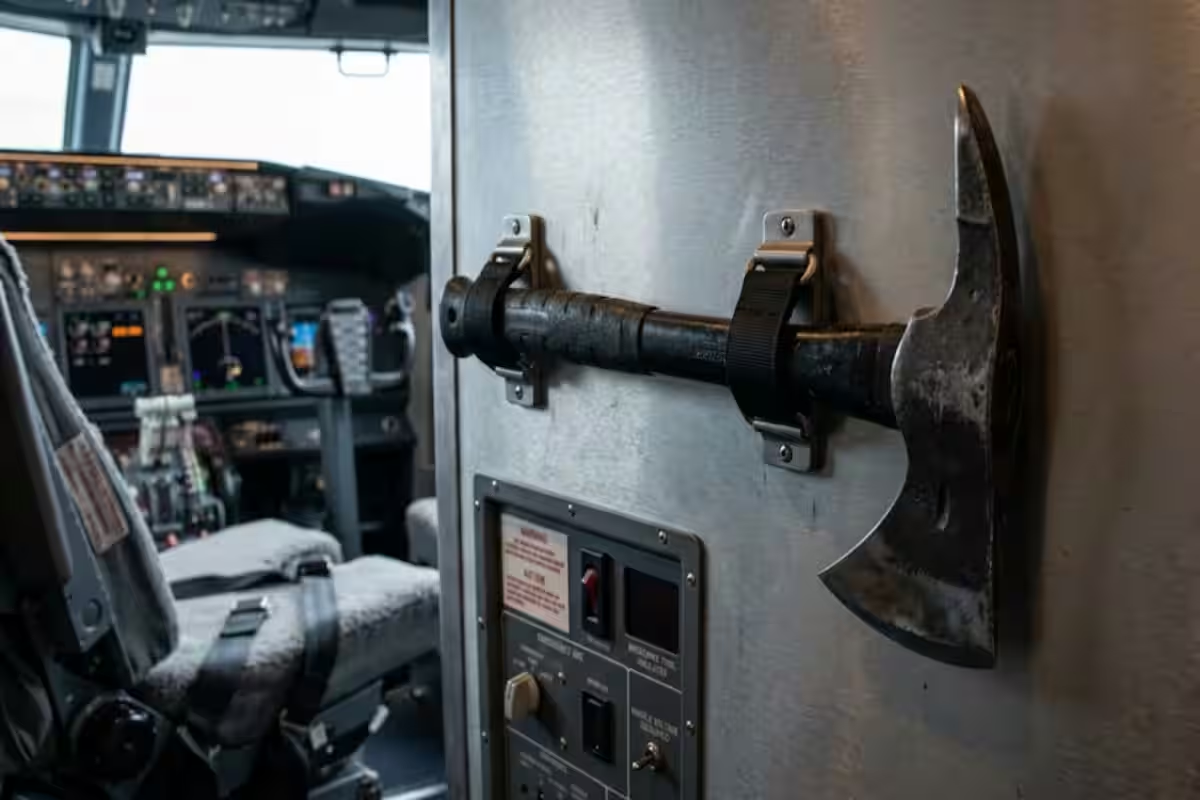
DUBAI: Multinational civil aviation bodies and intelligence agencies have intensified investigations into a chilling mid-air crisis aboard flydubai flight FZ1073, after a co-pilot armed with an emergency crash axe violently ambushed the aircraft’s captain in an apparent bid to crash the passenger jet. The incident, classified by UAE judicial authorities as an attempted terrorist act, has triggered an emergency reassessment of flight-deck security, psychological screening, and cross-border intelligence sharing for commercial aircrews.
The Boeing 737, carrying over 170 passengers and crew en route from Dubai to Tel Aviv, was cruising at altitude when First Officer Hamam al-Hammami, an Omani national, attacked the pilot-in-command, Mumbai-born Captain Smit Machchhar. During the struggle, the controls were forced forward, sending the airliner into a harrowing, steep plunge of thousands of feet before the situation was brought under control.
Key Details of the Flight FZ1073 Attack
- Mid-Air Ambush: The co-pilot struck Captain Smit Machchhar using the cockpit’s emergency crash axe and attempted to crash the Boeing 737.
- Heroic Resistance: Despite suffering severe stab and slash wounds, Captain Machchhar unlocked the armored cockpit door, enabling cabin crew and passengers to breach the flight deck.
- Plunge & Recovery: The plane descended sharply by an estimated 14,000 to 16,000 feet before off-duty pilots and crew regained control, executing an emergency landing in Tabuk, Saudi Arabia.
- Prior Extremism Red Flags: Reports revealed the suspect had previously been removed from active flying duties by Oman’s national carrier over suspected extremist inclinations.
Battle at 30,000 Feet: How Catastrophe Was Averted
Investigators and eyewitnesses recount that as the Boeing 737 approached regional airspace, al-Hammami initiated a sudden, unprovoked assault on the captain. Despite being critically wounded and fighting for his life, Captain Machchhar summoned the presence of mind to trigger the electric door release of the reinforced cockpit barrier.
Alerted by sudden extreme turbulence, alarms, and shouts from the flight deck, alert passengers—supported by cabin crew and off-duty pilots traveling on board—stormed the cockpit, physically overpowering and restraining the assailant. A reserve crew member and the surviving flight team stabilized the aircraft and coordinated with Saudi air traffic controllers to execute an emergency landing at Tabuk regional airport.
“In that moment, I was fighting for my life and for the lives of every passenger behind that door. When the plane began plunging, I knew I had to open the latch no matter what,” Captain Machchhar recalled from his hospital bed, earning praise from Indian Prime Minister Narendra Modi and aviation leaders worldwide.
The Vetting Failure: Red Flags Ignored
The investigation has sparked anger across the international aviation fraternity after emerging intelligence revealed that al-Hammami had previously been grounded by Oman Air due to overt indicators of ideological extremism and shifted to an administrative desk job.
Security analysts are questioning how an individual flagged for extremist tendencies slipped through background checks, secured a flying license with an international carrier, and was rostered on a sensitive, high-profile route. Multiple regional intelligence agencies, alongside Western security counterparts, are investigating whether the co-pilot acted as a radicalized lone actor or had operational ties to a wider terror network.
UAE Attorney General’s Official Position
The UAE Attorney General’s office confirmed that Hamam al-Hammami remains in high-security custody facing charges of an attempted terrorist act, premeditated attempted murder, and endangering civil aviation. Officials stressed that comprehensive interrogations and digital forensic sweeps are underway to determine if any external handlers or accomplices were involved.
Global Aviation Weighs Drastic Reforms
The incident has reopened contentious debates over flight-deck safety regulations that trace back to post-9/11 protocols and the 2015 Germanwings tragedy:
Re-evaluating the ‘Two-Person’ Rule: Regulators including the Federal Aviation Administration (FAA), the European Union Aviation Safety Agency (EASA), and Gulf civil aviation directorates are re-examining cockpit behavioral dynamics. While armored doors protect against external hijackers, they offer zero protection when the threat originates from behind the controls.
Centralized Security Databases: Aviation unions and safety bodies are demanding an international clearinghouse for pilot vetting. Analysts point out that an airline pilot flagged or grounded for security reasons in one jurisdiction should be universally flagged across global civil aviation registries.
As Captain Machchhar recovers and investigators piece together the timeline of the attack, the episode stands as a stark warning to the commercial aviation industry: physical security measures mean little without airtight behavioral vetting and transnational counter-terror vetting of the personnel entrusted with the cockpit.