

Cauvery Water Dispute: DMK Moves Supreme Court, Demands Karnataka Release Water
Urgent intervention sought as low seasonal rainfall paralyzes Tamil Nadu’s agricultural belt.

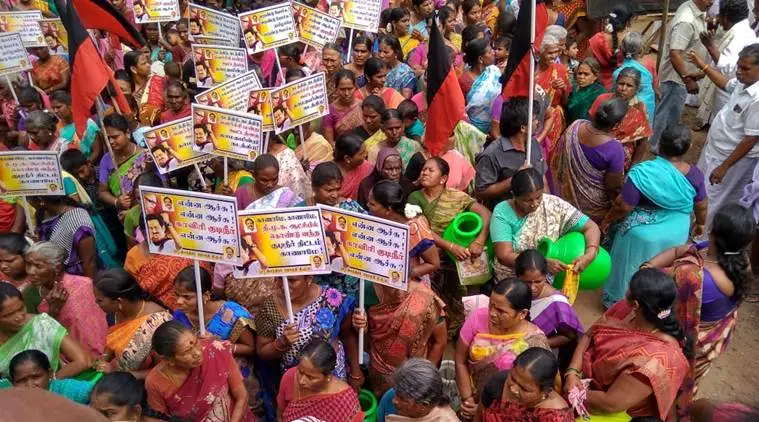
STATE DEMAND: A powerful DMK-led protest in Chennai, Tamil Nadu, visualizes the intensifying water crisis. Protesters hold banners reading ‘RELEASE CAUVERY WATER NOW – OUR RIGHTS, NOT KARNATAKA’S GIFT!’ in English and Tamil, emphasizing the urgency of the situation as the party moves the Supreme Court.
STATE CORRESPONDENTS | NEW DELHI / CHENNAI: The long-standing, volatile inter-state Cauvery river water dispute has taken a significant legal turn. Tamil Nadu’s ruling party, the Dravida Munnetra Kazhagam (DMK), has moved the Supreme Court, seeking an immediate and mandatory direction for Karnataka to release the state’s allocated share of water from the Cauvery basin.
Key Report Highlights
- Legal Action: Tamil Nadu’s DMK party files a petition in the Supreme Court, citing immediate distress.
- Core Demand: Direction to Karnataka to release the prescribed quantum of Cauvery water.
- Ground Crisis: Severe low seasonal rainfall has led to a critical water deficit in the Cauvery delta, threatening livelihoods.
- Karnataka’s Stance: Karnataka faces its own water shortage, complicating compliance with previous tribunal orders.
DMK Cites Distress and Rights in Petition
The DMK’s petition, filed through standing counsel, emphasizes the critical situation on the ground. The party contends that Karnataka has failed to release the stipulated quantum of water, violating the final order of the Cauvery Water Disputes Tribunal (CWDT) and subsequent Supreme Court judgments. This failure, the petition argues, is a direct breach of the cooperative federalism principles that govern inter-state water sharing.
Our Chennai correspondent highlights that the move is supported by a large-scale mobilization (pictured above), where party workers and farmers are unified in their demand. The primary argument is that water is a state right, essential for the survival of millions of farmers in the delta districts, and not a conditional gift from the upper riparian state.
The petition draws urgent attention to the fact that the ‘Kuruavai’ (short-term) and upcoming ‘Samba’ (long-term) paddy crops, the backbone of Tamil Nadu’s agriculture, are facing failure due to the acute water shortage. The party is seeking an interim directive for the release of water for immediate irrigation needs while the main petition is heard.
The ‘Rain Shadow’ Factor: Low Rainfall Amplifies Crisis
A major complicating factor in the current cycle of the dispute is the “low seasonal rain in the basin.” Meteorological data from both states indicates a significant deficit in the Southwest Monsoon rainfall within the Cauvery catchment areas. This has reduced inflows into the major reservoirs in both Karnataka (Harangi, Hemavathy, KRS, and Kabini) and Tamil Nadu (Mettur).
The problem is systemic: Karnataka, facing a drought-like situation in many of its districts, argues that it has insufficient water to meet its own drinking and irrigation demands, let alone releasing the full allocated share to Tamil Nadu. However, Tamil Nadu contends that in a distress year, the pain must be shared proportionally, as per the established distress-sharing formula.
| Indicator | Karnataka Basin Reservoirs | Tamil Nadu Basin Reservoirs | Implication |
|---|---|---|---|
| Seasonal Rainfall Deficit (SW Monsoon) | ~35% Deficit | ~28% Deficit | Significant distress across the basin. Proportionate sharing is required. |
| Current Live Storage (July 2026) | ~48% of Full Capacity | ~25% of Full Capacity | Deficit exists in Karnataka, but Tamil Nadu faces immediate agricultural failure. |
Legal Battles and Co-operative Federalism
The Supreme Court will have to balance the immediate survival needs of Tamil Nadu’s agriculture with the storage deficits in Karnataka. Previous orders have often used a distress-sharing mechanism to allocate water in deficit years, but the exact implementation quantum is frequently contested.
The Cauvery Management Authority (CMA) and the Cauvery Water Regulation Committee (CWRC), the regulatory bodies established by the Supreme Court, have been attempting to broker a solution, but political pressure and the actual water deficit often lead to deadlock. The DMK’s decision to bypass regulatory intermediaries and approach the apex court directly signals the gravity of the ground-level crisis.
State Correspondents will continue to provide real-time updates as the Supreme Court schedules the hearing and judicial intervention begins.