

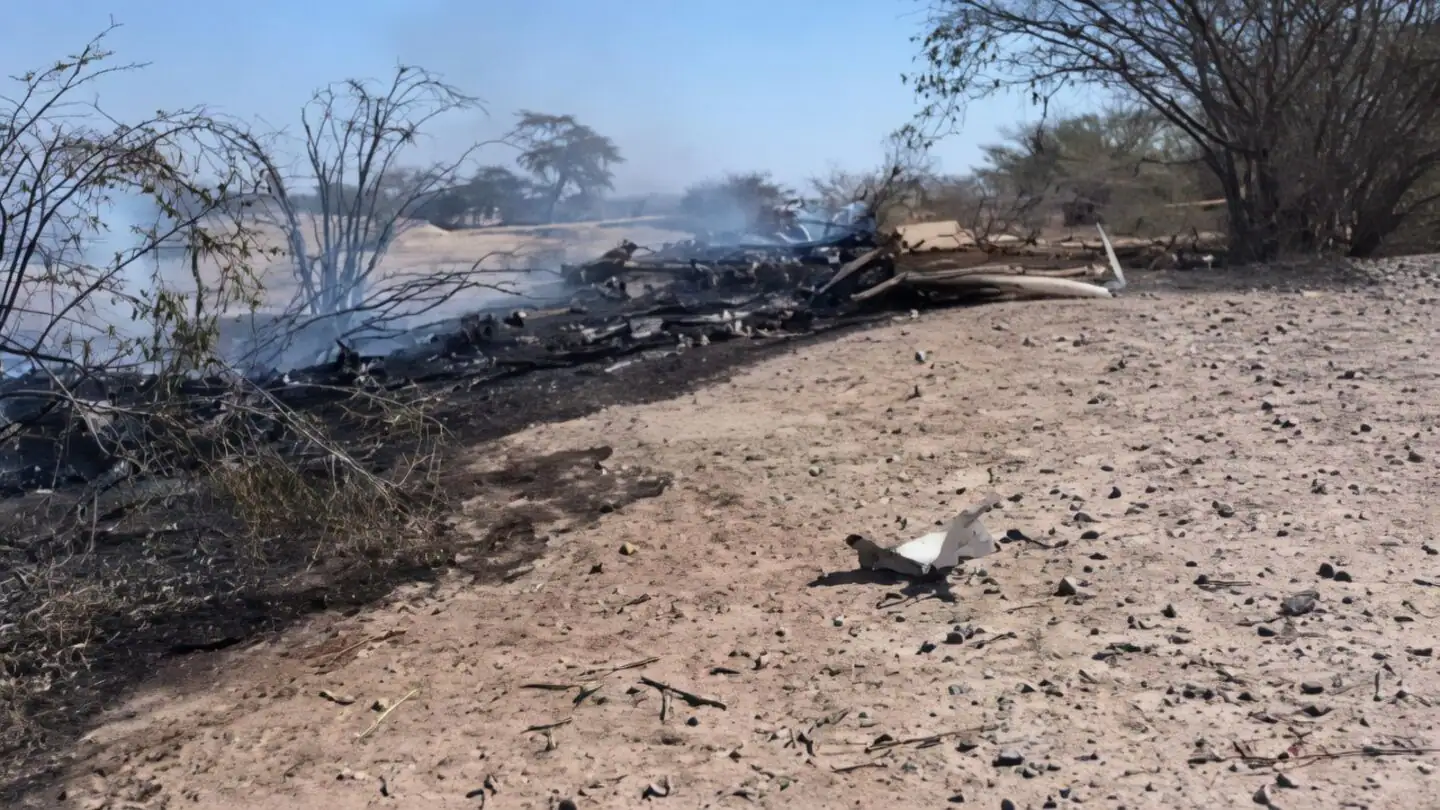
Tragedy in Peru: Small Tourist Plane Crashes Near UNESCO-Listed Nazca Lines, All 13 On Board Killed
NAZCA, PERU — A scenic overflight tour above Peru’s famous UNESCO World Heritage Nazca Lines ended in catastrophic loss on Saturday after a small passenger plane crashed into a field outside the southern city of Nazca. Officials have confirmed that all 13 people on board—11 foreign tourists and two Peruvian crew members—perished in the impact and subsequent fire.
Mid-Air Emergency Before Loss of Contact
The ill-fated aircraft, a Cessna 208 Grand Caravan operated by regional Peruvian charter carrier Aerodiana, took off from Pisco Airport shortly after midday. The flight was carrying tourists on a low-altitude sightseeing journey to view the ancient desert geoglyphs.
According to Peru’s Ministry of Transportation and Communications, the flight crew reported a sudden in-flight emergency to the Nazca control tower at approximately 1:00 PM local time. Moments later, all radio communications were lost as the aircraft went down near the Socos district, roughly 6 kilometers from Nazca city and 12 kilometers from the core archaeological zone.
Accident Summary at a Glance
- Aircraft: Cessna 208 Grand Caravan (Operated by Aerodiana)
- Crash Location: Socos / Pueblo Viejo area near Nazca, Peru
- Fatalities: 13 total (11 passengers, 2 pilots)
- Victim Demographics: 7 Italian, 2 German, 2 Spanish nationals, and 2 Peruvian flight crew members.
Breakdown of Victims and Crew Identified
Peru’s Ministry of Foreign Trade and Tourism released details confirming the nationalities of the passengers on board. The crew was led by senior pilot Américo Salazar Cuellar and co-pilot Irenka Guanilo del Carpio.
| Category | Nationality | Number of Victims |
|---|---|---|
| Tourists | Italy | 7 |
| Tourists | Germany | 2 |
| Tourists | Spain | 2 |
| Flight Crew | Peru | 2 (Pilot & Co-Pilot) |
“Given the severity of the crash and the resulting fire, there were no survivors. Emergency teams and forensic units are actively working at the site.”
— Police Major Jorge Andrade, Speaking at the Crash SiteSafety Scrutiny Surrounding Sightseeing Overflights
The Nazca Lines—enormous ancient drawings etched into the arid desert soil depicting animals, geometric shapes, and plants—are best appreciated from above, attracting over 100,000 visitors annually. However, aerial tours in the region have historically faced intense safety oversight following periodic mechanical failures and incidents over past decades.
Peruvian aviation authorities and civil accident investigators have arrived at the scene to collect evidence and determine whether mechanical malfunction, atmospheric turbulence, or fuel issues contributed to the crash. Meanwhile, local municipal authorities confirmed that airport operations are under review pending preliminary investigative reports.