



India Denies ‘Secret Arrangement’ With Iran For Safe Tanker Passage Through Strait of Hormuz
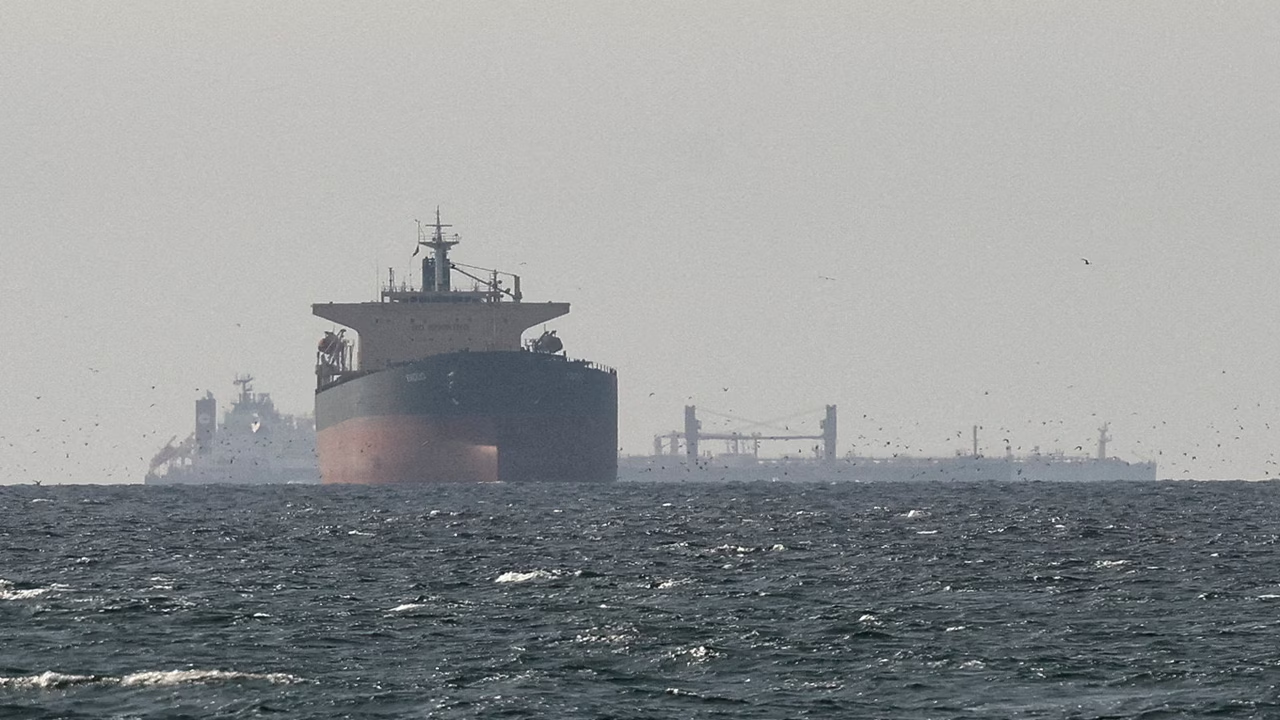
- External Affairs Minister S Jaishankar says there is “no blanket arrangement” or secret deal with Iran for Indian ships in the Strait of Hormuz.
- New Delhi rejects media reports of a tanker‑swap or quid pro quo with Tehran in exchange for safe passage of Indian‑flagged or India‑bound vessels.
- Government stresses that every ship movement is handled individually through diplomatic engagement, as two LPG carriers safely transit the conflict‑hit corridor.
India has firmly denied speculation that it struck a secret deal with Iran to secure safe passage for its tankers through the war‑hit Strait of Hormuz, insisting that there is no “blanket arrangement” and that each ship’s transit is being managed individually through diplomacy.
The clarification comes after reports suggested that Tehran had offered special assurances to Indian‑flagged or India‑bound vessels—even as ships linked to Western countries remained stranded or under threat amid the Iran war and a near‑shutdown of the strategic waterway.
Jaishankar: ‘No Blanket Arrangement, No Secret Deal’
External Affairs Minister S Jaishankar, speaking in interviews with international media and in comments cited by Indian outlets, stressed that India has not entered into any secret or comprehensive agreement granting its ships automatic clearance through the Strait of Hormuz.
“There is no blanket arrangement. Every ship movement is an individual happening,” Jaishankar said, adding that New Delhi is relying on “reason and coordination” with Tehran based on a long‑standing bilateral relationship, not on any hidden quid pro quo.
He also rejected suggestions that India had offered concessions or traded anything in return for the recent safe passage of two Indian‑flagged LPG carriers, saying, “It’s not an exchange issue. India and Iran have a relationship… which is the basis on which I engaged.”
Background: Two LPG Tankers Break the Deadlock
Jaishankar’s remarks follow the high‑profile transit of two Indian‑flagged gas carriers—Nanda Devi and Shivalik—through the Strait of Hormuz last week, at a time when global attention was focused on stranded ships and surging oil prices.
According to government statements and shipping ministry data, the two LPG tankers, carrying about 90,000 tonnes of liquefied petroleum gas between them, crossed the strait and are heading towards Indian ports, offering some relief to concerns about immediate supply disruptions.
New Delhi has framed their passage as the result of “ongoing diplomatic engagement” with Tehran, while cautioning that many more Indian vessels remain in the wider Gulf region and that the situation is still fluid.
Government Rejects ‘Tanker Swap’ and Secret Understanding
The Indian government has also pushed back against reports claiming that Iran demanded the release of three seized oil tankers in exchange for allowing Indian vessels to pass safely through Hormuz.
Official sources quoted by Indian media described such stories as “baseless” and pointed out that the ships in question were not Iranian‑owned, dismissing suggestions of any covert tanker‑swap deal.
New Delhi maintains that its communications with Tehran have focused on maritime safety, the welfare of Indian seafarers and broader energy security, rather than on transactional exchanges involving detained vessels.
Case‑By‑Case Diplomatic Clearances
Jaishankar has repeatedly underlined that each Indian‑flagged vessel’s movement through the Strait of Hormuz is being handled on a case‑by‑case basis, with diplomats engaging Tehran before and during transits.
An Indian government source cited in international reports said informal assurances were conveyed by Iran after phone calls between the two countries’ foreign ministers, but stressed that no formal or written agreement had been concluded.
At the same time, an Iranian source quoted by Reuters denied that any formal deal exists, highlighting the sensitivity of the issue and the complex internal decision‑making within Tehran’s political and military structures.
Iran Also Denies Special Deal for Indian Ships
Interestingly, Iranian officials too have publicly rejected claims that the strait has been “opened” exclusively for Indian‑flagged tankers, saying no special arrangement exists for any country’s vessels.
Tehran has maintained that while it is in contact with partners including India, its overall posture in the Strait of Hormuz is shaped by the broader conflict with the United States and Israel, not by bilateral deals granting privileged access.
This dual denial—from both New Delhi and Tehran—has added to the sense of confusion around how exactly some ships manage to cross while others remain blocked, fuelling further speculation even as diplomats call for restraint.
Energy Security and Indian Sailors at Stake
Behind the diplomatic wordplay lies a serious concern: India’s heavy dependence on Gulf energy supplies and the safety of hundreds of Indian seafarers working in and around Hormuz.
Government figures indicate that roughly two dozen Indian‑flagged ships, carrying close to 800 Indian sailors, have been operating on both sides of the strait since the Iran war escalated, placing them directly in the path of missile, drone and naval threats.
Ministries in New Delhi say they are in constant contact with ship managers, recruitment agencies and Indian embassies in the region to ensure real‑time coordination and emergency support for crews.
Balancing Ties With Iran, US and Gulf Partners
India’s careful messaging also reflects its broader diplomatic balancing act: maintaining long‑standing ties with Iran, deepening strategic partnerships with the United States and key Gulf monarchies, and safeguarding its own energy lifelines.
New Delhi has repeatedly called the conflict in West Asia “very unfortunate” and urged all sides to avoid targeting commercial shipping, even as it quietly steps up crude purchases from alternative suppliers such as Russia to hedge against prolonged disruption.
Officials say the priority is to keep energy flowing without being sucked into either side’s military or sanctions agenda, a stance that requires both public denials of secret deals and intense private engagement with all players.
Media Speculation vs Official Narrative
Initial reports that Iran had “opened” Hormuz for Indian tankers, or that an informal safe‑passage corridor had been carved out for New Delhi alone, triggered a wave of commentary about India’s rising clout and quiet diplomacy.
But as both governments pushed back, the official narrative has shifted towards emphasising individual ship clearances, ongoing talks and a shared desire to avoid miscalculation in one of the world’s most dangerous waterways.
Analysts warn that while discreet understandings are not unusual in crises, public claims of secret deals can complicate diplomacy, invite criticism from rival powers and raise unrealistic expectations among shippers and markets.
‘Early Days’ in a Fast‑Moving Crisis
Jaishankar himself has cautioned that “these are still early days” and that many more Indian vessels remain in the region, meaning continued engagement with Tehran will be necessary to ensure their safe passage.
He has described the recent transits as a “welcome development” but stressed that there is “continued work” ahead, underscoring that India cannot assume normalcy while the Iran war and the global energy crunch continue.
For now, New Delhi’s message is clear: there is no secret corridor or hidden pact—only painstaking, ship‑by‑ship diplomacy in a conflict zone where every safe arrival is counted as a quiet victory.
Tags:
Like and Follow State Correspondents Facebook Page Latest International News Iran US War Subscribe for alerts© 2026 State Correspondents. All rights reserved.