




26 Naxalites With ₹65 Lakh Collective Bounty Surrender In Sukma; Major Setback To Maoist Movement
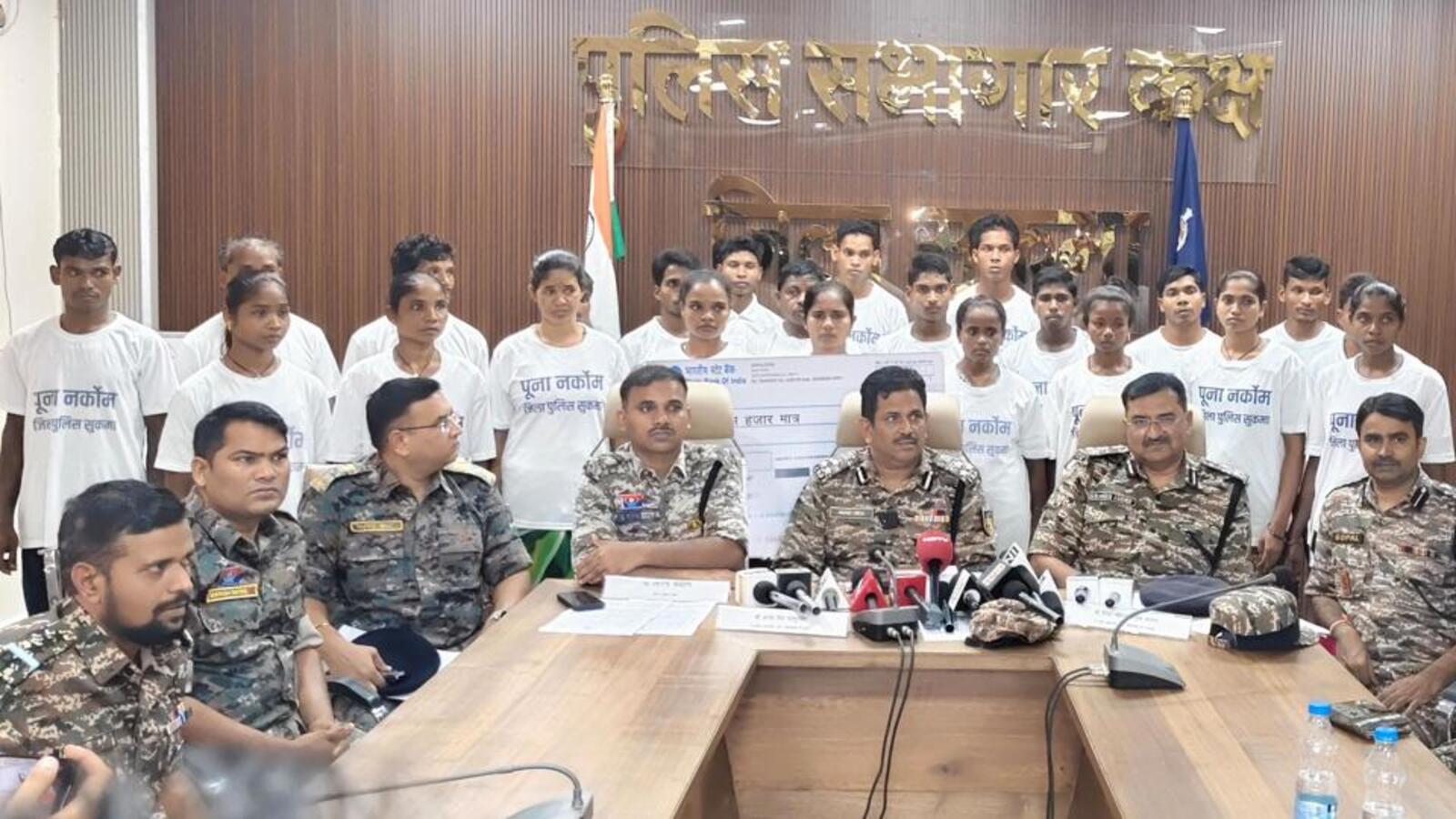
Surrender Details And Profile Of Cadres
The mass surrender took place on Wednesday (January 6, 2026), when the group of 26 Naxalites, including seven women, turned themselves in before senior police officers and Central Reserve Police Force (CRPF) officials in Sukma under the “Poona Margem” (from militancy to social reintegration) programme.
According to Sukma Superintendent of Police Kiran Chavan, the surrendered cadres were active across multiple Maoist formations, including the People’s Liberation Guerrilla Army (PLGA) battalion, South Bastar division, Maad division and the Andhra Odisha Border (AOB) division.
High-Value Cadres Among Surrendered
One of the most prominent figures in the group was Lali alias Muchaki Aayte Lakhmu (35), a company party committee member carrying a reward of ₹10 lakh, who was allegedly involved in the 2017 IED blast on the Koraput road in Odisha that killed 14 security personnel.
Four other key Maoist cadres — Hemla Lakhma (41), Aasmita alias Kamlu Sanni (20), Rambati alias Padam Jogi (21) and Sundam Pale (20) — carried bounties of ₹8 lakh each, with Hemla Lakhma linked to the 2020 Minpa ambush in Sukma that claimed 17 security personnel lives.
Among the remaining 13 cadres carrying rewards, three had bounties of ₹5 lakh each, one had ₹3 lakh, another ₹2 lakh, and three carried ₹1 lakh each, while the rest were lower-ranking members.
Reasons Behind The Surrender
Police officials said the cadres were involved in several violent incidents across Abujhmad, Sukma and bordering areas of Odisha, but cited prolonged exposure to hardship, internal discontent within the Maoist organisation and the attractiveness of Chhattisgarh’s surrender and rehabilitation policy as key motivations for laying down arms.
Security experts view the surrender as evidence of crumbling Maoist morale, driven by sustained counter-insurgency operations and the establishment of new security camps in remote interior areas that have significantly increased pressure on insurgent networks.
Rehabilitation And Financial Assistance
All 26 surrendered Naxalites were immediately provided financial assistance of ₹50,000 each and will be further rehabilitated under the state government’s comprehensive surrender and rehabilitation policy, which includes vocational training, housing support and livelihood assistance.
Appealing to others still associated with the outlawed Maoist movement, SP Chavan urged them to abandon violence and surrender, emphasising that the government is committed to providing a dignified pathway back to mainstream society.
Part Of Larger Anti-Naxal Push
The mass surrender comes just days after security forces killed 14 Naxals in two separate encounters in Sukma and Bijapur districts, and follows the surrender of top Naxal leader Deva Barse along with 20 associates in Hyderabad, indicating sustained momentum in counter-insurgency efforts.
This development aligns with the Central government’s stated goal to eradicate Naxalism by March 2026, as reiterated by Union Home Minister Amit Shah, and reflects the steady decline in Maoist influence across Chhattisgarh’s Bastar region.