



Trump Pushes Naval Coalition to Reopen Strait of Hormuz, Warns NATO Allies
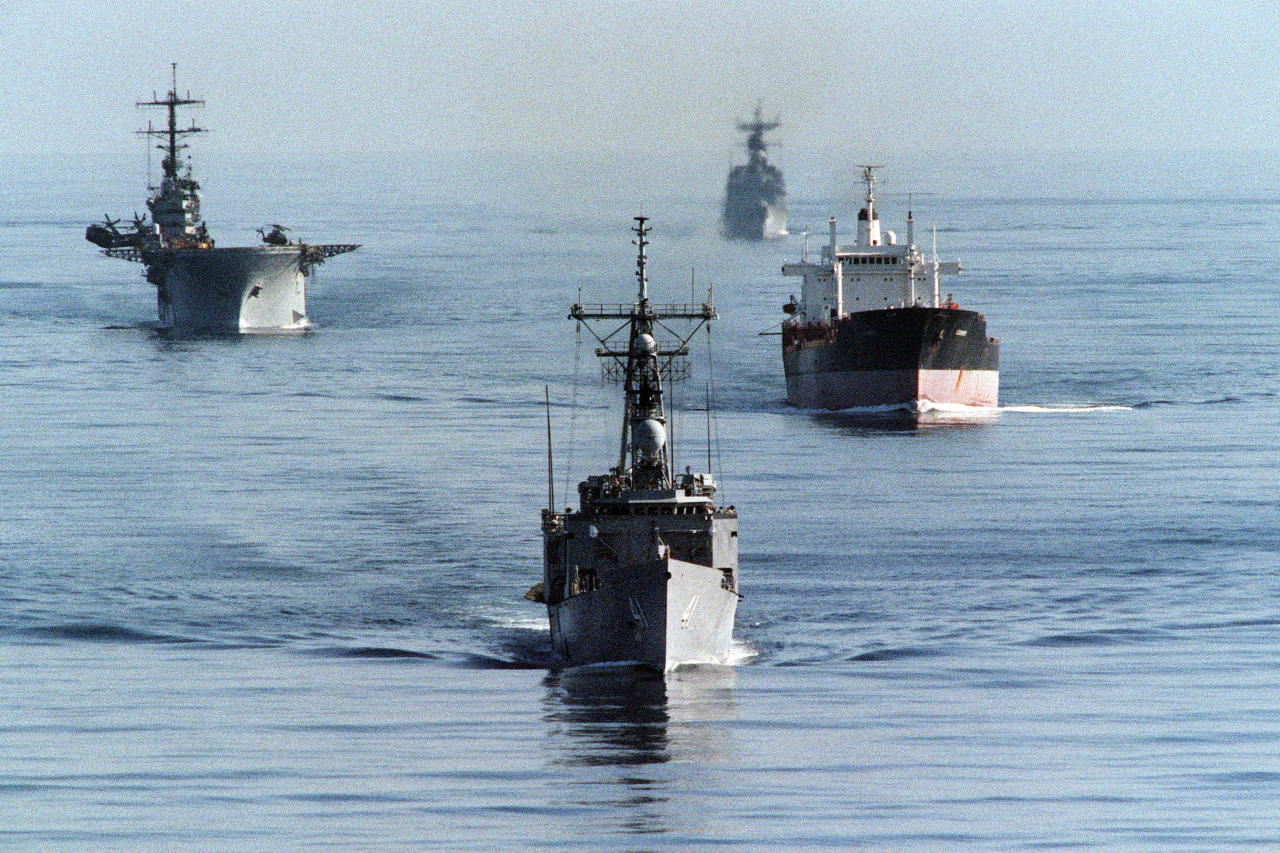
- Trump says “many countries” will send warships to help reopen the Strait of Hormuz and keep vital oil traffic flowing.
- The US leader warns NATO faces a “very bad” future if allies do not contribute more to Gulf security operations.
- Talks are under way with about seven nations, including China, the UK, France, Japan and South Korea, but several remain cautious.
With oil prices soaring and shipping through the Strait of Hormuz severely disrupted, US President Donald Trump has stepped up calls for a multinational naval coalition to secure the vital waterway and warned NATO allies that they must “step up” or face a “very bad” future.
Speaking in interviews, aboard Air Force One and on his Truth Social platform, Trump said he has asked “about seven” countries to join US warships in escorting commercial vessels through the strait, even as Iranian drones, missiles and naval units continue to threaten tankers and regional ports.
Trump’s Call for a Naval Coalition
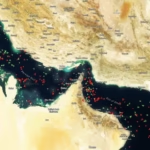
Trump has framed the proposed coalition as an international response to what he describes as Iran’s attempted “closure” of the Strait of Hormuz, through which roughly a fifth of the world’s oil and liquefied natural gas normally passes.
In multiple public statements, he has claimed that “many countries, especially those affected by Iran’s attempted closure of the Hormuz Strait, will be sending warships, in conjunction with the United States of America, to keep the strait open and safe.”
According to US and allied officials quoted in American media, the White House hopes to formally unveil a coalition plan within days, with a mixture of destroyers, frigates, minesweepers and surveillance assets tasked with deterring attacks and guiding commercial convoys through the narrow channel.
Pressure on NATO and Key Allies
Trump has coupled his coalition push with unusually sharp language towards NATO allies, warning that the alliance faces a “very bad” future if European members do not send ships or other assets to help secure the Gulf.
In remarks cited by the Financial Times and other outlets, he argued that countries which benefit from Gulf oil flows have a responsibility to help protect the shipping lanes rather than expecting Washington to shoulder the burden alone.
Referring to NATO spending disputes and the ongoing war in Ukraine, Trump contrasted US support for Europe with what he sees as European reluctance to act in the Gulf, saying it would be “interesting to see which country would not assist us with this relatively minor undertaking, which simply involves keeping the strait open.”
Targets: China, UK, Japan and Others
Trump has repeatedly singled out China, arguing that Beijing, which imports a large share of its oil from the Gulf, should contribute warships and minesweepers to any Hormuz mission.
He has also named Britain, France, Japan and South Korea among the countries he expects to join, while officials say Gulf partners like the United Arab Emirates and Saudi Arabia are already deeply involved in regional air and naval patrols.
According to wire‑service reports, consultations are under way in European capitals and Tokyo, with some governments expressing support in principle but moving cautiously amid fears of being drawn deeper into a fast‑escalating confrontation with Iran.
Limited Enthusiasm So Far
Diplomats quoted by Western media suggest that while a few states are open to sending ships, many others are wary of signing on to an operation perceived as being led and defined by Washington, especially after years of tension over burden‑sharing and unilateral US actions.
Some European officials argue privately that their navies are already stretched by commitments in the Mediterranean, the Red Sea and the Black Sea, and insist that any Hormuz mission must be clearly defensive and anchored in a broader diplomatic effort to limit the conflict.
Escalating Rhetoric Against Iran
Trump has boasted that US‑led strikes have destroyed “100% of Iran’s military capability,” even as American and allied assessments acknowledge that Tehran still possesses drones, naval mines and missiles capable of harassing shipping and attacking Gulf infrastructure.
He has also threatened further attacks on Iran’s key oil export facilities on Kharg Island if Iranian forces continue to target tankers and ports, a stance that risks escalating an already volatile situation.
Iranian officials, including the commander of the Revolutionary Guard Navy, have dismissed US claims and insisted that the Strait of Hormuz remains under Iranian control but is not “militarily blocked,” accusing Washington of exaggerating the threat to justify its military build‑up.
Global Energy and Market Stakes
The coalition push comes against the backdrop of a historic energy shock, with oil prices above 100 dollars per barrel and traffic through Hormuz sharply reduced after Iran targeted multiple vessels and coastal facilities.
Analysts say that even the announcement of a credible protection mission could help calm markets by signalling that tankers will once again be able to transit the Gulf under armed escort, although the risk of miscalculation or direct clashes at sea remains high.
For energy‑importing nations from Asia to Europe, the stakes are enormous: a prolonged shutdown of Hormuz would mean higher fuel bills, renewed inflation and pressure on already fragile post‑pandemic recoveries.
NATO’s Future and Transatlantic Tensions
Trump’s warning that NATO could face a “very bad” future if allies do not help open the Strait of Hormuz echoes his long‑running criticism of European defence spending and burden‑sharing within the alliance.
Commentators note that tying NATO’s credibility to contributions in the Gulf may deepen transatlantic tensions at a time when the alliance is already under strain from the war in Ukraine and debates over how to handle China’s rise.
For European governments, the challenge will be to balance solidarity with the US against domestic fears of escalation with Iran, as well as legal and political questions about operating under a US‑dominated command structure in such a sensitive theatre.
Can a Coalition Reopen the Strait?
Security analysts quoted by regional and international media say that, in theory, a well‑resourced naval coalition could gradually restore safe passage by escorting convoys, clearing mines and striking land‑based anti‑ship systems, but warn that such operations would be complex and could take weeks or months.
Iran’s long coastline, its experience with asymmetric warfare and the tight, crowded geography of the Strait of Hormuz would all work in Tehran’s favour, allowing it to keep pressure on shipping even in the face of superior allied firepower.
Some experts argue that without a parallel diplomatic track, military escorts alone may simply manage the crisis rather than resolve it, leaving oil markets and global trade exposed to periodic flare‑ups and sudden attacks.
Uncertain Response, High Stakes
As of now, few countries have publicly committed to sending warships, and it remains unclear whether Trump’s mix of threats, warnings and appeals will translate into the broad, burden‑sharing coalition he envisions.
What is clear is that the crisis over the Strait of Hormuz has become a major test of Trump’s ability to rally partners, of NATO’s cohesion, and of the willingness of rising powers like China to act as security providers rather than just consumers of Gulf energy.
For now, tankers remain at risk, markets remain nervous, and the world is watching to see whether warships flying many different flags will soon be sailing side by side through one of the most dangerous waterways on Earth.
Tags:
Like and Follow State Correspondents Facebook Page Latest International News Iran US War Subscribe for alerts© 2026 State Correspondents. All rights reserved.