



Japan Starts Releasing Strategic Oil Reserves as Iran War Fuels Energy Shock
- Japan begins releasing 15 days’ worth of private-sector oil reserves, with a month of state stockpiles to follow from late March.
- The move is part of a record International Energy Agency plan to tap over 270–400 million barrels globally to counter the Iran war–driven price surge.
- Resource‑scarce Japan, which depends on the Middle East for around 90–95% of its oil imports, aims to cushion consumers from a historic energy shock.
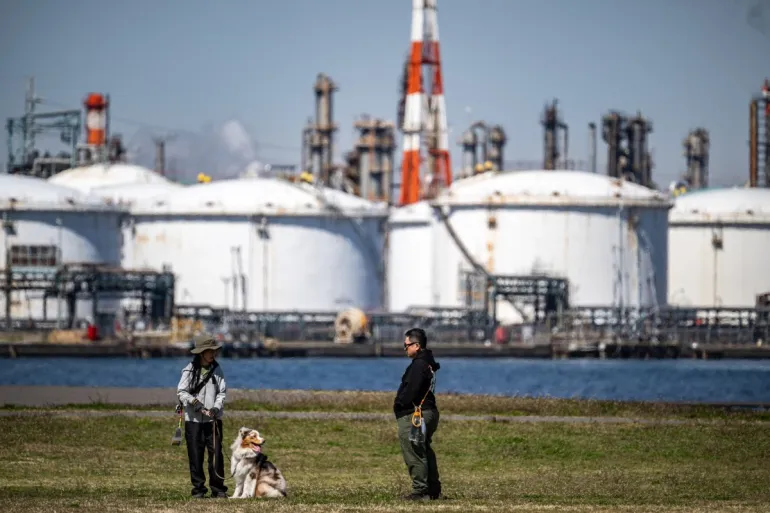
Japan has started releasing oil from its strategic reserves in a bid to cushion its economy from a historic energy shock triggered by the Iran war and the effective blockade of the Strait of Hormuz, one of the world’s most important oil routes.
The government in Tokyo says the drawdown will help stabilise domestic fuel supplies and slow a surge in petrol and diesel prices that has already begun to squeeze households and small businesses across the country.
15 Days of Private Oil Reserves Released First
Prime Minister Sanae Takaichi and senior ministers have confirmed that Japan will first release about 15 days’ worth of oil held in private-sector reserves, followed by the release of roughly one month of state‑owned strategic stockpiles from around late March.
Reports from Japanese and international agencies suggest the plan involves an unprecedented draw of around 80 million barrels in total, equivalent to roughly 45 days of Japan’s oil consumption, making it one of the largest emergency releases in the country’s history.
Officials have instructed domestic refiners to prioritise the released crude for domestic use, saying the goal is to secure stable supplies of gasoline, diesel and other products and prevent sudden shortages at service stations.
Part of a Record IEA‑Led Global Response
Japan’s move is part of a much larger International Energy Agency (IEA) plan under which member countries have agreed to unleash hundreds of millions of barrels from emergency stockpiles in response to the Iran war and disruptions in the Strait of Hormuz.
The IEA has described this as the largest‑ever coordinated stock release in its history, with Asia‑Pacific countries expected to play a leading role as tanker traffic from the Middle East remains severely constrained.
According to energy‑market summaries, Asia and Oceania together will contribute more than 100 million barrels to the global effort, with Japan acting as one of the first major economies to actually begin tapping its reserves.
Iran War, Strait of Hormuz Blockade Fuel Energy Shock
The decision comes as the US‑Israeli conflict with Iran escalates into a broader regional war, with Iranian forces and allied militias attacking tankers and energy infrastructure across the Gulf and effectively shutting down traffic through the Strait of Hormuz.
Hormuz normally carries about a fifth of the world’s crude oil and a significant share of global LNG exports, but weeks of missile and drone strikes, naval threats and insurance withdrawals have left dozens of ships stranded on either side of the narrow channel.
For Japan, which sources around 90–95 percent of its crude imports from the Middle East and relies heavily on shipments that pass directly through Hormuz, the disruption has sharply exposed longstanding vulnerabilities in its energy security.
Tokyo Aims to Shield Households and Industry
Prime Minister Takaichi has acknowledged that the surge in crude prices threatens to undermine Japan’s fragile economic recovery by eroding real wages and pushing up the cost of living, especially for lower‑income families.
She has signalled that reserve releases will be coordinated with other domestic measures, including potential subsidies and tax adjustments, to prevent petrol and diesel prices from reaching “intolerable” levels for ordinary citizens.
The government is also watching the yen closely, as a weaker currency amplifies the impact of high dollar‑denominated oil prices on Japan’s import bill and inflation outlook.
Reserves ‘Buy Time’, Not a Permanent Fix
Energy analysts quoted by Japanese and international media warn that while tapping reserves can stabilise prices and supplies in the short term, it cannot fully offset a prolonged disruption in the Strait of Hormuz or an extended period of war in the Middle East.
Experts stress that emergency stocks are designed to “buy time” for diplomacy, demand management and diversification, not to replace regular imports indefinitely, especially for a country as import‑dependent as Japan.
Coordinated Global Release, But Fragmented Security Response
While the IEA‑led reserve release shows rare unity among major consuming nations, the global security response around Hormuz remains far more fragmented, with no single, unified mission to protect shipping lanes.
Some allies have been reluctant to commit naval assets to the Gulf, and Japan itself has signalled that it has no immediate plans to send warships, focusing instead on economic tools and diplomacy to manage its energy risks.
Analysts say this mismatch—strong coordination on stockpiles but weaker coordination on security—means reserve releases are acting as a temporary bandage rather than a cure for the underlying geopolitical threat to global energy flows.
Impact on Japanese Consumers and Companies
In Japan, petrol prices have already moved higher, and diesel costs are putting pressure on logistics firms, fisheries and small manufacturers, many of which operate on thin margins and cannot easily pass on higher costs.
The government hopes that visible action—such as tapping reserves and announcing clear volumes and timelines—will help calm public anxiety and discourage panic buying or hoarding of fuel.
Large industrial users and power utilities are also reassessing fuel mixes and hedging strategies, with some considering greater short‑term use of coal and nuclear power to conserve scarce oil and gas supplies.
Looking Beyond Oil: LNG and Renewables
The Iran crisis is also sharpening debates in Tokyo about how quickly Japan can diversify away from oil and gas, including by expanding renewable energy, restarting more nuclear reactors and securing flexible LNG contracts from suppliers outside the Middle East.
Analysts note that while Japan has significant LNG storage and emergency arrangements with partners such as Qatar and Australia, a prolonged conflict that affects both oil and gas routes would still pose severe challenges.
For now, officials emphasise that emergency reserves, careful demand management and close cooperation with G7 partners and the IEA remain the core pillars of Japan’s crisis response.
Short‑Term Relief, Long‑Term Questions
Markets initially welcomed Japan’s announcement, viewing it as a signal that major consumers will not allow the Iran war and the Strait of Hormuz blockade to choke off energy supplies without using all available tools.
But traders and experts caution that reserve drawdowns can only go so far if the conflict drags on, and that restoring safe, reliable flows through Hormuz will ultimately depend on diplomatic breakthroughs and credible security guarantees in the Gulf.
Until then, Japan’s decision to tap its strategic oil reserves underscores both the severity of the current energy shock and the difficult balancing act facing an import‑dependent economy trying to protect its people from a war being fought thousands of kilometres away.
Tags:
Like and Follow State Correspondents Facebook Page Latest International News Iran US War Subscribe for alerts© 2026 State Correspondents. All rights reserved.