

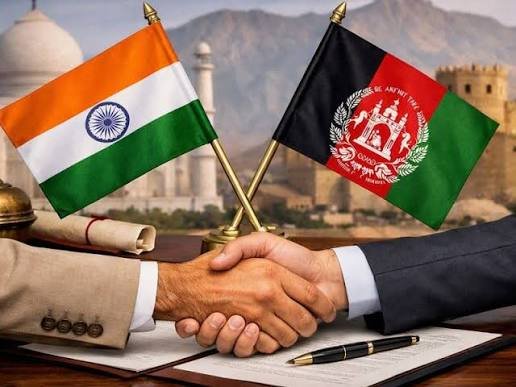
India, Afghanistan Convene Joint Working Group to Boost Trade & Connectivity
Virtual talks between senior delegations prioritize cargo transit, visa facilitation, customs data-sharing, and agricultural and pharmaceutical exchange.
By State Correspondents Diplomatic & Trade Bureau•New Delhi / Jammu•Published: September 02, 2026
NEW DELHI / JAMMU: In an essential strategic step aimed at revitalizing cross-border mercantile relations and addressing logistical bottlenecks, India, Afghanistan Convene Joint Working Group to Boost Trade & Connectivity. India and Afghanistan convened a high-level virtual session of their Joint Working Group (JWG) on Trade, Commerce, and Investment on Tuesday.
The diplomatic and regulatory consultation brought together key decision-makers from across multiple departments on both sides—including commerce ministries, industrial directorates, customs authorities, specialized trade regulators, and diplomatic missions—to comprehensively reassess the bilateral economic architecture and establish actionable frameworks for sustained commercial engagement.
Core Pillars of the JWG Deliberations
- Customs & Procedural Modernization: Streamlining verification procedures, automated clearances, and digital data-sharing networks.
- Merchant Mobility: Expediting visa processing for genuine Afghan traders and business delegates to attend trade expos and finalize contracts.
- Financial Architecture: Exploring smooth institutional banking and payment settlement mechanisms to overcome third-country transactional hurdles.
- Sectoral Priorities: Deepening trade in Indian pharmaceuticals and Afghan agricultural produce, alongside potential energy collaborations and reciprocal tariff revisions.
- Transit & Port Access: Optimizing sea-land cargo corridors, port logistics, and freight connectivity to curtail transit durations and freight costs.
Overcoming Transit Bottlenecks and Strengthening Financial Channels
According to officials privy to the discussions, central to the talks was addressing longstanding barriers in supply-chain logistics and transaction settlement. With land-transit routes historically vulnerable to geopolitical volatility, both sides laid renewed emphasis on sea-and-air cargo conduits, including port infrastructure efficiency, to sustain unhindered flow of essential commodities and industrial goods.
Financial and banking mechanisms received thorough scrutiny during the session. Officials explored avenues to facilitate transparent, regulatory-compliant financial channels that can enable commercial banks and merchants to conduct transactions without facing arbitrary currency conversion and liquidity constraints.
Pharmaceuticals, Agriculture, and Regulatory Harmony
The bilateral portfolio showcased a strong mutual interest in essential commodities. The Indian delegation highlighted its ability to support Afghan healthcare infrastructure through the continuous delivery of affordable, high-standard pharmaceutical supplies and surgical essentials. In turn, regulatory alignment in phyto-sanitary inspection was identified as critical to accelerating the dispatch of Afghanistan’s premium horticulture and dry-fruit exports into the Indian market.
Regional Trade Angle: The North Indian & Jammu Connection
The renewed impetus on bilateral trade carries immediate positive implications for northern markets, including Jammu and Kashmir and Punjab. Traditional wholesale hubs in Jammu, Amritsar, and Delhi rely heavily on seasonal Afghan imports—notably dry fruits, almonds, saffron, figs, and medicinal herbs. Smooth customs clearing and reliable banking channels are expected to stabilize wholesale prices and secure supplies for domestic processors and traders across the wider region.
Targeted Follow-up and Institutional Mechanism
Concluding the talks in what participants characterized as a cordial, pragmatic, and forward-looking environment, the delegations reached consensus on setting up actionable follow-up timelines. These steps include institutionalized inter-agency data sharing, streamlined customs clearances, mutual regulatory recognition for agricultural and healthcare goods, and active facilitation of business-to-business (B2B) networking between chambers of commerce.
Both sides reaffirmed their enduring mutual commitment to deepening economic, commercial, and investment ties, underscoring that sustained commercial dialogue remains indispensable for the welfare and prosperity of both peoples.
Follow Us
News Categories
Quick Links
© 2026 State Correspondents. All rights reserved.