




Delhi Chokes Under ‘Severe’ Smog As Dense Fog Cripples Visibility, Traffic Across NCR
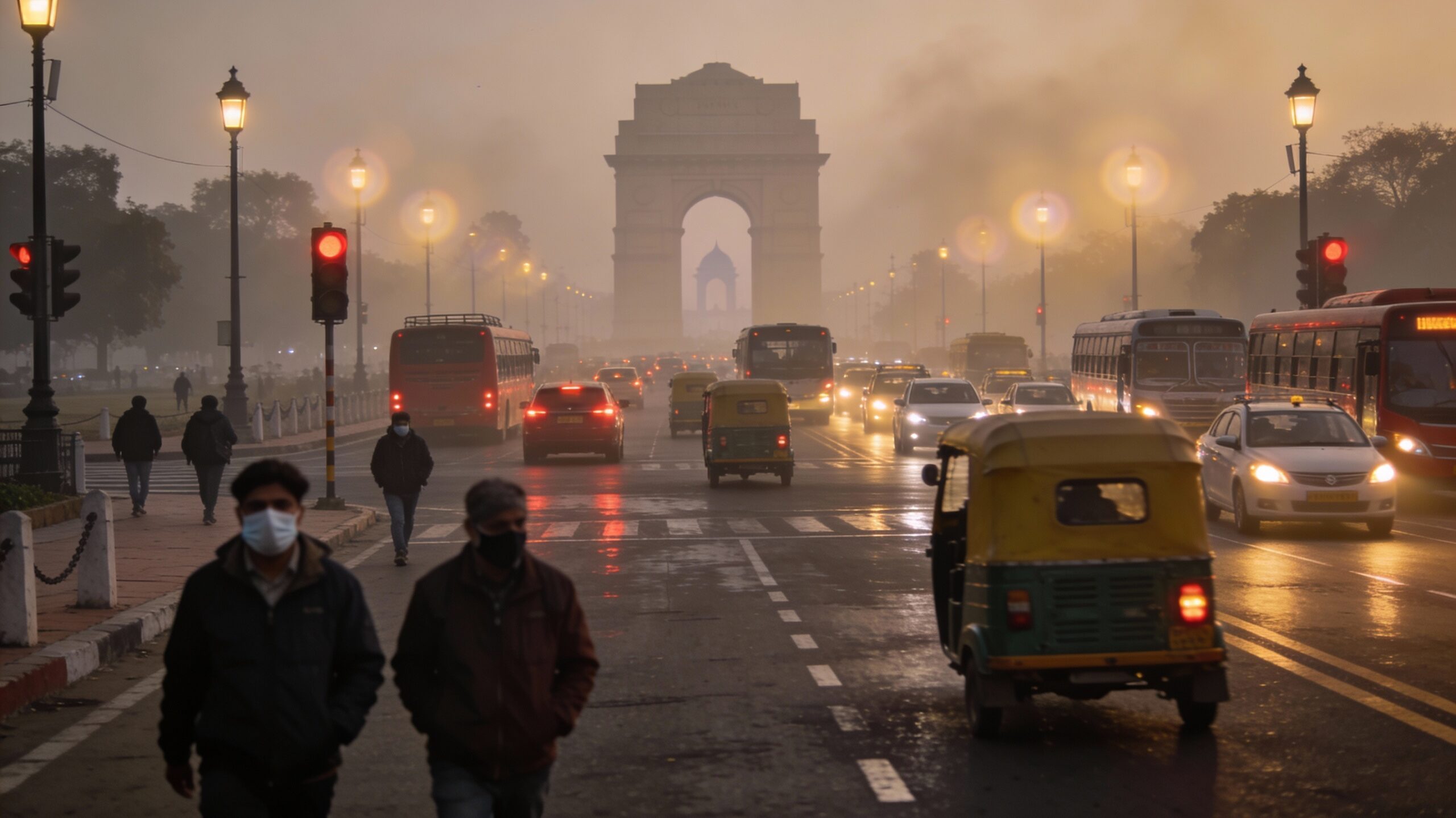
Delhi woke up to another day of hazardous air on Sunday as a thick mix of smog and dense fog pushed the city’s air quality into the “severe” range at several monitoring stations, while visibility on major roads and around the airport plunged to a few hundred metres, disrupting flights, trains and peak-hour traffic across the National Capital Region (NCR).
According to Central Pollution Control Board (CPCB) data, the overall Air Quality Index in Delhi hovered in the “very poor” to “severe” band, with several stations – including ITO, Anand Vihar, Vivek Vihar, Jahangirpuri, Rohini, Wazirpur and Punjabi Bagh – recording AQI readings above 400, indicating highly toxic air.
Visibility Crashes As Fog And Smog Combine
Dense to very dense fog layered over the existing smog cover sharply reduced visibility during the late night and early morning hours, forcing motorists to crawl with headlights and hazard lights on across key arterial corridors in Delhi and adjoining NCR towns.
Airport sources said low-visibility procedures remained in force, with the runway operating under CAT III conditions and visibility at times dropping to just a few hundred metres around Safdarjung and Palam, leading to cascading delays in arrivals and departures.
Flights, Trains And Road Traffic Hit
Flight operations at Delhi airport were partially disrupted as the dense fog band intensified, with over a hundred services either cancelled, diverted or delayed over the weekend due to poor visibility and compounding congestion.
Train movement into and out of Delhi was also affected, with several long-distance services running late as fog-related speed restrictions were imposed on busy routes across the northern rail network.
On the roads, long snarls were reported from multiple stretches of Ring Road, NH-48, Noida and Ghaziabad entry points as vehicles moved in long queues at reduced speeds, while traffic police issued repeated advisories urging commuters to avoid non-essential travel during peak fog hours.
IMD Issues Fog, Cold-Day Alerts
The India Meteorological Department (IMD) placed Delhi under a yellow alert for dense fog and cold-day conditions, warning that shallow to moderate fog in the early part of the night could intensify to moderate or dense fog during the morning hours over the next couple of days.
Daytime temperatures have stayed several degrees below normal, with the city recording its first cold-wave conditions of the season, compounding discomfort for residents already battling stinging eyes, throat irritation and breathing difficulties caused by the toxic air.
AQI In ‘Severe’ Band At Many Stations
Data from the city’s air-quality monitoring network showed that more than half of Delhi’s stations remained in the “severe” or upper “very poor” range, with some of the worst readings coming from dense residential and traffic-dominated pockets.
In several locations, including busy commercial hubs and outer-ring clusters, AQI values hovered between 420 and 450, driven mainly by elevated levels of fine particulate matter (PM2.5 and PM10), which can penetrate deep into the lungs and bloodstream.
- Limit outdoor activities, especially for children, the elderly and those with asthma, COPD or heart disease, and keep windows closed during peak smog hours.
- Use N95 or equivalent masks when stepping outdoors, avoid early morning walks and intense exercise, and stay hydrated to reduce throat and eye irritation.
- Motorists are advised to drive slowly, maintain safe distance, use fog lamps instead of high-beam headlights and follow all traffic advisories issued by the authorities.
Experts warn that back-to-back episodes of severe pollution combined with extended fog and cold-wave conditions underline the need for year-round action on vehicle emissions, dust control, industrial pollution and biomass burning to prevent Delhi’s winter air from turning toxic every season.