

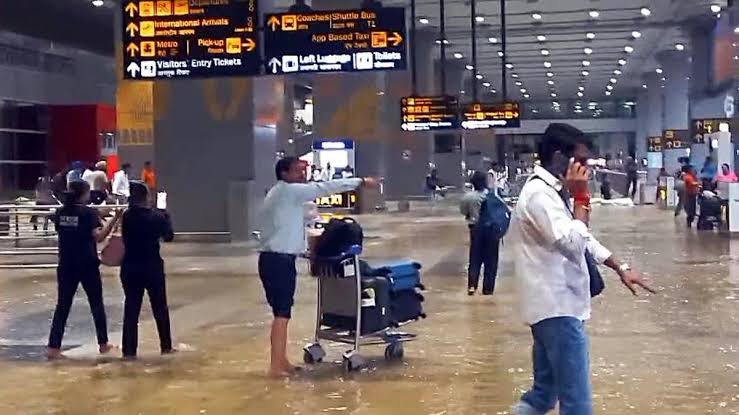
Torrential overnight and morning rains leave approach routes and passenger walkways at IGI Airport submerged, triggering widespread flight diversions, extensive delays, and gridlock across the National Capital Region.
By State Correspondents Special Bureau 05, September 2026 • New Delhi
The downpour, which intensified through the early morning hours, brought urban transit to an excruciating crawl. Stretches along the airport’s outer perimeter, vital underpasses, and arterial expressways were submerged under ankle- to knee-deep water, forcing hundreds of inbound and outbound passengers to hoist luggage above their heads to reach terminal check-in gates.
Aviation Havoc: Mass Delays, Diversions, and Stunned Passengers
The scale of water accumulation at Terminal 3—the flagship international terminal—prompted emergency deployment of high-capacity drainage pumps and airport support staff to clear inundated curbsides and prevent runoff from seeping deeper into arrival lounges. Passengers navigating the chaos described scenes of utter confusion as luggage trolleys dragged through silt-laden puddles and cab queues evaporated under rising water levels.
Live flight monitoring portals recorded consequential disruptions throughout the day. Scores of flights departing and arriving at IGI experienced prolonged delays, while poor visibility and gale-force wind gusts prompted air traffic controllers to divert multiple inbound aircraft to alternate aerodromes including Jaipur, Lucknow, Ahmedabad, and Chandigarh. Leading domestic carriers, including IndiGo and Air India, issued urgent passenger advisories requesting travelers to budget significant buffer time and check live flight status prior to departing home.
“I have been standing here for over thirty minutes watching the water rise toward the entrance gates. You do not expect a premier international hub to resemble an overflowing lake right outside the check-in gates,” lamented a stranded traveler attempting to catch a connecting domestic service.
Responding to mounting public concern over viral footage showing water entering apron and forecourt areas, airport operator GMR-led Delhi International Airport Limited (DIAL) confirmed that exceptionally concentrated rain over a brief window led to sudden runoff accumulation. Authorities asserted that rapid response units worked continuously to clear blocked catchment channels and discharge excess water into trunk outflows.
Record Precipitation and Infrastructure Stress
According to India Meteorological Department (IMD) observatory records, the weather monitoring station at Palam, which borders the airfield, recorded significant rainfall exceeding 75 millimeters within a single observation cycle, crossing the threshold for intense localized spells. Surrounding weather stations across Safdarjung, Lodhi Road, and Ridge similarly posted substantial figures, saturating low-lying tracts across Southwest and Central Delhi.
Civic analysts point out that recurrent water stagnation around the IGI complex stems from persistent gaps in stormwater outflow infrastructure linking the airport basin to the main Najafgarh and Dwarka trunk drain systems. While municipal and development bodies claim operational readiness across key sectors, ongoing culvert projects and constriction points underneath major rail corridors have continued to throttle gravity-fed discharge when rainfall spikes abruptly.
Widespread Gridlock Paralyzes Daily City Commutes
Beyond the airport perimeter, the deluge battered Delhi’s broader transit ecosystem. The Delhi Traffic Police maintained an active stream of public alerts warning motorists away from submerged choke points, including the Zakhira underpass, stretches of New Rohtak Road, parts of Mathura Road, and intersections bordering Connaught Place and Moti Bagh. Office-goers found themselves trapped in multi-kilometer vehicular queues as stranded two-wheelers and stalled buses occupied flooded lanes.
With roads turning precarious, urban commuters increasingly shifted towards the Delhi Metro network, resulting in surging passenger footfalls across interchange terminals. Airport authorities specifically urged travelers headed towards Terminals 2 and 3 to utilize the underground Airport Express Line as a reliable bypass against impassable surface roads.
With meteorologists projecting persistent squalls and sporadic thunderstorms across the northern plains over the coming 48 hours, civic enforcement teams and municipal drainage squads remain on high alert. For Delhi’s travelers and residents, however, the latest downpour serves as an uncomfortable reminder of the national capital’s recurring vulnerability to seasonal monsoon shocks.