
Trump Extends $100,000 H-1B Visa Fee Until September 2027: What It Means for Indian Tech Professionals
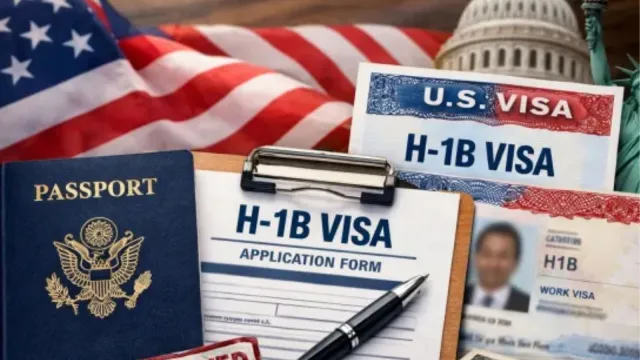
WASHINGTON: Delivering another significant blow to skilled foreign labor mobility, Donald Trump has formally extended the controversial $100,000 fee requirement for certain new H-1B visa petitions through September 2027. The move prolongs a high-stakes standoff between the administration, corporate America, and international legal advocates, leaving Indian professionals—who constitute over 70% of the H-1B workforce—most heavily exposed.
The extraordinary fee, initially pitched as a measure to disincentivize outsourcing and prioritize American domestic hiring, mandates that sponsoring companies remit an exorbitant $100,000 penalty alongside conventional processing and petition charges for certain categories of incoming high-skilled foreign workers.
Executive Order Extension: Critical Points
- Extended Deadline: The $100,000 upfront employer levy will remain operative until September 2027.
- Target Group: Applies primarily to new cross-border petitions and initial hires by large technology employers and staffing intermediaries.
- Legal Limbo: Multiple federal lawsuits challenging the mandate on constitutional and regulatory grounds remain active in US courts.
- Disproportionate Impact: Indian nationals, holding more than two-thirds of all active H-1B visas, bear the brunt of reduced hiring quotas.
The Courtroom Battle Over Regulatory Powers
The continuation of the mandate comes despite intense legal pushback from prominent industry coalitions, business chambers, and academic institutions across the United States. Trade groups and technology giants have argued in federal court filings that the executive branch has overstepped its statutory authority under the Immigration and Nationality Act (INA), which exclusively empowers the US Congress to levy immigration fees and define visa quotas.
Litigants argue that imposing a $100,000 financial barrier operates as a de facto entry ban rather than an administrative fee, bypassing legislative oversight to choke legal high-skilled immigration routes. However, with appellate rulings moving slowly through judicial channels, the administration’s extension prolongs commercial friction.
Direct Ramifications for Indian Workers & IT Firms
The extension carries sweeping consequences for Indian graduate students studying in the US, aspiring tech migrants, and the subcontinent’s massive IT services sector:
Entry-Level Squeeze
US employers are increasingly reluctant to sponsor fresh Indian graduates transitioning from F-1 OPT status to H-1B due to prohibitive upfront capital risks.
Shifting Offshore Models
Indian IT giants (TCS, Infosys, Wipro, HCL) are accelerating plans to base mission-critical teams in nearshore hubs like Canada, Mexico, or back in Bengaluru and Hyderabad.
Green Card Vulnerability
Workers trapped in decades-long permanent residency backlogs face shrinking lateral job mobility, as changing sponsors now risks triggering the $100,000 barrier.
Startup Chokehold
Early-stage Silicon Valley startups and venture-backed firms with limited cash reserves are entirely priced out of competing for elite global engineering talent.
A Reshuffling of Global Talent Corridors
Immigration economists warn that continuing this policy through late 2027 could structurally alter the global flow of STEM professionals. Countries such as Canada, Germany, and the United Kingdom have already introduced accelerated work permits and digital nomad tracks designed specifically to lure disenfranchised US-trained engineers.
For thousands of Indian families who invest substantial savings into US university degrees in the hope of building an international career, the extended $100,000 hurdle replaces a predictable merit pathway with sustained regulatory and financial unpredictability.