

Massive 7.1 Magnitude Earthquake Hits Southern Japan; Mall Blast & Collapses Trigger Major Search Operations

TOKYO / KUMAMOTO — Emergency responders in southwestern Japan are racing against time following a powerful 7.1-magnitude earthquake that struck Kumamoto Prefecture on the island of Kyushu, leaving a trail of structural devastation, fires, and ongoing rescue efforts.
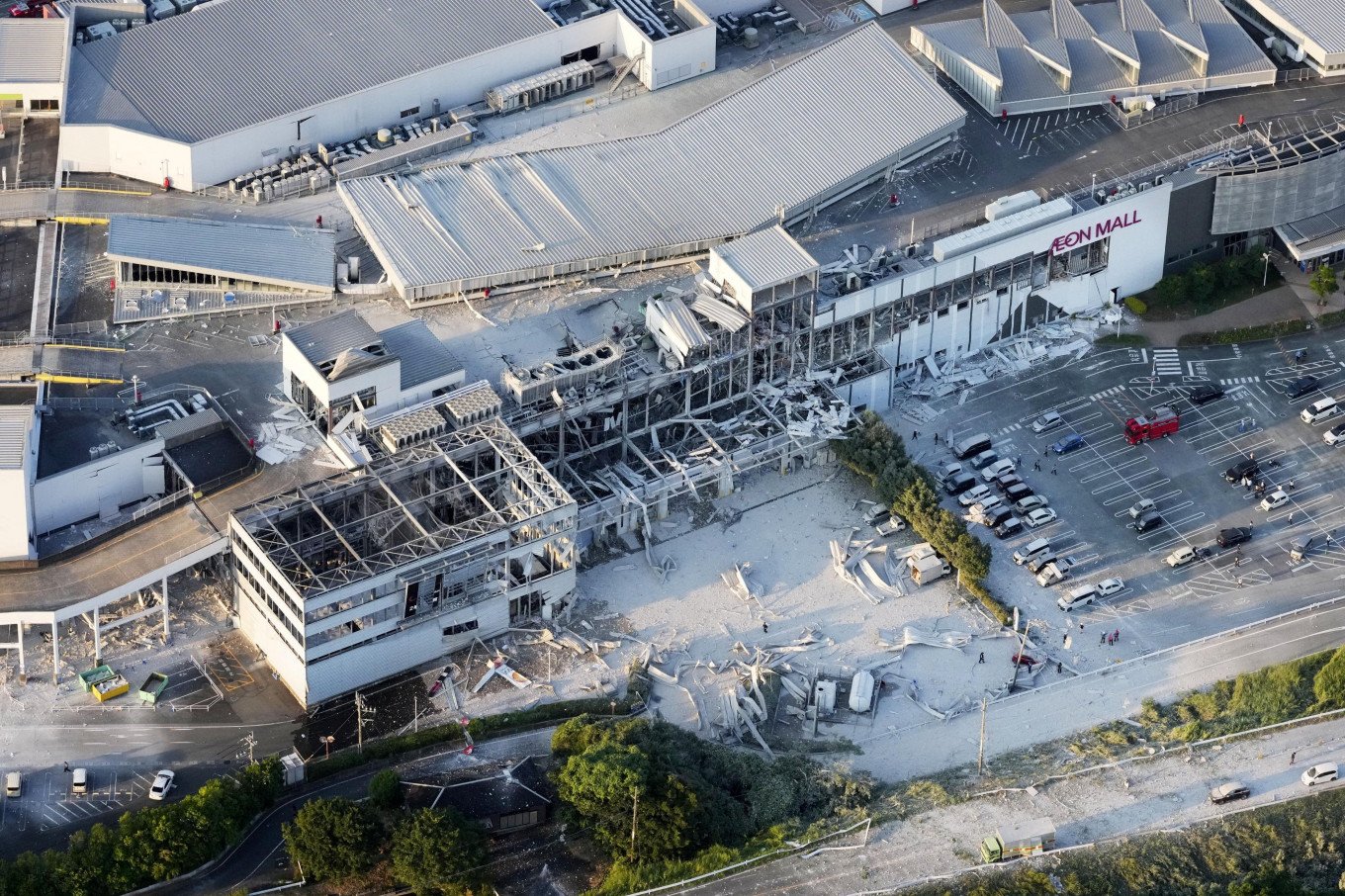
The violent tremor, which struck at a shallow depth of approximately 10 kilometers, triggered localized gas explosions and building failures across the region. Among the hardest-hit locations is the Aeon Mall complex in Kashima Town, where a subsequent blast caused significant sections of the upper floor to cave in.
Emergency Operations & Casualty Updates
Japanese authorities confirmed that at least 13 fatalities have been recorded across affected prefectures, with over 300 individuals receiving medical treatment for varying injuries. Search-and-rescue teams, supported by military personnel, are systematically combing through rubble where dozens remain unaccounted for.
At the Aeon Mall site, emergency personnel reported smelling gas inside the structure shortly before sections of the roof and facade collapsed into the exterior parking zone. Rescue operations remain ongoing to free workers and visitors trapped under concrete debris.
“This is a critical race against time. We are mobilizing every available government and local resource to locate and save survivors stranded beneath damaged structures,” stated Prime Minister Sanae Takaichi during an emergency press briefing in Tokyo.
Infrastructure & Regional Impact
The earthquake disrupted vital regional infrastructure throughout Kyushu:
- Power Grid: Tens of thousands of households suffered immediate blackouts as regional utilities worked to stabilize line infrastructure.
- Transport Networks: High-speed Shinkansen rail services across Kyushu were halted, while runway inspections briefly suspended operations at local airports.
- Historical Sites: Stone perimeter walls at the historic Kumamoto Castle sustained fresh damage, reminiscent of the major seismic events that impacted the site in 2016.
Nuclear Watchdog Statement
Addressing safety concerns, the International Atomic Energy Agency (IAEA) confirmed it remains in close communication with Japan’s Nuclear Regulation Authority. Inspections at nearby nuclear facilities, including the Sendai Nuclear Power Plant, revealed no radiation leaks or operational abnormalities.
Meteorological officials have warned residents across Kumamoto and neighboring prefectures to prepare for potential high-intensity aftershocks over the coming week.
Stay tuned to State Correspondents Like and Follow State Correspondents Facebook Page Latest International News Iran US War Subscribe for alerts


© 2026 State Correspondents. All rights reserved.