




US Lawmakers Seek End To Trump’s India Tariffs As India Protests Mexico’s Steep Duty Hike
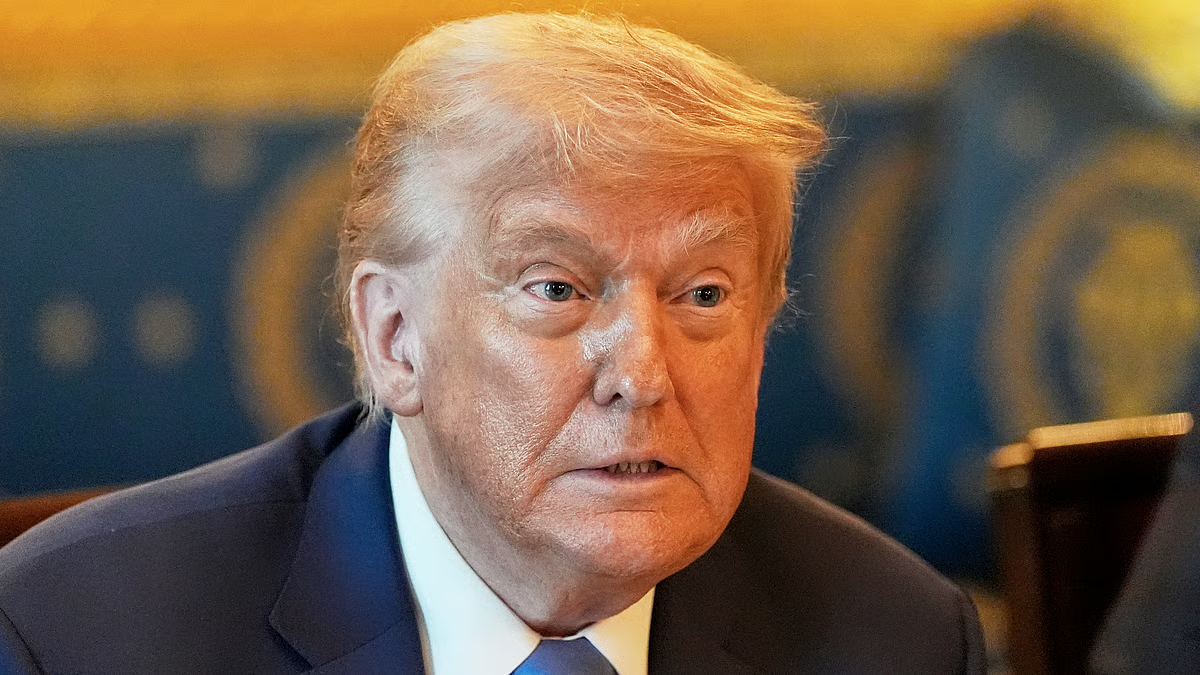 Three members of the US House of Representatives have introduced a resolution to terminate President Donald Trump’s national emergency declaration that allowed tariffs of up to 50% on imports from India, calling the duties “illegal” and harmful to a key partnership.
The move comes even as India mounts a strong diplomatic protest against Mexico’s decision to dramatically raise import tariffs on a wide range of products from countries without free trade agreements, including India.
Three members of the US House of Representatives have introduced a resolution to terminate President Donald Trump’s national emergency declaration that allowed tariffs of up to 50% on imports from India, calling the duties “illegal” and harmful to a key partnership.
The move comes even as India mounts a strong diplomatic protest against Mexico’s decision to dramatically raise import tariffs on a wide range of products from countries without free trade agreements, including India.
US Resolution Targets Trump’s 50% Tariffs On India
The resolution in the US House has been spearheaded by Democratic Representatives Deborah Ross, Marc Veasey and Raja Krishnamoorthi. It seeks to rescind the additional 25% “secondary” tariffs imposed on Indian goods on 27 August 2025, which were layered over earlier duties and pushed total levies on several Indian‑origin products to 50% under the International Emergency Economic Powers Act (IEEPA).
In their joint statement, the lawmakers argue that the tariffs are an abuse of emergency powers, disrupt supply chains and effectively act as a tax on American consumers and workers at a time of high inflation. They stress that India is a major economic and strategic partner for the United States and warn that punitive trade measures undermine broader cooperation on security, technology and climate change.
Why India Matters To US Lawmakers
The sponsors highlight that Indian companies support tens of thousands of jobs across US manufacturing, services and technology sectors through investments and sourcing. They contend that easing tariffs would help stabilise prices for American families, restore predictability for businesses and reinforce the idea of India as a trusted partner in diversifying supply chains away from China.
The House move builds on a bipartisan resolution in the Senate that sought to rein in the use of emergency authority for trade actions and to roll back similar special tariffs imposed on Brazil. Trade analysts say if the India‑focused resolution gains traction, it could signal a broader congressional push to reclaim authority over tariff policy from the White House.
India Slams Mexico’s One-Sided Tariff Hike
While developments play out in Washington, India has separately raised strong objections to Mexico’s decision to sharply increase import duties on products from nations without free trade agreements, a list that includes India, China, South Korea, Thailand and Indonesia. Mexico’s new law, approved by both houses of its Congress, revises tariffs across 1,463 product categories in sectors such as auto parts, light vehicles, plastics, textiles, toys, aluminium and glass, with duties ranging from 5% to 50% and most items expected to face around 35%.
New Delhi has called the move unilateral and “not in the spirit of cooperative economic engagement”, pointing out that the hikes were pushed through without prior consultation despite their impact on Indian exporters. Officials say India reserves the right to take “appropriate measures” to safeguard its commercial interests while continuing dialogue with Mexico and raising transparency concerns under multilateral trade rules.
Implications For India’s Global Trade Strategy
Together, the two developments underline how India is simultaneously contesting punitive tariffs in some markets while benefiting from political support in others that view it as a long‑term strategic partner. For exporters, the outcome of the US resolution and India’s talks with Mexico will influence market access in sectors ranging from engineering goods and textiles to auto components and metals.
Trade experts note that if Washington rolls back Trump’s duties while Mexico’s hikes stand, Indian firms may pivot more aggressively towards the US and other friendly markets, accelerating existing supply‑chain shifts. Policymakers in New Delhi are expected to track these shifts closely as they calibrate India’s tariff and FTA strategies in the coming months.