



Islamabad Fortifies for US-Iran Talks as Pakistan Faces Israeli Backlash and Trump Tightens Pressure
Pakistan’s capital is entering one of its most delicate diplomatic moments in years. Streets are under heightened security, political rhetoric is escalating across the region, and the coming talks could shape not only US-Iran relations but also oil markets, regional mediation and Pakistan’s own international credibility.
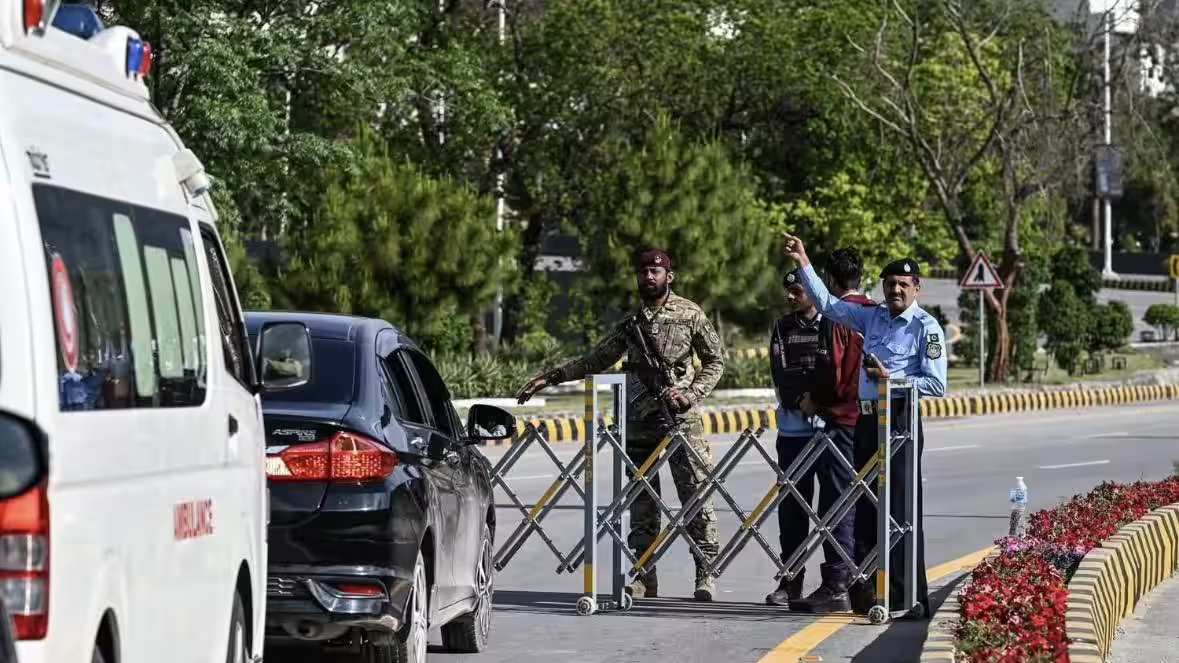
Islamabad is preparing for a rare and exceptionally sensitive diplomatic encounter as talks between the United States and Iran are scheduled to begin on April 10 or April 11, depending on the official channel being referenced, after a two-week ceasefire framework emerged following recent hostilities linked to the Strait of Hormuz and wider regional escalation. Pakistan has presented itself as a mediator, and Prime Minister Shehbaz Sharif has publicly welcomed both delegations to the capital for negotiations intended to convert a fragile pause into a broader understanding.
The security atmosphere surrounding the talks has become part of the story itself. In the run-up to the meeting, Islamabad has been described in diplomatic and media reporting as a city operating under tight restrictions, especially in and around the Red Zone, where foreign missions, federal institutions and major security installations are concentrated. For Pakistan, such measures are not merely logistical. They are a signal that the state views the dialogue as strategically important, but also potentially vulnerable to sabotage, protest, or escalation triggered by events outside the conference room.
Why Islamabad Matters
Pakistan’s choice as venue is politically significant. By stepping into the role of intermediary, Islamabad is attempting to showcase diplomatic relevance at a time when West Asian conflict is reshaping geopolitical alignments. Tehran has said the planned discussions will be guided by a 10-point proposal that covers sanctions relief, military de-escalation and the future of navigation through the Strait of Hormuz. That last issue is crucial because even the threat of disruption in the narrow waterway can send shockwaves through global energy markets.
The White House, meanwhile, has framed the diplomacy in practical and transactional terms. Reporting around the talks indicates that the US side wants a workable arrangement tied to freedom of passage through Hormuz and a reduction in immediate military risk. This means Islamabad is not hosting a ceremonial meeting; it is hosting a negotiation under pressure, where each side is expected to test the other’s red lines from the opening session.
The Khawaja Asif Controversy
That credibility came under immediate strain after Pakistan’s Defence Minister Khawaja Asif posted an inflammatory message on social media attacking Israel. In the post, Asif described Israel as “evil”, “a curse for humanity” and a “cancerous state”, while accusing it of carrying out bloodshed from Gaza to Iran and Lebanon. The remarks appeared at precisely the moment Pakistan was trying to project neutrality and restraint around the Islamabad talks.
Israel’s response was swift and unusually direct. Prime Minister Benjamin Netanyahu’s office denounced the comments as outrageous and argued that language portraying Israel as “cancerous” effectively amounted to a call for annihilation. The Israeli side also underscored the diplomatic contradiction of a government claiming to mediate peace while one of its most senior ministers was using incendiary language against one of the central actors in the regional conflict system.
This exchange has deepened international questions about whether Pakistan can separate official mediation from domestic political signalling. Islamabad’s balancing act has always been complicated: it must speak to domestic public sentiment, manage ties across the Muslim world, and at the same time reassure global powers that it can facilitate dialogue without becoming an openly partisan platform. Asif’s intervention made that balancing act harder and gave critics an opening to question the neutrality Pakistan hopes to display.
Trump’s Pressure Strategy
US President Donald Trump has paired diplomatic engagement with unmistakable economic coercion. In the context of the ceasefire and the lead-up to the Islamabad talks, Trump warned that any country supplying military weapons to Iran could face a 50 percent tariff on goods sold to the United States. The message was designed not only for Tehran’s potential arms suppliers, but also for countries calculating whether to deepen strategic support to Iran while the negotiating track remains alive.
Trump has also stressed that the flow of oil through the Strait of Hormuz must not be interrupted. That emphasis reflects the central economic reality behind the diplomatic urgency. The Strait is one of the world’s most vital energy corridors, and any prolonged closure, restriction, or politically conditioned reopening would intensify fears across importing economies. Even temporary instability there quickly becomes a global issue, affecting crude prices, freight expectations and wider investor sentiment.
The combination of tariff threats and calls for de-escalation reflects a familiar Trump doctrine: negotiate from visible pressure, maintain strategic ambiguity, and keep the economic cost of defiance front and centre. Whether this approach produces concessions or hardens positions will likely become clearer once the Islamabad meetings move from public statements to agenda-setting and closed-door bargaining.
Iran’s Objectives and Pakistan’s Stakes
Iran has indicated that its proposal for talks includes oversight and terms related to the Strait of Hormuz, sanctions questions and broader regional security demands. Tehran’s negotiating posture suggests it wants recognition of its leverage without appearing to retreat under pressure. It is also trying to turn a moment of military confrontation into political bargaining space, particularly if it can extract understandings linked to sanctions or force posture in the region.
Pakistan, for its part, has multiple interests riding on the talks. A successful diplomatic opening would elevate its standing as a problem-solving state at a moment when middle-power mediation is receiving renewed attention. It would also allow Islamabad to project relevance beyond South Asia and show that it can convene rivals under extraordinary pressure. But the risks are equally clear: if the talks fail, if regional violence escalates, or if Pakistan is viewed as rhetorically biased, the effort could damage rather than strengthen its diplomatic image.
That is why the security choreography around Islamabad matters. High alert protocols, movement restrictions and protected zones are part of the visible statecraft of mediation. They tell visiting delegations that Pakistan intends to control the environment. Yet security can only protect the venue. It cannot solve the deeper political contradiction exposed by the simultaneous roles Pakistan is trying to play: mediator abroad, emotional political actor at home, and strategic partner to multiple camps that do not trust one another.
Regional Fallout Beyond the Meeting Room
The diplomatic tension is unfolding against a broader regional backdrop that remains combustible. Recent reporting has connected the ceasefire initiative to continuing concern over Lebanon, Iran’s nuclear and military posture, and control over maritime transit. That means the Islamabad talks are likely to involve more than one dispute. They may become a staging ground for arguments over deterrence, sanctions, shipping rights, proxy conflict and the political meaning of de-escalation itself.
For energy markets, the key question is whether the talks reduce uncertainty around Hormuz or simply manage it temporarily. For regional powers, the test is whether Pakistan’s hosting role leads to a structured follow-up process or merely a pause before the next confrontation. And for Washington and Tehran, the issue is whether limited tactical arrangements can survive amid mutual distrust, public grandstanding and the pressure of domestic audiences.
What Happens Next
If the talks begin as planned, the first phase will likely focus on procedure, confidence-building and the immediate mechanics of de-escalation. The harder issues — sanctions, military positioning, long-term transit rules and the political language both sides can live with — would almost certainly require more time. Reports already suggest the process could run for days and possibly up to two weeks if both sides decide the opening sessions are productive enough to continue.
For now, Islamabad has become the physical centre of a much wider contest. It is where diplomatic ambition, ideological confrontation, economic pressure and security theatre are colliding in real time. Whether the city becomes remembered as the place where a dangerous crisis was contained or merely delayed will depend on what happens once the delegations move from guarded public messaging to substantive negotiation.
Tags:
Like and Follow State Correspondents Facebook Page Latest International News Iran US War Subscribe for alerts© 2026 State Correspondents. All rights reserved.