



Trump Signals Iran War May Be Nearing Its End, But Global Markets Stay Volatile
March 10, 2026 | State Correspondents News Desk
US President Donald Trump has declared that the US‑Israeli military campaign against Iran is “very complete, pretty much” and “very far ahead of schedule,” suggesting the war could be approaching its final phase even as investors brace for more financial turbulence. His upbeat tone has temporarily lifted global equities and pushed oil prices lower, but conflicting statements from both Washington and Tehran mean markets remain on edge.
‘Very Complete, Pretty Much’: Trump’s Latest Assessment
In a phone interview with CBS News, Trump said he believed the war was “very complete, pretty much” and claimed the operation was “very far ahead of schedule” compared to the initial four‑to‑five‑week timeline he had mentioned when strikes on Iran first began. He asserted that Iran’s military capabilities had been devastated, saying the country had “no navy, no communications, no air force” left and that its missile and drone arsenals were now “down to a scatter.”
Trump argued that the campaign had already neutralised what he described as a looming nuclear threat from Tehran, again defending the surge in energy prices as a “small price to pay” for long‑term global security. According to US media reports, he has privately framed the operation as a decisive strike meant to ensure Iran can never fully rebuild its conventional or strategic military power.
Hinting the War Could End ‘Very Soon’
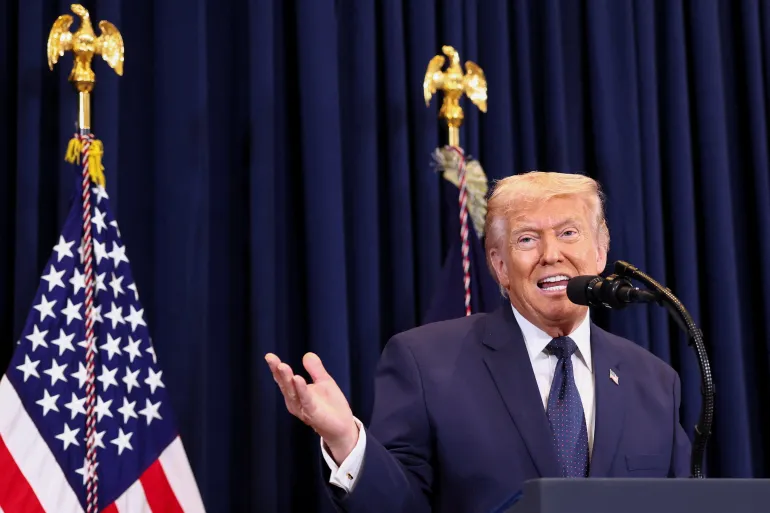
While speaking to reporters at his Florida golf resort and addressing a gathering of House Republicans, Trump went further, saying he expected the war to end “very soon,” even as he continued to threaten “much, much harder” strikes if Iran sought to block oil shipments through the Strait of Hormuz. He has repeatedly insisted that the conflict would not drag on for months and predicted that oil prices would “drop rapidly” once what he calls “the destruction of the Iran nuclear threat” is complete.
Despite this optimistic outlook, Trump has also maintained that the US will “not relent until the enemy is totally and decisively defeated” and has suggested that only Iran’s “unconditional surrender” or full compliance with Washington’s demands would formally bring the war to a close. The combination of talk of a near‑term end and vows of uncompromising pressure has fuelled uncertainty about Washington’s true exit strategy.
Mixed Messages: Optimism and Threats in the Same Breath
US outlets have described Trump’s Iran messaging as a zigzag between triumphalism and escalation, noting that in the same news cycle he discussed the war being “very complete” while also warning that Iran would be hit “twenty times harder” if it interfered with oil flows. On his Truth Social platform, he characterised recent spikes in energy prices as a temporary spike and berated critics as “fools” for questioning the costs of the campaign.
At a closed‑door Republican retreat, Trump boasted that US and Israeli forces were “crushing the enemy,” claiming Iran’s drone and missile capabilities had been “utterly demolished” and even declaring that its navy was “lying at the bottom of the ocean.” Yet officials have provided few details about what a political settlement in Iran might look like once the bombing stops, raising questions about the long‑term strategic end‑state.
Tehran Dismisses US Claims, Vows to Keep Pressure on Oil Flows
Iran’s Revolutionary Guard Corps has publicly ridiculed Trump’s suggestion that the war is almost over, vowing that no oil will leave the Middle East if US and Israeli strikes continue. Iranian commanders have promised to disrupt exports from regional producers through missile and drone attacks and maritime harassment, directly contradicting Washington’s narrative that Tehran’s forces are close to collapse.
Iranian officials have also highlighted the growing civilian toll at home, citing more than a thousand deaths and thousands of injuries since the start of the campaign, as they rally support around the new Supreme Leader, Mojtaba Khamenei. For Tehran, the ability to threaten energy markets remains one of the few levers it can still pull to retain bargaining power despite heavy military losses.
Markets Whipsaw as Investors Parse Every Word
Trump’s remarks have had immediate and dramatic effects on global financial markets. After his CBS comments that the war was “very complete” and ahead of schedule, Wall Street rebounded, with the S&P 500 reversing earlier losses and closing in positive territory. Asian markets then followed with a relief rally, led by South Korea’s Kospi index, which surged more than 5 percent as investors bet on a quicker end to the crisis.
Oil, which had soared above 100 dollars per barrel amid fears of a prolonged regional conflict, tumbled by as much as 8–10 percent as traders recalibrated expectations for supply disruptions. Benchmarks like Brent crude and West Texas Intermediate erased a chunk of their war‑premium, though prices remain elevated compared to pre‑conflict levels, reflecting lingering doubts about how stable the situation really is.
Volatility Persists Despite Relief Rally
Analysts caution that the optimism may be fragile. Some strategists quoted in US and European media note that while Trump’s softer language has temporarily soothed markets, Iran still retains enough asymmetric capabilities to keep energy supplies and shipping routes under threat for months. Predictions of further central bank rate cuts, particularly by the Bank of England, have already been pushed back as policymakers grapple with war‑driven inflation pressures.
Indeed, even as stocks rallied on Trump’s reassurances, futures trading signalled renewed nerves, with US index futures slipping and bond yields swinging sharply as traders weighed the possibility of a fresh escalation around the Strait of Hormuz. Some Asian governments, including South Korea, have been forced to consider price caps and alternative energy sourcing strategies as petrol and diesel costs spike domestically.
Economic and Political Risks Mount for Trump
Commentary in leading financial and political outlets suggests that the Iran war is increasingly becoming a double‑edged sword for Trump, who faces rising casualties, high energy prices and voter anxiety at home. While he has pointed to the rally in equities as vindication of his strategy, critics argue that the US economy and the Federal Reserve are now “caught between Iran and a hard place” as they try to contain inflation without triggering a recession.
Pollsters and strategists warn that if oil remains volatile or if the conflict drags on longer than the White House has implied, the political costs could climb sharply in an election‑charged environment. Trump’s tendency to swing between reassuring messages and fiery threats also complicates efforts by allies and markets to anticipate Washington’s next moves.
Global Energy Security and India’s Concerns
Beyond Wall Street and European exchanges, energy‑importing nations such as India remain deeply exposed to swings in Gulf crude supplies and the risk of a prolonged closure or militarisation of the Strait of Hormuz. New Delhi has already highlighted in Parliament that any sustained disruption could push domestic fuel prices higher and undermine growth, even if a short‑term easing occurs after Trump’s latest comments.
Indian policymakers are therefore watching both the battlefield and the bond markets closely, wary that a miscalculation on either side in West Asia could quickly reverse the fragile relief seen in oil benchmarks over the past 24 hours. For millions of Indian workers in the Gulf, the broader uncertainty over shipping, aviation and regional stability also continues to cast a long shadow over jobs and remittances.
What ‘Nearing the End’ Really Means
For now, Trump’s assertion that the conflict is “very complete” appears to refer primarily to the intensity of US‑Israeli air and missile strikes, not to any formal ceasefire or negotiated settlement with Tehran. His own officials have stressed that Iran’s leadership must still accept stringent conditions on its missile and nuclear programmes before Washington will declare victory.
That gap between military destruction and political resolution is precisely what keeps markets volatile and allies cautious. Until there is clarity on whether Iran’s rulers intend to keep contesting regional shipping and oil flows—or whether a credible diplomatic channel can be re‑opened—each new presidential soundbite is likely to send fresh tremors through global energy and financial systems.
Tags:
Like and Follow State Correspondents Facebook Page Latest International News Iran US War Subscribe for alerts© 2026 State Correspondents. All rights reserved.