




Iran–Israel–US Conflict: Missiles and Drones Rock Dubai, Abu Dhabi, Saudi Arabia and Lebanon
By State Correspondents News Desk | | World / Middle East
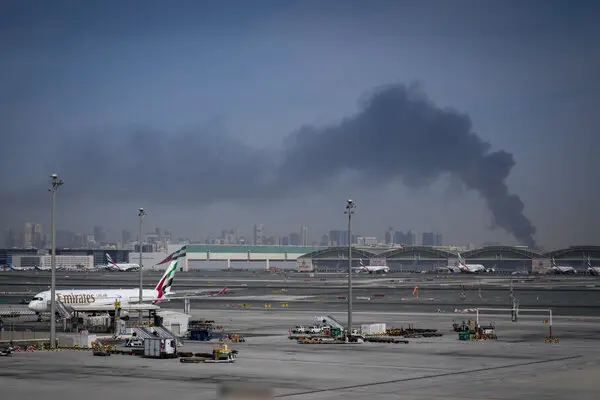
The fast‑intensifying confrontation involving Iran, Israel and the United States has spilled dramatically across the Gulf, with waves of Iranian missiles and armed drones targeting cities such as Dubai, Abu Dhabi and Riyadh, as well as strategic oil and gas facilities and diplomatic sites across the region.
What began as coordinated US–Israeli strikes on Iranian leadership and military infrastructure has triggered an unprecedented pattern of Iranian retaliation against multiple Gulf Cooperation Council states and deepened parallel fighting between Israel and Hezbollah in Lebanon.
Background: From US–Israel Strikes to Regional Eruption
The current escalation follows large‑scale US and Israeli strikes on Iran that targeted senior figures and key air defence and missile sites, an operation that Tehran has portrayed as an existential assault requiring a forceful response.
In the days that followed, Iran launched barrages of ballistic missiles and drones not only at Israel and US bases but also at territories hosting American forces across Kuwait, Bahrain, Qatar, Saudi Arabia, Iraq and the United Arab Emirates, marking the first time all Gulf monarchies have come under direct Iranian fire in a single crisis.
Analysts tracking conflict events note that the UAE has absorbed the heaviest concentration of strikes and interceptions, followed by Kuwait and Bahrain, with attacks aimed at airports, ports, emblematic city districts and facilities linked to Western militaries and energy exports.
Missile and Drone Threat Over Dubai and Abu Dhabi
In the United Arab Emirates, residents of Dubai and Abu Dhabi have repeatedly been jolted by air‑raid sirens and loud explosions as air defence systems engage incoming missiles and drones attributed to Iran.
Authorities in the UAE report that well over a thousand projectiles—including ballistic missiles, cruise missiles and drones—have been fired at the country since the start of the Iranian response, with the overwhelming majority intercepted before impact.
Even where interceptions succeed, falling debris has caused fires and structural damage in populated areas of Dubai Marina, the Palm Jumeirah and neighbourhoods near major transport hubs such as Zayed International Airport in Abu Dhabi, leading to civilian casualties and temporary disruption of flights.
Officials confirmed at least one fatality—a foreign driver killed when debris struck a vehicle—and dozens of injuries in separate incidents linked to interception fragments and drone impacts in and around Dubai and Abu Dhabi.
Key commercial infrastructure has also been affected, with local authorities linking fires at Dubai’s Jebel Ali Port and at industrial zones near Abu Dhabi to fragments of intercepted missiles and drones, underscoring how the conflict is now directly touching civilian logistics and trade corridors.
Saudi Arabia: Drones Near Riyadh and Critical Oil Sites
Saudi Arabia, which had restored diplomatic ties with Iran in 2023, has nonetheless found itself under Iranian fire, with the kingdom’s defence ministry reporting multiple incoming drones and missiles intercepted over its territory.
Saudi officials say air defences have destroyed more than a dozen drones across different sectors of the country, including several near the capital Riyadh and others approaching the vast desert oil fields and refineries that underpin global energy markets.
In one widely watched incident, debris from intercepted drones forced operations at the Ras Tanura oil complex—one of the world’s largest refining hubs operated by Saudi Aramco—to be temporarily suspended after a minor fire, highlighting how even near‑misses can rattle energy supplies and trader sentiment.
Additional drones have also been reported near the diplomatic quarter in Riyadh and in eastern provinces hosting US military facilities, though Saudi authorities insist there have been no significant casualties or long‑term damage to critical infrastructure so far.
Oil and Gas Facilities Across the Gulf Under Fire
Iranian projectiles and drones have not been confined to the UAE and Saudi Arabia, with Gulf‑wide reporting confirming strikes or attempted strikes on energy infrastructure in Qatar, Oman, Bahrain and Kuwait as Tehran seeks to raise pressure on Washington and its allies.
In Oman, multiple Iranian drones have been linked to explosions and fires at storage tanks and a tanker in the port of Duqm, a growing logistics and energy hub on the Arabian Sea, while further attacks have hit facilities around the port city of Salalah.
Qatar has temporarily halted production of several downstream petrochemical products after drone and missile threats, adding to concerns that sustained attacks on Gulf energy nodes could remove significant volumes of oil and gas from international markets.
Bahrain, home to the US Fifth Fleet, has likewise reported a ballistic missile strike on a refinery complex amid wider barrages that regional officials say are aimed at US military sites and linked infrastructure but which have repeatedly encroached on civilian and commercial zones.
Lebanon Front Heats Up as Hezbollah and Israel Trade Blows
Even as missiles and drones criss‑cross Gulf airspace, Lebanon has been dragged deeper into the conflict, with Hezbollah launching attacks on northern Israel after the killing of Iran’s supreme leader and Israel responding with heavy strikes across Lebanese territory.
Lebanese authorities report that nearly 400 people have been killed within a week of intensified Israeli bombardment, including dozens of children and women, after air strikes hit targets across the country and even reached central Beirut, where a hotel in the city centre was struck.
Hezbollah claims to have targeted Israeli naval and military sites, including near Haifa and in border areas, while Israel acknowledges casualties among its soldiers during ground operations in southern Lebanon, fuelling fears that the war could evolve into a full‑scale Israel–Hezbollah confrontation alongside the Iran–US–Israel axis.
Humanitarian Impact and Global Concern
The United Nations and a range of humanitarian agencies warn that the rapid expansion of missile and drone attacks from Iran, coupled with retaliatory operations by Israel and the US, is sharply increasing civilian suffering across Iran, Israel, Lebanon and the wider Gulf region.
UN updates describe “no let‑up” in the tempo of strikes, with bombs, drones and rockets hitting or threatening multiple countries simultaneously, complicating evacuation efforts, straining hospitals and disrupting commercial aviation and shipping lanes critical to global trade.
In the UAE and Saudi Arabia, authorities have repeatedly urged residents to follow civil defence instructions, stay near shelters during alerts and avoid spreading rumours, even as they emphasize that most incoming threats are being intercepted and that “human safety remains the top priority.”
Strategic and Economic Stakes for the World
Strategists note that Iran’s decision to target or threaten multiple Gulf states—many of them key energy exporters and long‑time logistical partners of Western militaries—has shattered long‑held assumptions that commercial hubs such as Dubai and Doha would remain insulated from direct missile warfare.
The repeated attacks on oil refineries, fuel terminals, storage tanks and ports across the Gulf have already prompted shutdowns and precautionary slowdowns, feeding anxiety that any prolonged disruption could send oil prices sharply higher and reverberate through inflation‑hit economies worldwide, including energy‑dependent countries like India.
Iran has also used the crisis to signal leverage over the Strait of Hormuz, hinting at the possibility of choking off tanker traffic through the world’s most important oil chokepoint, even as its officials publicly deny a formal closure while tacitly allowing attacks on vessels attempting to transit the area.
Regional and International Responses
Governments across the Arab world have condemned Iran’s missile and drone barrages on neighbouring states, with the Arab League’s secretary‑general calling the attacks on several member countries “reckless” and warning that Tehran is making a “massive strategic mistake” by striking Gulf soil.
At the same time, Gulf leaders—including those in the UAE and Saudi Arabia—have stressed that their current actions are defensive while warning that continued Iranian aggression could eventually force them to consider more direct military responses in coordination with Western partners.
Western governments, for their part, are scrambling to reassure allies, bolster air and missile defence coverage and prevent the Iran–Israel–US confrontation from spiralling into a broader regional war that could upend energy markets, destabilize fragile Arab economies and further strain global diplomatic alignments.
What It Means for India and the Wider Region
For India and South Asia, the escalating conflict carries immediate implications, from potential spikes in crude oil prices and shipping insurance costs to the safety of millions of Indian expatriate workers living across the Gulf, particularly in the UAE and Saudi Arabia where much of the recent missile activity has been concentrated.
Any sustained disruption to Gulf energy exports or prolonged closure of key sea lanes near the Strait of Hormuz would directly affect India’s energy security, current‑account balance and domestic fuel prices, reinforcing New Delhi’s calls for de‑escalation and strict protection of civilian infrastructure in the conflict zone.
As the Iran–Israel–US confrontation enters another tense week with missiles still flying over Gulf cities and casualties mounting in Lebanon, diplomats warn that the window for a negotiated pause is narrowing and that each fresh strike raises the risk of miscalculation, drawing more states and civilians into the cross‑fire.
Tags:
Like and Follow State Correspondents Facebook Page Latest International News Iran US War Subscribe for alerts© 2026 State Correspondents. All rights reserved.