

Vice-President
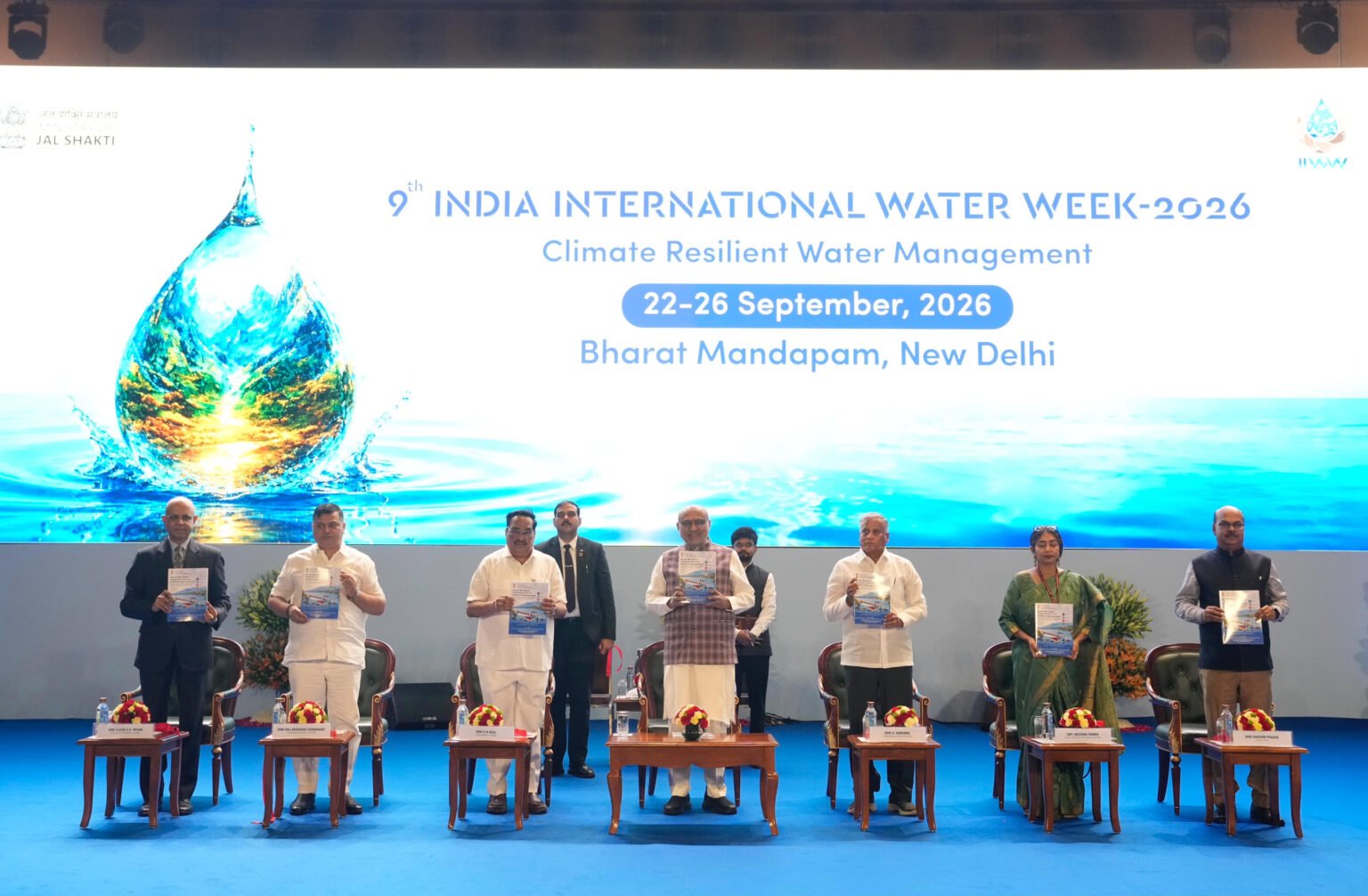
Vice-President C. P. Radhakrishnan Inaugurates 9th India International Water Week 2026
Calls for integrated water management, river interlinking, and daily conservation: “Jal Suraksha will lead to Jan Suraksha and Rashtra Suraksha.”
New Delhi: Vice-President of India, Shri C. P. Radhakrishnan, inaugurated the 9th India International Water Week (IIWW) 2026 today at Bharat Mandapam, calling on citizens and states to treat water conservation as an urgent national priority and convert it into a mass public movement.
The five-day international summit, organized by the Ministry of Jal Shakti from September 22 to 26, is centered on the critical theme of “Climate Resilient Water Management.” Addressing policymakers, engineers, and international delegates, the Vice-President stressed that water forms the cornerstone of human life and civilization, demanding immediate shifts toward prudent utilization, active conservation, and unified basin-level governance.
“Jal Suraksha will lead to Jan Suraksha and Rashtra Suraksha — securing water is vital to protecting our citizens and securing our nation’s sovereignty.”
Drawing from his personal experiences in Tamil Nadu, Shri Radhakrishnan recalled facing acute water shortages early in life and highlighted his 19,000-km Ratha Yatra undertaken over two decades ago to champion river interlinking and sustainable resource management. He underscored that interlinking rivers remains an essential strategy to bridge regional disparities, balancing flood-prone zones with drought-hit basins.
Key Takeaways & Resource Disparities
- Disproportionate Footprint: India holds 18% of global population and 2.4% of land area, yet commands merely ~4% of global freshwater resources.
- Cooperative Federalism: 10 inter-state river-sharing MoUs signed under PM Narendra Modi’s administration, highlighted by the 6-state Kishau Multipurpose Project pact.
- Technology Rollout: Official launch of the Sustainable Urban River Management (SURM) Framework alongside AI/ML-powered Reservoir Sediment Management systems.
Emphasizing the civilisational relationship India shares with its rivers, the Vice-President reiterated that centuries of traditional indigenous wisdom provide workable solutions for contemporary water stress. He made an earnest appeal for grassroots behavioral change:
“We can take a bath using two buckets or twenty buckets. The choice is ours. We can close the tap while brushing our teeth. These may appear to be small things, but within these small actions lies the interest of humanity and the world.”
Looking toward India’s vision of becoming a developed nation by 2047, Shri Radhakrishnan reiterated Prime Minister Narendra Modi’s call for “Jal Sanchay Jan Bhagidari”, urging rapid adoption of predictive water analytics, wastewater recycling, and enhanced agricultural irrigation efficiency.
The inaugural session was attended by Union Minister of Jal Shakti Shri C. R. Patil, Ministers of State Shri V. Somanna and Shri Raj Bhushan Choudhary, Secretaries Smt. Archana Varma and Shri Ashok Meena, Central Water Commission Chairman Shri Anupam Prasad, alongside technical experts and foreign dignitaries.