

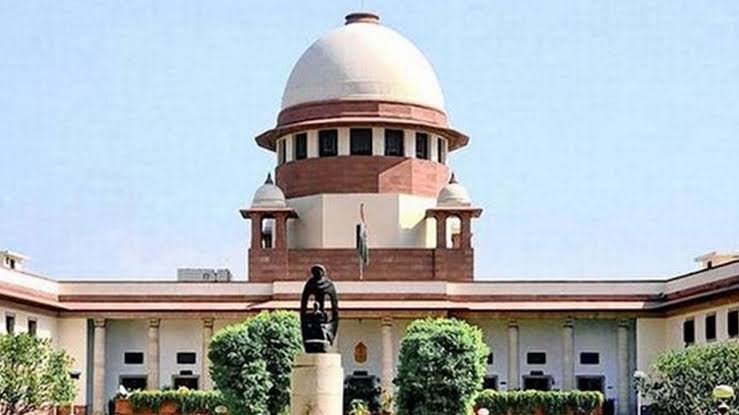
Supreme Court Slams Centre Over IPS Dominance: 5 Tough Questions on CAPF Promotions & Cadre Neglect
A division bench questions the persistent denial of top managerial commands to veteran paramilitary officers who dedicate 30 years to guarding borders and counter-insurgency frontlines.
By State Correspondents Legal Bureau•New Delhi•Published: September 03, 2026
NEW DELHI: In a fiery hearing on service parity within India’s internal security architecture, the Supreme Court of India strongly reprimanded the Union Government over its long-standing policies governing Indian Police Service (IPS) deputations into Central Armed Police Forces (CAPFs). The top court demanded that the Centre explicitly justify the rationale behind curbing leadership elevations for in-house cadre officers while preserving plum command posts for lateral police deputationists.
Presiding over a batch of petitions and contempt pleas challenging the newly enacted Central Armed Police Forces (General Administration) Act, a division bench comprising Justice Ujjal Bhuyan and Justice A. S. Chandurkar took stern exception to the bureaucratic inertia that continues to leave career commanders in the Border Security Force (BSF), Central Reserve Police Force (CRPF), Indo-Tibetan Border Police (ITBP), Central Industrial Security Force (CISF), and Sashastra Seema Bal (SSB) stagnating for decades.
Supreme Court Rebukes Government over Promotional Glass Ceiling
The bench directly questioned Additional Solicitor General Aishwarya Bhati on whether the government believed that indigenous officers—recruited through UPSC as direct Assistant Commandants—lacked the professional competence to helm the very forces they have served for over a quarter of a century.
“Do you genuinely believe there are no competent officers within the Central Armed Police Forces capable of holding leadership and managerial positions? It is wrong—totally wrong. There are dedicated officers who have rendered 25 to 30 years of selfless service in the CRPF, ITBP, and BSF, yet they are systematically denied apex promotions. Why are you treating them like this? They defend our borders in sub-zero glaciers and dense jungles, making supreme sacrifices for this nation.”
While the law officer argued that deputation ratios are anchored in sovereign administrative policy to ensure seamless Centre-State coordination during operational emergencies, the bench indicated that policy prerogatives cannot become an instrument of arbitrary institutional stagnation.
5 Key Friction Points Highlighted in the Apex Court
- Severe Promotion Stagnation: Direct-entry CAPF commanders spend nearly three decades on demanding frontlines only to hit a dead end at DIG or IG ranks, while lateral entrants step directly into apex roles.
- The 2026 Legislative Override: The contentious new CAPF statute statutorily reserves 100% of DG and Special DG slots, 67% of ADG posts, and 50% of IG positions for IPS officers, effectively freezing out internal cadre growth.
- Flouting Earlier Verdicts: The bench observed that the new statutory quotas run counter to previous Supreme Court directives ordering a phased, progressive reduction of IPS deputation posts up to Senior Administrative Grade (SAG).
- Neglect of Organised Group ‘A’ Status: Despite judicial recognition of CAPF executive cadres as Organised Group ‘A’ Central Services, associated structural command benefits remain largely unfulfilled.
- Operational Demoralisation: Prolonged disparity between frontline field sacrifices and back-office career progression threatens to erode morale across sensitive borders like the Line of Control and the LAC.
Judicial Pushback Against Legislative Counter-Measures
The friction stems from prolonged legal battles fought by cadre associations seeking parity and timely promotional ladders. In May 2025, the Supreme Court had unequivocally recognized CAPF executive officers as members of an Organised Group ‘A’ Service, mandating that the Centre undertake an overdue cadre restructuring and progressively decrease IPS quotas up to the SAG level within two years.
However, the subsequent enactment of the Central Armed Police Forces (General Administration) Act earlier this year statutorily fortified IPS deputation quotas across the higher echelons of all five paramilitary forces. Paramilitary officers challenged the enactment before the Supreme Court, arguing that the legislation effectively nullified judicial orders, violating the constitutional doctrine of separation of powers.
High Stakes for Border Security and Regional Morale
The apex court’s remarks hold significant strategic resonance for regions like Jammu, Kashmir, and Ladakh, where tens of thousands of CAPF personnel remain permanently mobilized in counter-terrorism, border-guarding, and critical installation defense under punishing circumstances.
As the Supreme Court directs the central government to place comprehensive explanatory affidavits on record detailing recruitment reforms and compliance timelines, the hearing marks a defining moment in resolving a decades-old institutional divide between career paramilitary commanders and generalist policing frameworks.
© 2026 State Correspondents. All Rights Reserved.