
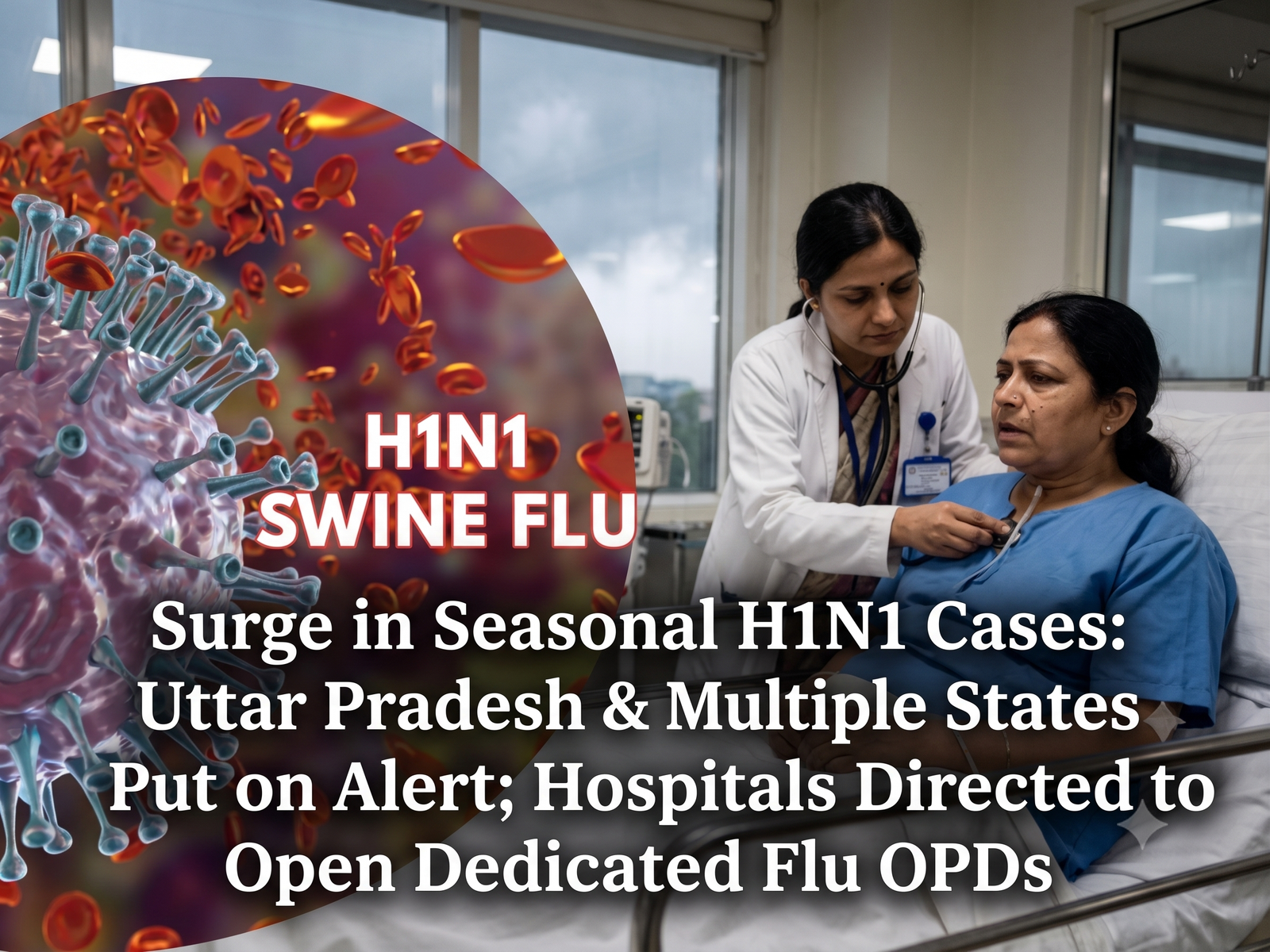
Surge in Seasonal H1N1 Cases: Uttar Pradesh & Multiple States Put on Alert; Hospitals Directed to Open Dedicated Flu OPDs
Health authorities mandate 4 to 6 isolation beds per district facility, enhance SARI surveillance, and urge citizens to avoid self-medication amid monsoon flu spike.
LUCKNOW: State health departments across the country, with Uttar Pradesh at the forefront, have issued urgent public health advisories following a sharp uptick in seasonal Influenza A (H1N1) infections, commonly known as swine flu. The authorities have placed district administrations, medical colleges, and government hospitals on high vigilance to contain the spread.
In a comprehensive state-wide review, the Uttar Pradesh government directed all 75 districts to implement proactive clinical management protocols. Deputy Chief Minister and Health Minister Brajesh Pathak ordered government and district combined hospitals to immediately set up dedicated fever and respiratory Outpatient Departments (OPDs) to streamline screening and prevent cross-infection in general wards.
- Dedicated Flu OPDs: Separate consultation counters established for patients showing acute respiratory illness or fever.
- Mandatory Isolation Units: 4 to 6 reserved isolation beds ready in every district and combined hospital for critical patients.
- Essential Stockpile: Buffer stocks of antiviral medications (Oseltamivir), medical oxygen, nebulisers, and bronchodilators maintained across all centres.
- SARI Monitoring: Heightened surveillance for Severe Acute Respiratory Infections (SARI) and Influenza-like Illnesses (ILI) through digital reporting systems.
- Diagnostic Testing: Mandatory flu testing protocols for patients admitted with breathing distress and acute pulmonary complications.
“Hospitals have been instructed to maintain adequate stocks of medicines, testing kits, and oxygen facilities. While there is no reason for panic, early medical consultation and strict respiratory etiquette are essential to curb transmission.”
— Uttar Pradesh Health Department Review
District-Wise Vigilance and Regional Spread
Health data indicates that urban clusters and high-density districts account for the majority of recent H1N1 detections, with Gautam Buddh Nagar, Lucknow, Meerut, and Ghaziabad reporting significant case clusters. Neighbouring regions including Delhi, Maharashtra, Karnataka, and West Bengal have also documented seasonal spikes typical of post-monsoon weather shifts.
Chief Minister Yogi Adityanath has directed District Magistrates and Chief Medical Officers (CMOs) to continuously evaluate the availability of beds, diagnostic kits, and medical personnel, emphasizing that zero negligence will be tolerated in patient care.
Advisory for the General Public
The health advisory classifies symptoms into distinct clinical brackets, warning high-risk groups—including elderly citizens, pregnant women, young children, and individuals with chronic respiratory or cardiac conditions—to seek prompt clinical care. Medical associations have explicitly cautioned the public against indiscriminate self-medication with over-the-counter antibiotics.
- Cover nose and mouth with a tissue or handkerchief while coughing or sneezing.
- Wash hands frequently with soap and water or use sanitizers.
- Wear protective masks in crowded public areas and healthcare setups.
- Stay hydrated and consult a medical practitioner upon onset of high fever.
- Do not indulge in self-medication or unprescribed antibiotic usage.
- Avoid close contact with symptomatic individuals without protection.
- Refrain from touching eyes, nose, or mouth with unwashed hands.
- Do not ignore worsening respiratory distress or breathlessness.
Authorities reiterated that seasonal influenza is manageable with timely diagnosis and appropriate supportive therapy. Citizens experiencing prolonged fever, sore throat, or body aches are advised to visit the nearest government health center or designated flu OPD without delay.