Lucknow vs Kolkata Clash Turns Into a Memorable Cricket Contest
Kolkata Knight Riders and Lucknow Super Giants delivered one of the most dramatic IPL 2026 contests, with a tense tie, a chaotic Super Over, and a cool finish that put Rinku Singh at the center of the conversation.
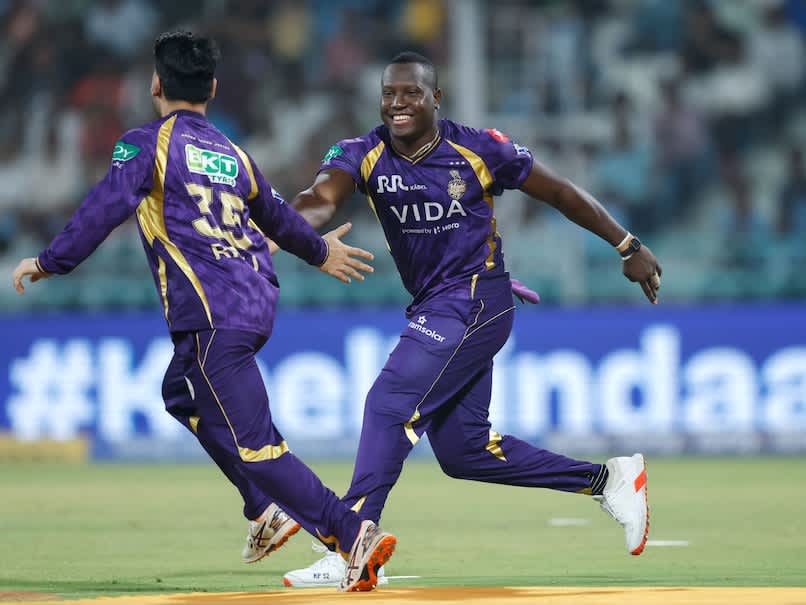
The Indian Premier League thrives on pressure, timing and nerve, and the meeting between Lucknow Super Giants and Kolkata Knight Riders had all three in abundant supply. What began as a regular league-stage contest at the Ekana Cricket Stadium soon transformed into a high-drama event that reminded fans why T20 cricket remains such a compelling format. Kolkata posted 155 for 7, Lucknow matched that total with 155 for 8, and the match then lurched into a Super Over that was over almost as soon as it began.
For news readers, this was not merely another result from a crowded season. It was the kind of game that creates momentum, revives conversations around form, and brings individual temperament into sharper focus than raw numbers ever can. Kolkata may have taken just two points from the night, but the manner of the victory made the result feel far larger. Lucknow, meanwhile, were left with the pain of coming back from the brink only to let the contest slip away in the shortest and most brutal phase of the evening.
A match that kept changing its mood
The rhythm of the game was unusual from the beginning. Kolkata’s innings never looked fully settled, yet it also never collapsed beyond repair. The total of 155 was competitive rather than imposing, the sort of score that demands disciplined bowling and intelligent field placements. At one stage, it appeared to be slightly under par, especially on a night when both teams were desperate to break out of difficult campaigns. Yet in T20 cricket, context often matters more than prediction, and Kolkata’s total proved to be exactly enough to drag Lucknow into uncomfortable territory.
Rinku Singh emerged as the emotional center of Kolkata’s innings. His contribution gave shape to the total and prevented the lower middle order from being forced into reckless recovery mode. Around him, the innings ebbed and flowed rather than exploded. That gave Kolkata a platform, but not certainty. They still needed a bowling performance built on control. More importantly, they needed to remain composed when Lucknow’s chase reached its dramatic final stretch.
Lucknow fought back but never fully took control
Lucknow’s reply was defined by tension. They were in the hunt, but rarely in command. Every small partnership hinted at momentum, and every wicket brought that momentum back down. The home side seemed to be walking a narrow rope between calm and panic. Even so, they found a way to stay connected to the chase until the last moments, which is why the final sequence felt so explosive.
The major turning point in narrative terms came when Mohammed Shami, better known for his class with the ball, produced a boundary under pressure to force the tie. That shot shifted the emotional balance of the night. Suddenly, Lucknow had moved from likely defeat to renewed hope, and the stadium atmosphere changed with it. In ordinary matches, that late hit becomes the headline. In this contest, it became only the prelude to something even more dramatic.
The Super Over changed everything in seconds
Super Overs are supposed to distill tension into a tiny, unforgettable burst. This one did exactly that, but with an added dose of chaos. Lucknow managed only 1 run for the loss of 2 wickets in 0.3 overs, an astonishing collapse in a phase designed for fearless striking. It was the kind of meltdown that can haunt a side because it combines poor execution with a complete swing in psychology. Kolkata sensed vulnerability immediately and attacked the moment rather than merely surviving it.
Chasing 4 in the Super Over, Kolkata needed only a single legal delivery to end the contest. The speed of the finish was almost surreal after the prolonged tension of the main game. It meant the contest had two endings: one dramatic and emotional at the close of regular play, and another sharp, clinical and unforgettable in the tiebreaker. That contrast is what made the match memorable. One team had rescued the evening, only to see it evaporate in seconds.
Why Rinku Singh stood out
Although cricket is always a team sport, some matches naturally center around one figure whose presence connects the phases of the game. For Kolkata, that player was Rinku Singh. He was named Player of the Match, and not without reason. His batting effort helped KKR reach a defendable score, while his overall impact on the contest was visible in the team’s body language and late calm under pressure.
Rinku has built a reputation over recent seasons as a player who understands the emotional temperature of a chase or a rescue innings. This match strengthened that image. He did not simply score runs; he held together Kolkata’s belief when the game kept turning. In tight IPL contests, that quality matters just as much as shot-making range. Teams remember the players who can absorb pressure without transmitting panic to everyone around them.
What the result means for both teams
For Kolkata Knight Riders, the win was valuable in both numerical and psychological terms. The points matter, but so does the method. Close finishes can become turning points in a campaign because they remind a squad that composure can still deliver results even when earlier performances have not. A Super Over win also tends to sharpen clarity within a team: roles become more visible, trust increases, and the dressing room regains voice.
Lucknow Super Giants, however, were left searching for answers. The search is not only tactical. It is also mental. To recover from the edge of defeat, force a tie, and then crash to 1 for 2 in the Super Over is a deeply frustrating sequence. It suggests a side capable of fight, yet still struggling to finish moments that matter most. In a competition as unforgiving as the IPL, repeated near-misses can become a storyline of their own.
Tactical lessons from the contest
One of the biggest lessons from this game is that totals in the mid-150s cannot be read in isolation. Conditions, matchups and pressure alter the meaning of a score. Kolkata’s 155 looked modest on paper, yet it became highly defendable because the bowlers kept Lucknow from building a smooth chase. That is a reminder for teams across the league that a disciplined bowling unit can convert an average total into a winning one.
The Super Over offered another lesson: clarity often defeats aggression when time is shortest. Lucknow appeared rushed, while Kolkata looked prepared. In high-pressure cricket, intent is essential, but intent without structure can collapse quickly. This was especially true in the tiebreak, where one team seemed overwhelmed by the occasion and the other appeared liberated by it.
Why this game will be remembered
Fans do not always remember every league-stage result, but they do remember games with distinct emotional turns. This was one of them. It featured a defendable but fragile total, a chase full of uncertainty, a dramatic final-ball six to force the tie, and then one of the shortest and strangest Super Overs of the season. Each phase rewrote the expected storyline, which is the surest way for a match to stay in public memory.
For Kolkata supporters, this will be remembered as an evening of resilience. For Lucknow fans, it may remain a painful missed opportunity. For neutral followers of the IPL, though, it was exactly the sort of contest the tournament promises at its best: unstable, dramatic, emotionally charged and impossible to look away from. Cricket often speaks in fine margins, and this match spoke through almost every one of them.
State Correspondents verdict
Lucknow versus Kolkata was not the highest-scoring match of the season, nor the cleanest exhibition of batting dominance. What made it special was its tension. Every phase carried consequence, and every small moment felt capable of changing the evening. By the end, Kolkata had shown that control under pressure can be as valuable as explosive talent. Lucknow had shown spirit, but not enough closure.
That is why this contest deserves more than a short scoreline update. It was a story of recovery, hesitation, nerve and execution. Above all, it was a reminder that in T20 cricket, drama does not require 220-run scorecards. Sometimes 155 is enough for a match to become unforgettable.