



Bharat Bandh 2026: Central Trade Unions’ Strike Disrupts Normal Life From Odisha To Tamil Nadu
By State Correspondents News Desk
Published: February 12, 2026 |
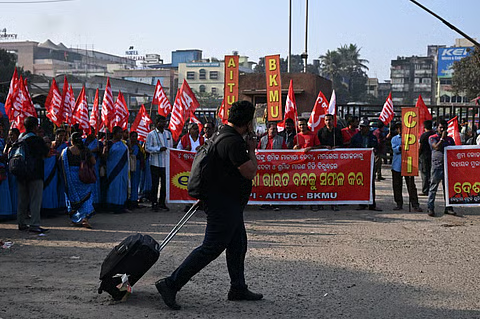
Photo: Bharat Bandh 2026: Central Trade Unions’ Strike Disrupts Normal Life From Odisha To Tamil Nadu.
- Joint platform of 10 central trade unions led a 24-hour Bharat Bandh starting midnight of February 12.
- Strike called against new labour codes, privatisation and “anti-worker, anti-farmer, pro-corporate” policies of the Centre.
- Transport, banking and public services hit in several states, with major impact reported in Odisha and southern states like Tamil Nadu and Kerala.
Bandh Call And Core Demands
A joint forum of ten central trade unions, including INTUC, AITUC, CITU, HMS, AIUTUC, TUCC, SEWA, AICCTU, LPF and UTUC, enforced a nationwide Bharat Bandh today, appealing to workers across sectors to join a 24‑hour strike from midnight.
The unions have targeted the Centre’s four new labour codes, alleging that they dilute worker safeguards, ease hire‑and‑fire norms and weaken trade union bargaining strength while favouring large corporate houses.
Leadership from these organisations also flagged anger over privatisation of public sector units, stagnating wages, limited social security coverage and the absence of a universal minimum pension, insisting that the government has ignored repeated representations and long lists of demands.
Farmer groups, which have been critical of recent economic and trade policies, extended support, linking the labour agitation to wider discontent over crop prices, market reforms and rural employment guarantees.
Impact On Services: Banks, Buses, Offices
According to union estimates, between 25 crore and 30 crore workers from sectors such as banking, insurance, postal services, transport, power, coal and manufacturing were expected to join the shutdown, though the ground response varied between states and cities.
Large public sector banks and insurance offices reported widespread participation in the strike, with several branches functioning with skeletal staff and customers complaining of delays or closures in industrial and district hubs.
Public transport took a visible hit in multiple regions, with trade union members and allied political outfits staging road blockades, leading to diverted routes, cancelled bus services and long queues of stranded passengers at major junctions.
In many places, essential services such as emergency healthcare, ambulance movement, milk supply and LPG cylinder transport were exempted from the agitation, following prior assurances from union leadership to avoid public backlash.
Odisha: Roads Blocked, Exams Postponed
Odisha emerged as one of the epicentres of the Bharat Bandh, with normal life disrupted across cities like Bhubaneswar, Cuttack, Rourkela and Sambalpur as trade unions intensified their campaign.
Visuals from Bhubaneswar showed groups of union workers and activists staging sit‑ins and blocking arterial stretches, including the busy Jaya Dev Vihar corridor, preventing city and inter‑district buses from moving and leaving commuters stranded for hours.
Shops, markets, several private educational institutions and a large number of small commercial establishments remained shut in solidarity with the strike, while state government staff were instructed to report to work under special advisories.
Authorities also confirmed that at least one nursing examination, the GNM second‑year Paper‑III, had to be rescheduled due to logistical disruptions, with the revised date pushed to February 16, underlining the reach of the protest into academic schedules.
Tamil Nadu And Southern States: Bus Services Hit
Southern states, especially Tamil Nadu and Kerala, saw noticeable impact on road transport, with state transport corporation buses staying off the roads in several depots as employees aligned with the central trade union call.
In Tamil Nadu, trade union activists held demonstrations in industrial belts and near bus stands, forcing partial suspension of city and mofussil services and prompting commuters to shift to autorickshaws, taxis and share vehicles at higher fares.
Kerala, which typically registers strong responses to bandh calls, reported high participation from government staff and public sector workers, leading to thin attendance in offices and a near‑shutdown feel in several districts during peak protest hours.
Despite the disruption, police and local administrations in these states deployed additional forces around bus depots, railway stations and secretariats, focusing on preventing damage to public property while allowing peaceful demonstrations.
Mixed Response Elsewhere, Political Backing Varies
Reports from other regions indicated a mixed response, with some metros and BJP‑ruled states seeing largely normal commercial activity even as pockets of industrial and public sector workforce joined the strike.
In Odisha, the bandh enjoyed overt political support from parties such as the Biju Janata Dal and the Congress, amplifying turnout on the streets, while in several other states opposition parties organised solidarity marches without formally enforcing a shutdown.
Trade union leaders argued that even where streets seemed calm, participation from organised sector workers, bank employees and government staff indicated simmering anger over policies they describe as “anti‑worker, anti‑farmer and pro‑corporate”.
Government representatives, however, maintained that essential services continued smoothly in most areas and described the overall impact as limited, reiterating that labour reforms are aimed at boosting investment and formal employment.
What Unions Want Next
Union platforms have warned that if the Centre does not roll back the labour codes, halt privatisation plans and convene a genuine national‑level dialogue on wages, pensions and social security, they may escalate to longer industrial actions in the coming months.
Key demands include scrapping the four labour codes, strengthening public sector undertakings, ensuring a statutory minimum wage and minimum pension, expanding MGNREGA‑style job guarantees and addressing farmers’ concerns on MSP and rural livelihood schemes.
For states like Odisha and Tamil Nadu, where employment in mining, heavy industry, textiles and services is significant, today’s Bharat Bandh doubles as a warning bell on grassroots frustration over job security and living conditions in the post‑reform economy.
As the strike winds down after 24 hours, all eyes will be on the Union government’s response and whether Parliament and state assemblies take up the core grievances that brought lakhs of workers onto the streets today.