



Parliament Stalemate Deepens: Amit Shah–Om Birla Talks Fail Amid Four Key Disputes
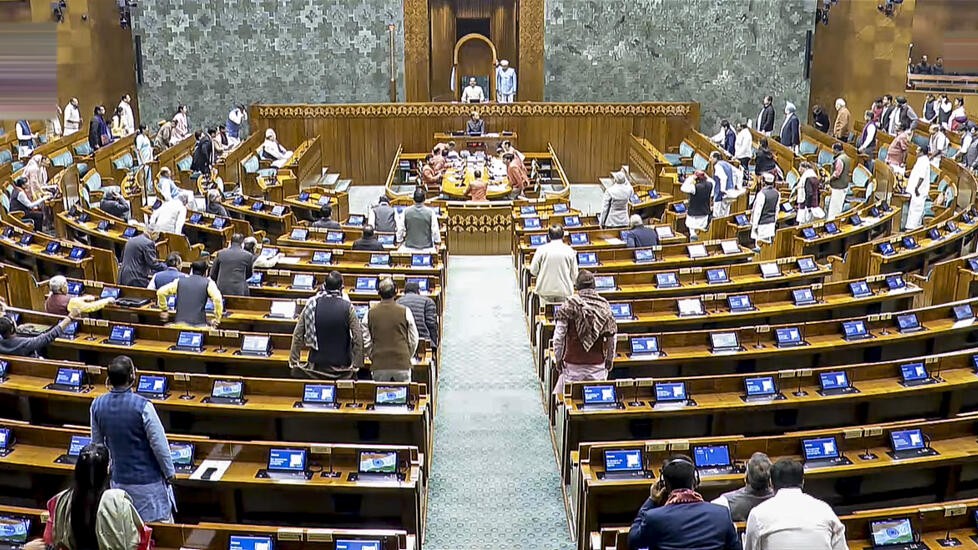
Lok Sabha Speaker Om Birla chairs a tense session amid opposition protests during the Budget Session 2026.
India’s Parliament remains paralysed as the current Budget Session grinds in disorder, with a crucial behind‑closed‑doors meeting between Union Home Minister Amit Shah and Lok Sabha Speaker Om Birla ending without a breakthrough. Multiple disruptions over the past week have forced repeated adjournments in both Houses, spotlighting four core issues that still separate the government and opposition as lawmakers battle for space, decorum, and public narrative.
Roots of the deadlock
The current stalemate stems from an escalation in the Lok Sabha last week, when several opposition MPs reportedly surged forward toward the Prime Minister’s seat, prompting sharp interventions from marshals and swift suspensions of errant members. Allegations of a “breach of privilege” and “unparliamentary behaviour” have since flooded the political discourse, with BJP MPs demanding stringent action and stiff penalties for women MPs allegedly attacked by opposition legislators.
At the same time, opposition parties, led by the Congress, have accused Speaker Om Birla of showing one‑sided bias in favour of the ruling Bharatiya Janata Party. Citing selective enforcement of rules and expunging of speeches, Congress lawmakers argue that their right to raise sensitive issues—especially on economic and foreign‑policy matters—has been systematically curtailed. In response, they have submitted a no‑confidence motion against the Speaker, reportedly signed by 118 MPs, underlining the scale of discontent inside the House.
The four unresolved issues
According to senior sources familiar with the talks, opposition leaders, particularly Congress president Rahul Gandhi, have anchored their demand for a truce to four specific conditions. The government has so far refused to accede fully, describing these as “non‑negotiable” unless normal behaviour is restored.
Alleged misconduct against women MPs. Opposition lawmakers allege that BJP women MPs were physically harassed during the scuffle near the PM’s seat, describing it as a direct assault on parliamentary dignity. Government allies, however, point to video footage circulating on social media showing aggressive movement from non‑BJP members toward the Speaker’s podium, arguing that such scenes damage the image of the House more than any procedural rule violations. Officials maintain that any such complaint should be handled via due process rather than turned into a political spectacle.
Reinstatement of suspended MPs. Eight opposition MPs remain suspended following the chaotic scenes in the Lok Sabha. The opposition insists on their unconditional restoration, arguing that suspensions penalise genuine dissent. The ruling camp, by contrast, treats reinstatement as conditional on an end to disruptions and a commitment to normal functioning. This standoff has created a stalemate, with neither side willing to blink first.
Contentious expunging of speeches. Tension flared further when the Lok Sabha Chair ordered that parts of a speech by BJP MP Nishikant Dubey be expunged from the record. Opposition parties framed this as an attempt to sanitise sensitive discussions and curb critical voices, calling for transparent communication on what was removed and why. Government representatives insist the Speaker was applying long‑standing parliamentary norms strictly and that rulings of the Chair cannot be challenged publicly just because some stakeholders dislike the content.
Right of response for Rahul Gandhi. Rahul Gandhi has demanded a dedicated platform within the Budget Session to address four priority topics he claims the House has “avoided,” including the implications of India‑US trade deals, public grievances, and certain governance concerns. The government has resisted this as a special concession, arguing that floor time is allocated at the Speaker’s discretion and that repeated agitation only prolongs disruption.
Impact on the Budget Session
The 2026 Budget Session, originally touted as a milestone for reviewing economic performance and setting policy direction for the year ahead, risks being reduced to a series of symbolic walkouts rather than substantive debate. With Question Hour and Zero Hour repeatedly washed out, ministers have been unable to respond to pressing queries, and key legislation lies pending.
Analysts warn that prolonged dysfunction could erode public confidence in Parliament at a time when effective oversight is critical. “The session was meant to showcase a focused discussion on reforms, growth, and welfare,” said a veteran political observer. “Instead, it is becoming a theatre of slogans. If this continues, both sides lose, and the country pays the price.”
Broader political reactions
Lok Sabha Speaker Om Birla has summoned floor leaders on multiple occasions—first privately and then in a more formal setting—seeking a truce formula, but without decisive outcome. In a sign of internal fractures, the Trinamool Congress and NCP have distanced themselves from the no‑confidence motion, arguing that such steps further polarise the atmosphere and weaken the collective position of opposition parties.
While the opposition frames the stalemate as a struggle for democratic space and accountability, BJP leaders portray it as a manufactured crisis aimed at projecting the government as repressive. Union ministers have urged both sides to return to normal proceedings, noting that Parliament’s primary mandate remains law‑making and governance, not prolonged theatrics.
What lies ahead?
With Tuesday’s sitting already underway and public scrutiny intensifying, all eyes are on whether a late‑hour compromise can be stitched together. Several proposals have been floated, including time‑bound guarantees for debate allocation, clearer norms around conduct near the PM’s seat, and a review of suspensions if disruptions cease for a defined period. Yet, agreement remains elusive.
For now, the deadlock continues, casting a shadow over the remaining days of the session. If no resolution emerges, there is a risk that future debates will be reduced to peremptory voice votes rather than deliberative discussion—raising uncomfortable questions about the health of Indian democracy in a high‑stakes election year.